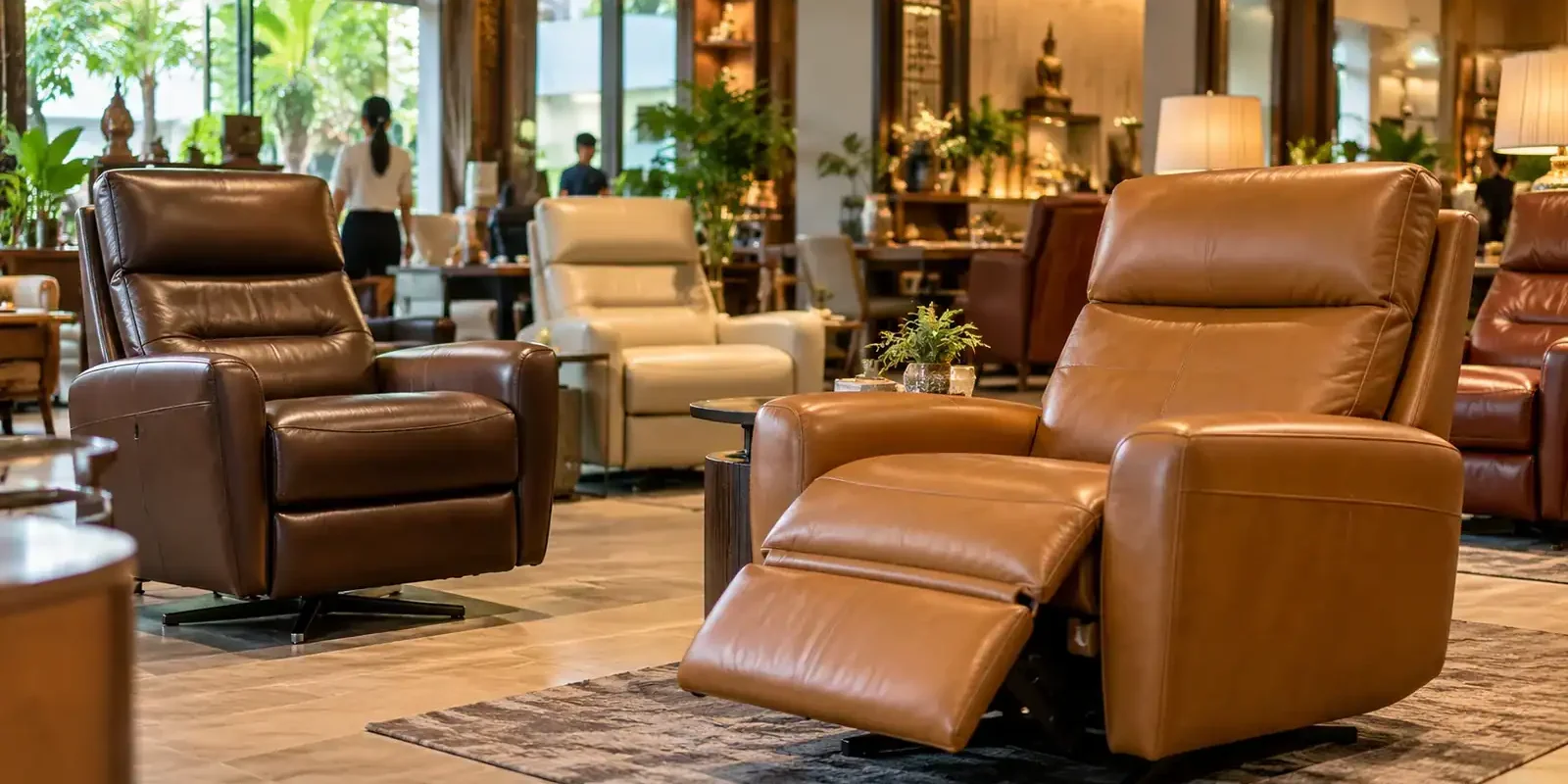
Finding a chair that looks right in a showroom is easy compared with finding one you will still enjoy after years of daily use. Leather club chairs are a particularly good example: two pieces may have a nearly identical shape and colour but differ in upholstery, stitching, cushioning and frame construction.
This website first raised the question in 2007, when the author had difficulty finding a satisfactory leather chair in Thailand and linked to an online seller. That old recommendation is not a current product endorsement, and one shopper’s disappointment does not establish that furniture retailers in Thailand routinely misdescribe materials. The useful question is how to make a careful purchase.
Start with what “leather” means in the listing
Ask the seller to name the upholstery material in writing, including whether different parts of the chair use different coverings. A chair may have a leather seating surface and another material on the back or sides; the label “leather chair” alone does not tell you everything.
Common retail descriptions include full-grain leather, top-grain leather, split leather, bonded leather, coated leather and synthetic leather. These terms are not interchangeable. Bonded products can contain leather fibres combined with other ingredients, while synthetic coverings are manufactured materials rather than animal hide. The quality of any finished chair depends on much more than the name of its covering.
Do not rely on a single online “scratch test” or a smell test to prove authenticity. Finishes, treatments and synthetic products can make those informal methods misleading. Instead, request the manufacturer’s material specification and keep a copy of any written claim used to sell the chair.
What to inspect in a showroom
- Seat comfort: Sit for longer than a few seconds. Check the seat height, depth, arm position and whether your feet rest comfortably.
- Frame stability: With the retailer’s permission, check for rocking, unusual movement or creaking when you sit normally.
- Stitching and joins: Look for even seams, smooth edges, securely fitted legs and consistent finishing where the fabric meets the frame.
- Cushioning: Ask how the cushions are filled and whether they can be replaced or repaired separately.
- Upholstery areas: Check the back, sides and base instead of examining only the prominent seat surface.
- Care instructions: Read any manufacturer’s advice before using cleaning chemicals or conditioners.
Think about Thai heat, sunlight and humidity
Comfort and maintenance matter in Thailand’s climate. A chair placed next to a hot, sunny window may age differently from one in a shaded, air-conditioned room. Consider how often the room is used, whether the windows expose the furniture to direct sunlight and whether young children or pets will use it.
Leather and synthetic upholstery can both be damaged by harsh products or excessive heat. Before treating a new chair, check the manufacturer’s care instructions for that exact finish. Blot ordinary spills promptly using the recommended method, and test a cleaning product in an inconspicuous place where the instructions allow.
Get measurements before ordering
Photographs can make a bulky club chair look compact. Measure the intended floor space and, just as importantly, the doorway, lift, stairs and sharp corridor turns the delivery team must negotiate. A high back or wide arms may stop the chair from fitting through a narrow apartment entrance.
Check the full dimensions, leg clearance and how far the chair must sit from the wall. If you are buying a pair, test that both pieces fit without blocking a passageway. Mark the footprint with paper or masking tape at home before committing to an expensive purchase.
Compare the whole price, not only the ticket
Ask whether the displayed amount includes delivery, installation, stairs, removal of packaging, tax and any custom upholstery charge. If an imported model is involved, clarify who is responsible for delays and damage during shipping. A low advertised price is not always the lowest final cost.
Keep a written quotation showing the product code, exact materials, colour, dimensions, delivery date or estimated window, payment schedule and any warranty. Confirm whether a custom-made chair can be cancelled or returned and what happens if the delivered material differs from the sample.
What to do if the delivered chair is not as described
Photograph the item before removing any packaging and compare the delivered model against the written order. Raise differences with the retailer calmly and promptly, saving messages, receipts and delivery paperwork. Ask for the proposed remedy in writing.
Thailand’s Office of the Consumer Protection Board provides information about consumer rights and complaints. Its official complaint portal and published contact channels can help consumers identify the appropriate next step. Outcomes depend on the facts and the applicable rules; a complaint does not guarantee a refund.
The best chair is the one that suits your room
A genuine material claim matters, but a comfortable fit, strong frame and realistic maintenance plan matter too. Compare two or three chairs side by side, ask questions the seller can answer in writing and avoid rushed decisions based on a showroom sale ending that day.
Verify the retailer’s current return terms before ordering.