
Editorially revised October 18, 2026. Travel conditions, admissions and transport services can change; verify practical details shortly before your visit.
Phrae rewards visitors who slow down. This northern town has carved wooden houses, temples with distinctive regional architecture and nearby landscapes shaped by erosion and forest. Much of its appeal sits in small details: shaded streets, locally made indigo textiles and buildings that tell stories about the timber trade. The original PersonalThailand post focused on old provincial statistics; this guide instead explains what is worth seeing and how to plan a relaxed visit.
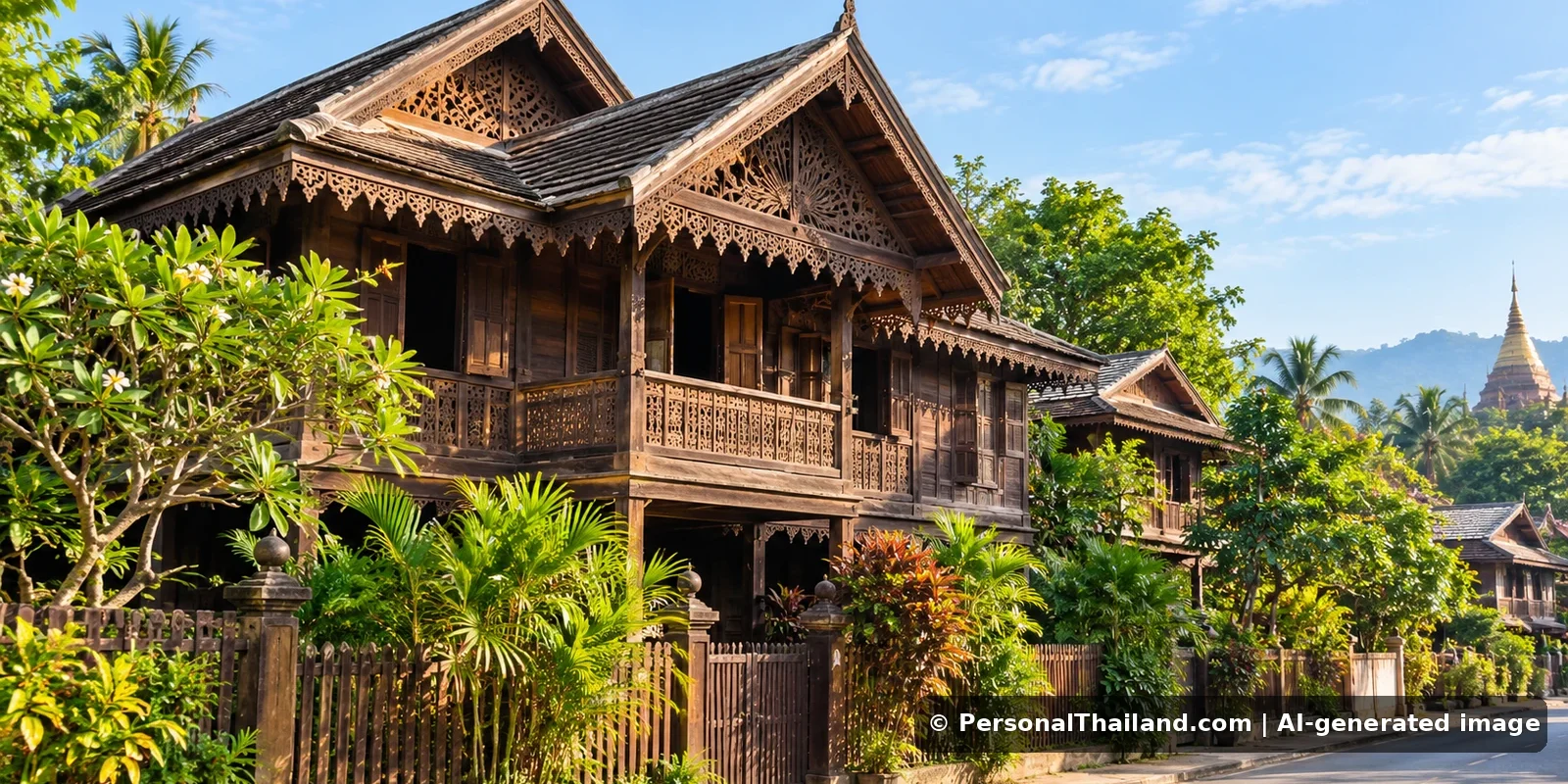
In short: Start in the older part of town, where surviving wooden residences illustrate the wealth and craftsmanship associated with Phrae's timber era.
Walk through Phrae’s teak-house heritage
Start in the older part of town, where surviving wooden residences illustrate the wealth and craftsmanship associated with Phrae's timber era. Khum Wong Buri and Khum Chao Luang are two names repeatedly highlighted by the Tourism Authority of Thailand. Their decorative fretwork and timber details are the attraction, not a promise that every room will be open on your arrival. Treat these buildings as cultural properties: follow access signs, ask before photographing private interiors and look for interpretation about the families who lived there. A short walk is more rewarding than a rushed photograph from the gate.
Temples and a different northern aesthetic
Wat Phra That Cho Hae is one of Phrae’s best-known religious sites. Other temples, including Wat Chom Sawan, show the importance of wood, layered roofs and regional influences in local architecture. Dress with shoulders and knees covered when appropriate, remove shoes where requested and keep your voice low around people praying. A temple may have separate areas for worship and for visitors. If a ceremony is taking place, watching respectfully from a distance is better than crossing in front of worshippers to get the perfect photo.
Look for indigo fabrics and local craftsmanship
Phrae is associated with mo hom, the deep indigo clothing sold in markets and workshops. Some sellers carry locally dyed or woven products; others may stock mass-produced clothing. Ask about the material and how the garment was made rather than assuming every item is handmade. Smaller products such as scarves or woven accessories are easy to pack. The tourist authority also describes crafts around Mae Kham Mee, including woven fabric shoes. A visit to a workshop can add context to shopping, but availability changes and should be confirmed before travelling specifically for a demonstration.
Add a nature stop without overpacking the day
Outside the urban area, Phae Mueang Phi is known for unusual earth and sandstone formations shaped by weathering. It contrasts nicely with the town's wooden architecture. Plan the walk for a cooler part of the day, take drinking water and protect yourself from the sun; exposed earth can feel hotter than a shady temple courtyard. Other forest or park excursions may require a longer drive, so avoid assuming they fit into the same short sightseeing loop. Check access locally after heavy rain rather than following an old blog’s route description.
Where Phrae fits in a northern itinerary
Phrae is a sensible stop for travellers exploring smaller northern cities rather than only the Chiang Mai–Chiang Rai circuit. Start with the town's historic sites, leave time for a meal and a local market, and reserve the afternoon for one out-of-town attraction. The journey between sights matters more than the number of pins on a map. Use local transport or a driver if you do not want to navigate unfamiliar rural roads. A one-night stay gives you a more relaxed rhythm than treating the town as a compulsory stopover.
A practical itinerary
For one day, visit a historic wooden house and one central temple in the morning, pause for lunch and look for textile shops during the afternoon. Add Phae Mueang Phi only if travel time and weather allow. For two days, spend the second on additional temples, craft visits or nearby nature. Check the operating status of individual houses or museums first; a tourism listing is not a live ticket counter.
Before you go
Phrae is not built around a single tourist strip. Keep small cash for stalls, bring sun protection and choose comfortable shoes for mixed pavements and temple grounds. If hiring a car, make sure your licence and insurance cover the vehicle. Avoid driving tired after a long intercity journey. This guide intentionally excludes old population rankings, uncertain royal dates and former festival calendars that appeared in older descriptions.
Frequently asked questions
Is Phrae worth visiting without a car?
Yes, the central historic area can be explored at a slower pace, but reaching nature sites is easier with arranged transport.
What should I buy in Phrae?
Consider indigo-dyed textiles and other locally documented crafts. Ask sellers about origin and materials.
Is the teak-house image a photograph of one specific museum?
No. The featured image is an AI-generated illustration of regional architecture, not proof of a particular building.
Official sources and further reading
Image disclosure: © PersonalThailand.com | AI-generated image. The featured illustration is AI-generated and is not a documentary photograph of a named landmark.





That one was not even me that was a Thai intern.
Sorry to harp again on your English but the first paragraph makes no sense! Forget the online “translators” they’re shite, get yourself an English-speaking friend or put some other effort into making your posts here legible. It may suck to you that English is the international language but same as “TIT” you can’t change it, better to master it.