Last checked: November 2, 2026. Thai rules change often, so always confirm with the official source before you travel or apply.
The helmet law in Thailand matters every day, not just when there is a police checkpoint ahead. A short ride to the shop can still end with a serious injury, and a passenger needs protection too.
An older version of this article suggested that checks were mainly a month-end affair. I cannot substantiate its claims about police quotas or commissions, so I have removed them. You may be stopped at other times, and a helmet is worth wearing regardless of the date.
Helmet law in Thailand: what riders should do
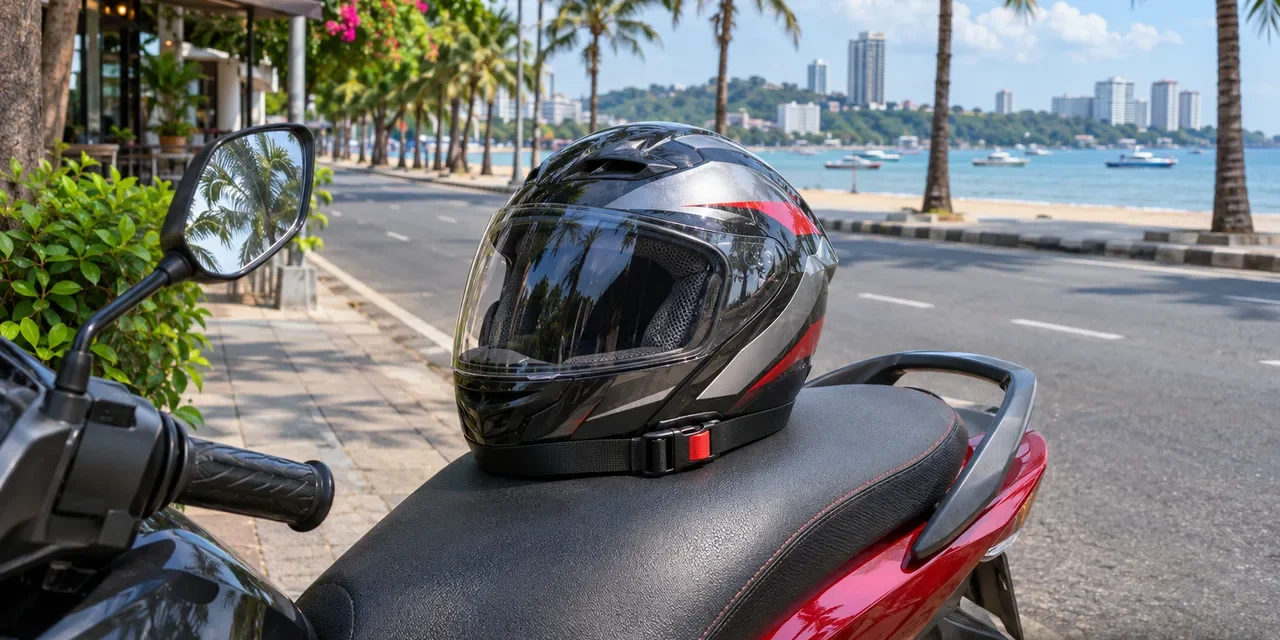
Under Section 122 of the Land Traffic Act, both the rider and the passenger must wear a crash helmet, and a rider must not carry a passenger who is not wearing one. Monks, novices and some religious headwear are exempt. The practical rule I follow is simple: put on a properly fitted helmet and fasten the strap before the bike moves, whether you are riding or sitting behind someone else. Do the same for every trip, however familiar the road looks.
Look for a helmet in good condition, without cracks or a damaged strap. It should sit snugly without painful pressure and should not slide off when fastened. An old helmet with a broken buckle left on a rental counter is not much of a bargain. If there is no suitable helmet for your passenger, find another way to travel.
Keep your visor or eye protection clean enough to see clearly, and replace damaged equipment. A helmet does not make a rider invulnerable, but securing it properly gives it a much better chance of doing its job. Children need appropriately sized protection too; an adult helmet that moves around is not a sensible substitute.
Check your licence before renting
A rental shop handing you the keys is not proof that you are licensed for the vehicle. Check the category on your home licence and whether you need an international driving permit recognised in Thailand, as well as the conditions for the length and purpose of your stay. A car licence alone should not be assumed to cover a motorcycle.
The Swedish embassy says a Swedish driving licence on its own is not valid in Thailand and refers to a recognised international permit together with the relevant national licence. Rules and documentation can differ for other nationalities and residents. Check the advice from your own embassy and the Thai authorities before riding.
Bring the relevant original licences and any required permit, and check the vehicle’s registration and insurance documents with the owner. Our guide to a Thai driving licence covers questions to ask if you live here longer term.
Passport, identification and a traffic stop
Police may ask a foreign visitor for identification. Keep your passport details accessible and check current advice about what you should carry. I also keep a copy of the passport identity page and the page showing my permission to stay, but a copy is not a guarantee that every official will accept it in place of the original.
If you are stopped, pull over safely, remove your sunglasses if that helps communication and listen to the officer. Ask politely what the alleged offence is and what document is needed. If language is a problem, tourist police can be contacted on 1155 for assistance. Keep the discussion calm; a roadside argument does not make an unclear instruction easier to understand.
When renting, the Swedish embassy advises against leaving your passport as a deposit. Ask the business in advance what alternative security it accepts. Take clear photographs of the bike with the owner before leaving, and note existing damage on the rental agreement.
If you receive a traffic fine
Ask for an official ticket or receipt and read any instructions on it. Confirm the offence, amount, due date and approved payment channel with the issuing authority. Procedures can change and a ticket may specify how it should be paid. Keep the receipt with the ticket so you can show that the payment was made.
Do not rely on a number quoted in an old article or on a friend’s account of a different checkpoint. Since the amended Land Traffic Act took effect on 5 September 2022, the maximum fine for not wearing a helmet is 2,000 baht (it used to be 500 baht). That is a ceiling; the amount on an actual ticket depends on the police schedule and the officer, so I am not quoting a roadside figure. If you believe the ticket is wrong, ask the authority how to challenge it rather than ignoring it.
Look beyond the helmet
Thailand drives on the left. Traffic can change speed suddenly, road surfaces may be slippery after rain, and sand or potholes can be hard to spot in poor light. Give yourself space, slow down near junctions and never ride after drinking. If you are tired or unfamiliar with a busy road, choose a taxi or another ride instead.
Check what your travel insurance actually covers. A policy may have conditions about the type of vehicle, the rider’s licence, helmets and alcohol. The insurance included with a rental is not automatically the same as medical cover for you or compensation for every kind of damage.
If there is an accident, get yourself away from immediate danger if possible and call emergency medical services on 1669 for urgent help. Police can be reached on 191. Contact your insurer as soon as practical and keep relevant documents. The guide to buying a motorbike in Pattaya covers further ownership questions.
FAQ
Do motorcycle passengers need a helmet?
Yes. Riders and passengers should wear a correctly fitted and fastened helmet on every trip.
Is my home car licence enough for a scooter?
Do not assume so. Check the motorcycle category, permit requirements and insurance conditions before riding.
Will a passport photocopy always be enough at a stop?
No. A copy is useful, but acceptance can vary. Check official advice and be prepared to provide the identification requested lawfully.
Where should I pay a traffic ticket?
Use the official channel shown on the ticket or confirmed by the issuing authority, and retain the receipt.
More from Personal Thailand
If you enjoy practical reporting and personal perspectives on Thailand, you can support my work and explore member-only content through either platform:
- Subscribe to Personal Thailand on X — creator membership with access to applicable subscriber-only posts and benefits.
- Join or support Personal Thailand on Buy Me a Coffee — browse available memberships and support options.
These are separate services with different charges and membership benefits. Paid access may be required; subscribing on one does not automatically grant access on the other. The main information in this article is free to read above.