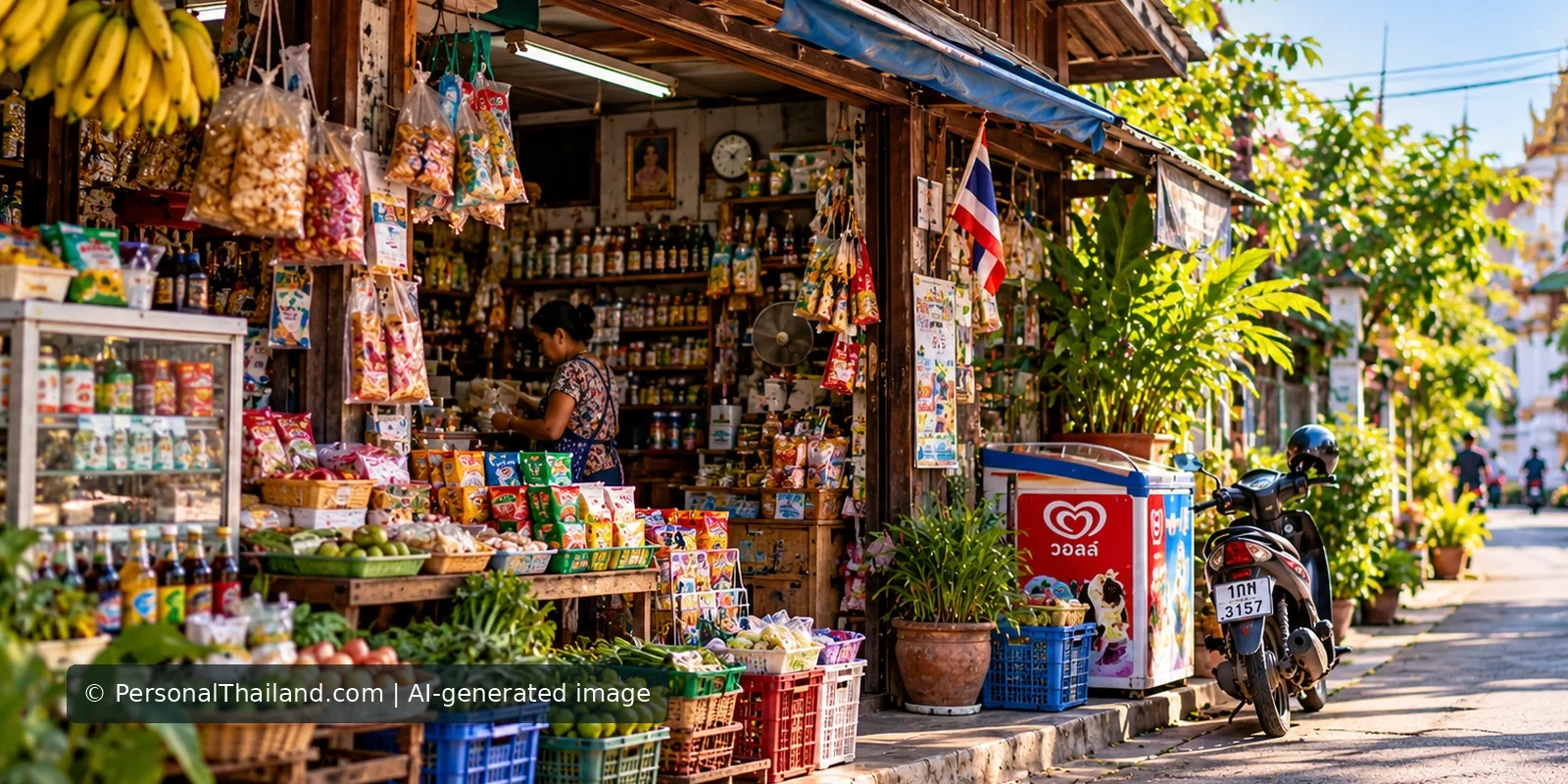
Step into a small Thai neighborhood shop and you may find chilled drinks, snacks, household basics, eggs, cooking ingredients and the day’s informal neighborhood conversation in the same few square metres. These independently run businesses are easy to overlook when a large convenience-store chain stands down the road. Yet for many shoppers, the attraction is precisely that the little shop is nearby and familiar.
An older version of this article argued about supermarket prices and whether “mom-and-pop” stores should survive competition. A better question for today’s visitor is simpler: when is a neighborhood shop useful, what should you expect, and how can you shop fairly?
What is a Thai mom-and-pop shop?
Often called a raan chao or simply a local grocery, a family-run neighborhood shop can be anything from a small counter selling drinks to a well-stocked minimart. Ownership, opening hours, payment methods and stock vary enormously. Some stores keep long hours; others close when the owner has errands or family commitments. Do not assume they operate like a franchise.
The best way to understand the shop is to notice who it serves. On one street it may supply bottled water and snacks to commuters. In a residential village it may be a convenient place for cooking ingredients, cleaning supplies and small household needs.
What is worth buying locally?
- Small everyday necessities: drinking water, tissues, cooking oil, soap, batteries and snacks when it is not worth travelling to a large supermarket.
- Local food products: depending on the shop, you might find regional snacks or freshly prepared items. Ask what a product is before you buy it.
- Last-minute supplies: a small local shop can be especially useful if you rent a home away from a large shopping centre.
- Regional specialities: some communities sell crafts or foods through local producers. These are not automatically part of a grocery shop, however.
Thailand also supports community-made products through its One Tambon One Product (OTOP) programme, described by the Department of Community Development. OTOP producers and a typical neighborhood grocery are not the same kind of business, but both are worth considering when you want locally made goods.
How do prices compare with supermarkets?
There is no universal rule that a small shop costs more, or that a chain always offers a better deal. A wholesaler may sell a multipack more cheaply while the neighborhood store sells exactly one item without the cost of a taxi ride. Promotions, pack sizes and location can change the comparison.
Check a visible price label where there is one. If an item has no price, ask politely before opening or consuming it. Learn a simple phrase such as tao rai? (“How much?”). For packaged items, compare the quantity and expiry date, not just the headline price. Keep receipts for higher-value purchases if a receipt is available.
Food and product checks
The size of the shop tells you little by itself about the safety of an individual product. Check intact packaging, readable expiry dates, appropriate refrigeration for chilled items and basic cleanliness. The same common-sense checks apply in supermarkets, markets and convenience stores. If a packaged product appears damaged or improperly stored, choose something else.
For fresh or prepared food, decide based on the actual handling and conditions in front of you. Never assume that one entire category of Thai seller is unhygienic. If you have food allergies, language can be a significant obstacle: ask clearly about ingredients, and do not treat an uncertain reply as a guarantee.
Shopping etiquette in a small community
A greeting, patience and a smile make the experience easier. Some owners speak English and others do not; showing the package or using translation can help. Keep cash in smaller denominations when practical, but ask whether digital payment is accepted rather than assuming either option. Avoid photographing staff, homes or customers without permission.
In most neighborhood groceries, quoted prices for packaged everyday items are not invitations to bargain aggressively. The bargaining associated with certain tourist markets is a different setting. Buying two drinks and expecting a large discount can feel inappropriate in a shop that depends on small daily transactions.
A useful way to explore local shopping
Try comparing the experience of a small shop, a local market and a larger store during the same trip. The Tourism Authority of Thailand’s shopping overview highlights the diversity of markets across the country. Each format serves a different purpose, and each neighborhood has its own rhythm.
The point is not that visitors should avoid supermarkets. It is that Thailand’s retail life is more varied than a row of chains. A small purchase made respectfully can be convenient for you and meaningful to the local business, without romanticising the shop or blaming customers for choosing another option.