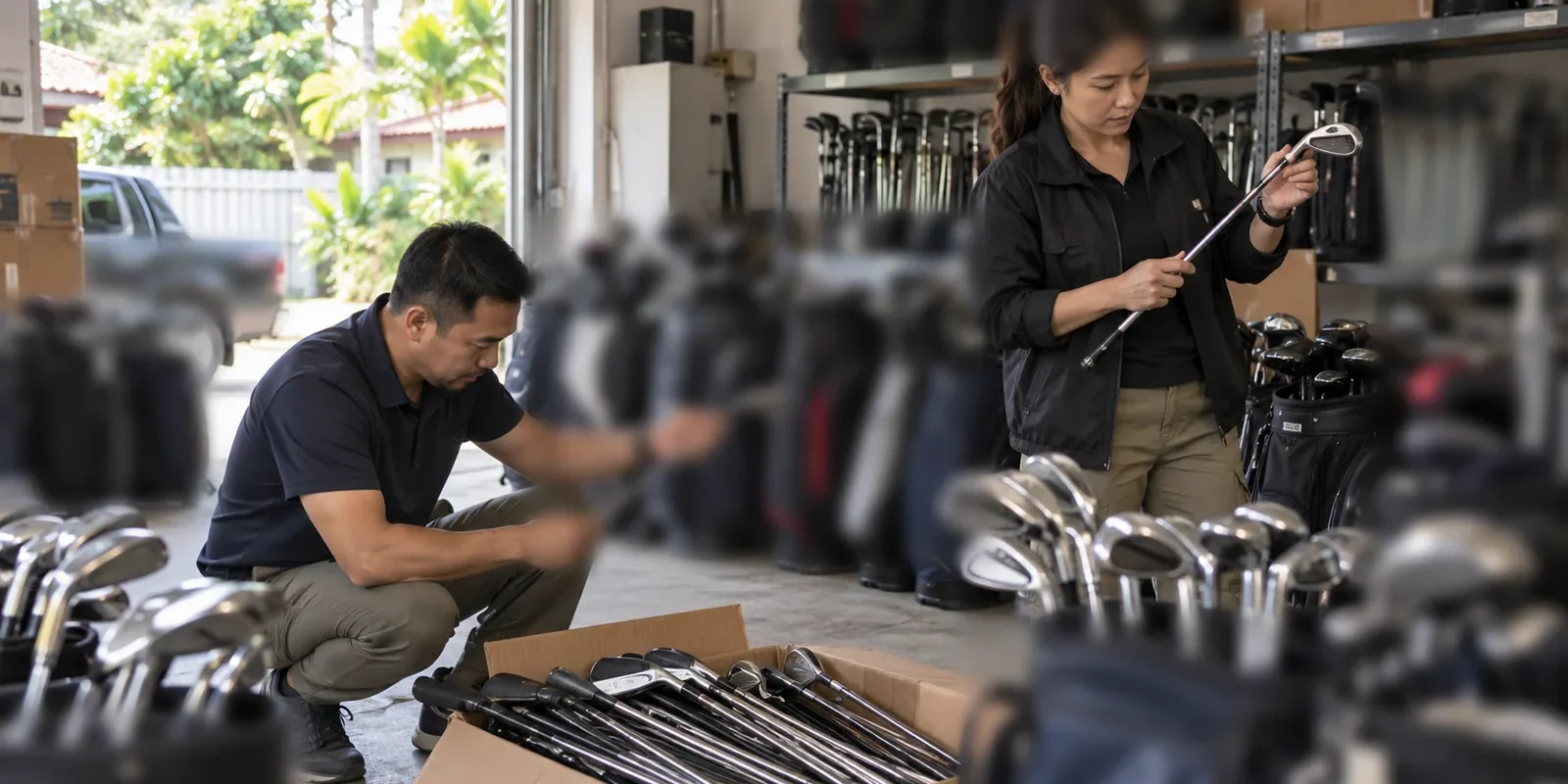
This page first reported a British online seller who made a fortune selling counterfeit golf equipment, reportedly made in Thailand. Fake goods and investment scams in Thailand work on the same instinct: a familiar brand or business feels safe. Whether you are buying clubs at a bargain price or putting money into a golf, property or tourism project, I would ask what you are really getting and who stands behind it.
Updated 31 October 2026: This older page has been rewritten. Historical events and past advice should not be read as current alerts or rules. For our latest updates, follow @PersonalThai on X (Twitter). For decisions involving laws, visas, health or safety, also check the responsible authority.
Counterfeit golf gear and other fake branded goods
A price far below the usual retail level, a seller who will not say where the stock comes from and packaging that looks slightly off are the usual warning signs. Fake sports equipment may also be less safe, because nobody has tested it.
Thailand’s Department of Intellectual Property handles trademark protection, and counterfeit goods can be seized by customs when you bring them home. If you have already paid for something fake online, keep the listing and messages and contact the platform and your card issuer.
The old golf story is not a current accusation
This page originally referred to an alleged golf-related money scheme. The replacement does not repeat private names or claim that a particular business is fraudulent. It uses the broader topic to explain checks that matter before putting money into a Thai venture.
Do not confuse a failed investment with proven fraud. Businesses can lose money without deliberate deception. Equally, a business can have real premises and still misrepresent what an investor is buying. The task is to verify the proposal rather than choose between blind trust and blanket suspicion.
Describe the investment in one plain paragraph
Before paying, write down what you believe you will receive. Is it a share in a company, a loan, a membership, equipment, a revenue share or an interest in property? Those are different arrangements with different rights and risks.
Ask the promoter to confirm that description in writing. If the answer changes when you ask about ownership or repayment, pause. A presentation about a successful golf course does not establish that your money buys any legal interest in it.
I would also ask who owes you money and under which document. A promise made by a friendly salesperson may not bind the entity receiving the funds. The name on the contract, the account receiving payment and the party responsible for performance should be understood together.
Investment scams in Thailand: verify the provider and product separately
Thailand’s SEC offers its Check First service for checking regulated capital-market providers and products, alongside an Investor Alert list. In February 2026 it announced additional alert and reporting features. Use the regulator’s own route rather than a screenshot of a licence supplied by the promoter.
A matching name is only the beginning. Check that the person contacting you genuinely represents the identified firm and that the proposed activity falls within the relevant permission. A company registration is not the same as authorisation to offer every financial product.
Not every business proposal falls within the SEC’s remit. If the arrangement is outside that scope, ask an independent Thai lawyer and suitable financial professional what checks apply. Absence from an alert list is not approval, and a regulator’s list is not a guarantee of investment performance.
Find the source of the promised return
Ask how the business earns money and what costs must be paid before investors receive anything. Request assumptions, not just a headline percentage. Who uses the service, what do they pay and what happens if demand is lower than expected?
If payments depend mainly on bringing in new participants, that deserves particular caution. Do not let a referral reward replace your assessment of the underlying activity. You could put friends at risk while still knowing very little about where their money goes.
Consider a disappointing outcome as well as the sales forecast. Could you lose the entire amount? Is repayment secured by anything that has been independently checked? Who decides whether profits are distributed? Questions about failure are normal investment questions, not an insult to the promoter.
Inspect documents before deposits
Obtain the full agreement and allow time for independent review. Ask what the deposit commits you to, whether it is refundable and what conditions must be met before further payment. Do not rely on a verbal promise that the paperwork can be corrected afterwards.
Where land or buildings are involved, ownership and contractual rights need separate examination. A photograph of a site does not prove that the seller can grant the interest being offered. My property-purchase checklist explains why physical inspection and legal checking are different tasks.
For an operating business, ask which records support the claimed income and expenses. A selection of busy-day photographs is not a financial statement. My business due-diligence guide provides further questions about what you are actually buying.
Keep the decision independent
Be cautious when the same person introduces the opportunity, supplies the lawyer, controls the documents and receives the money. Those roles may create conflicts that need to be understood. Choose advisers whose responsibility to you is clear.
Do not let a social relationship set the timetable. A friend may sincerely believe in an opportunity and still be wrong. A respected community member may not have checked the financial structure. Ask what they know directly and what they were told by someone else.
Keep emergency and household funds separate from speculative commitments. The amount you can afford to lose is not the amount someone can persuade you to transfer. Discuss major shared-finance decisions with the people affected before signing.
If you have already invested
Collect the agreement, payment records, promotional material and correspondence. Ask for a clear account of the current position and any missed obligations. Avoid paying an additional release fee merely to access a balance shown on a website.
Contact your payment provider promptly if fraud is suspected and ask the relevant regulator or adviser which reporting route applies. Recovery is not guaranteed. Be particularly careful with strangers who contact you offering to retrieve everything for an upfront payment.
FAQ
Does a real office prove an investment is genuine?
No. An office can confirm a physical presence without proving the promised rights, returns or regulatory status. Verify the entity, the particular product and the money trail separately, and read the agreement before paying.
Is an investment safe if it is not on an alert list?
No. An alert list may be incomplete or may not cover that activity. Check positive authorisation where applicable and obtain independent advice. Absence of a warning is not an endorsement or a promise against loss.
Should I trust a friend who has already been paid?
A payment to one participant does not establish how the scheme is funded or whether future obligations can be met. Treat the friend’s experience as one piece of information, not a substitute for checking the proposal yourself.
What if I am pressured to decide today?
Decline the deadline if it prevents proper checking. A missed opportunity is easier to accept than an irreversible commitment you do not understand. Do not send a deposit simply to preserve an offer while hoping the details will later become clear.
More from Personal Thailand
If you enjoy practical reporting and personal perspectives on Thailand, you can support my work and explore member-only content through either platform:
- Subscribe to Personal Thailand on X — creator membership with access to applicable subscriber-only posts and benefits.
- Join or support Personal Thailand on Buy Me a Coffee — browse available memberships and support options.
These are separate services with different charges and membership benefits. Paid access may be required; subscribing on one does not automatically grant access on the other. The main information in this article is free to read above.