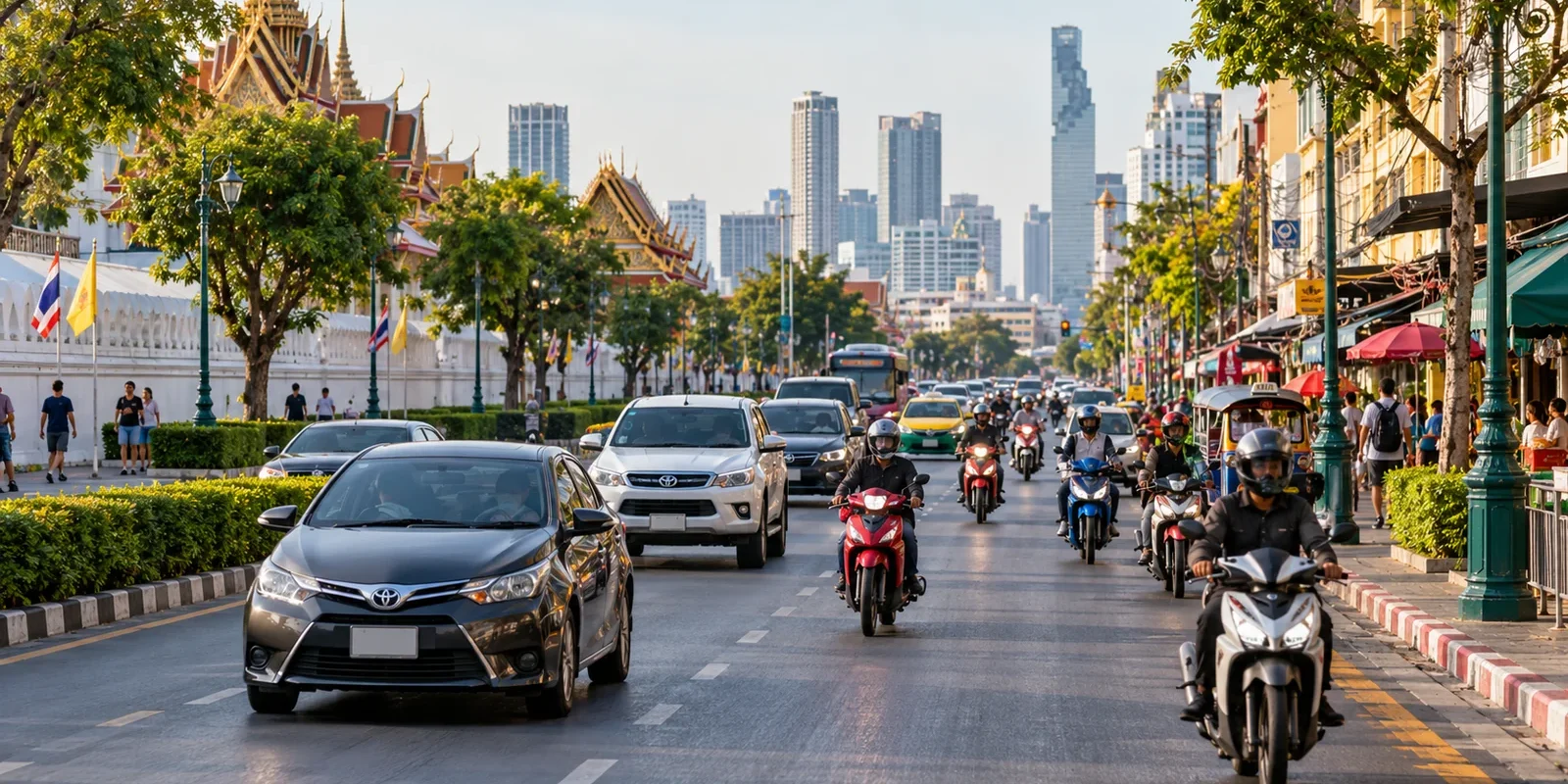
Updated 16 October 2026. Renting a car or motorcycle can be a rewarding way to explore Thailand, but unfamiliar traffic patterns and road conditions demand care. Thailand drives on the left, urban roads can be crowded with motorcycles and delivery vehicles, and driving in heavy tropical rain may be very different from what visitors are used to.
Road safety is a serious issue. The World Health Organization’s Thailand road-safety page cites WHO estimates of 18,218 road traffic deaths in 2021 (25.4 per 100,000 people) and notes that motorcyclists accounted for 83.8% of all traffic deaths. That figure is a national context measure, not a prediction of what will happen on your individual trip.
Before you rent: licence and insurance checks
Ask the rental provider which licence is needed for the exact vehicle category. A home-country car licence does not automatically authorise riding a motorcycle. Eligible visitors may also need the applicable international driving permit (IDP) alongside their national licence. If you live in Thailand, check whether a Thai licence is the suitable route.
The UK Foreign Office advises drivers to verify that a rented vehicle is legally registered, the rental agreement is understood and insurance covers the activity. It warns that riding or driving without a valid licence can invalidate travel-insurance cover. Always check your own insurer’s rules.
Seven practical safety rules
- Adjust to left-side traffic. Take extra care at junctions, roundabouts and when pulling out of a car park.
- Give motorcycles space. Watch mirrors before opening car doors or changing lanes. Small motorcycles can appear quickly beside stationary traffic.
- Slow down in rain. Standing water reduces visibility and grip. Avoid flooded roads and unknown depths; turn back when necessary.
- Do not assume other vehicles will signal. Check the whole intersection rather than relying only on another driver’s indicator.
- Take breaks. Long rural drives, unfamiliar signs and heat can be tiring. Avoid driving when sleepy or after drinking.
- Use proper restraints. Wear seat belts; on motorcycles, wear a correctly fitted helmet and protective clothing.
- Plan a route before moving. Do not stop suddenly in live traffic to read your phone or GPS.
Motorcycle and scooter risks
Many visitors use the word “scooter” for a powered motorcycle. That casual label does not change the licensing or insurance requirements. Before hiring, check your entitlement, inspect the tyres and brakes and photograph the vehicle’s existing marks. A cheap daily price is not a substitute for good maintenance.
Protective gear matters even for a short ride to a beach or café. Helmets are required by law, according to the UK Foreign Office. Choose one that fits properly and fastens securely. If you are inexperienced on a motorcycle, consider taxis, public transport or a professional driver instead.
Rural roads, mountain roads and night driving
Outside cities, you may encounter sharp bends, changing road surfaces, unlit vehicles, animals and slower-moving agricultural traffic. Hill roads require careful speed control, particularly in rain. Night driving adds the challenge of poorer visibility and more difficult hazard detection; if you are new to the route, daylight travel is often preferable.
What to check on a rental car
- Walk around the vehicle and record damage with photographs before taking possession.
- Confirm tyres, lights, brakes, mirrors and wipers work.
- Find the registration and insurance documents and ask whom to call after a collision.
- Read the deductible/excess and the limits of any third-party liability cover.
- Agree where and how to return the car, including fuel and after-hours procedures.
If an accident happens
Prioritise safety. Get yourself and others out of immediate danger where possible, request medical help if needed and contact local emergency services and the rental company. Do not sign a document you cannot understand without seeking clarification. Photograph the scene only when safe, note witness and vehicle details, and contact your insurer as soon as you can.
Australia’s government travel advice lists 191 for police, 1669 for medical emergencies and 1155 for Tourist Police. Keep your insurance emergency number saved offline too.
Frequently asked questions
Is driving in Thailand on the left?
Yes. Visitors used to right-side driving should take special care when turning and exiting junctions.
Can I ride a rented scooter on a car licence?
Do not assume so. Check the exact motorcycle entitlement and IDP requirements for your circumstances.
Should I hire a driver instead?
For unfamiliar mountain routes, heavy city traffic or journeys after dark, a licensed professional driver or public transport may be the more comfortable option.
Drive with a plan, not a timetable
Leave extra time, avoid unnecessary night journeys and choose the vehicle that matches your experience. To understand the licensing process for longer stays, see our guide to getting a Thai driver’s licence.