Updated 17 October 2026. This guide replaces material from an older PersonalThailand article; verify current rules and services before travel.
Chinese New Year brings a different colour and rhythm to many communities across Thailand. Streets glow with red lanterns, families gather, and temples and neighbourhoods host cultural ceremonies. The original PersonalThailand article was a very personal reaction to how imported and local celebrations were changing. An updated guide should instead help visitors understand where the festival is celebrated, how it differs from Thai New Year and what to check before attending an event.
Quick takeaway: Look for annual programmes in Bangkok's Yaowarat and other Thai-Chinese communities. Festival dates and event schedules change, and a public celebration is not proof that every Thai business is closed.
Why Chinese New Year matters in Thailand
Thailand has long-standing Chinese-Thai communities whose traditions are woven into food, trade, religious life and family celebrations. Chinese New Year is therefore more than a tourist shopping promotion. It is a time for family visits, offerings, temple activities and wishes for prosperity and good health.
Not every household celebrates in the same way, and the importance of the festival varies by family and region. Travellers should not assume that all Thai people observe it or that the entire country stops for the holiday.
Bangkok’s Yaowarat is a natural starting point
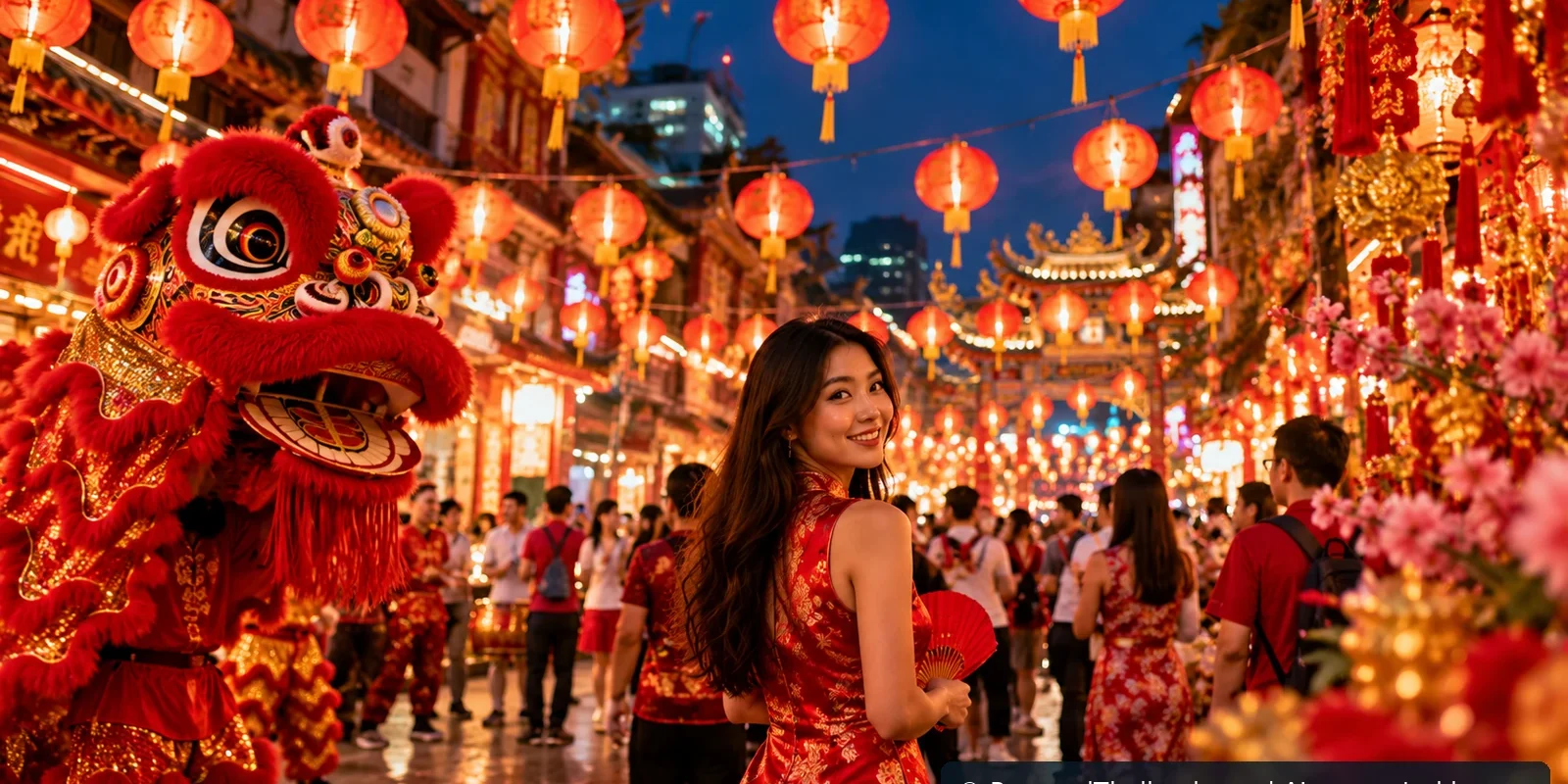
Yaowarat, Bangkok's Chinatown, is known for markets, food vendors, traditional shops and Chinese cultural landmarks. The Tourism Authority of Thailand identifies it as a distinctive area for exploring Chinese-Thai heritage. Decorations and crowds can create an energetic evening atmosphere during the festival season.
Walk rather than drive through the busiest stretches when streets are restricted. Allow extra time for transport, watch your belongings in crowds and respect areas where people are making offerings or praying rather than treating every ritual as a photo opportunity.
Regional celebrations beyond Bangkok
The Tourism Authority of Thailand's 2026 festival announcement highlighted events in Hat Yai, Nakhon Sawan and Suphan Buri alongside Bangkok. This is a useful reminder that Thai-Chinese heritage is found in many provinces, not only in the capital.
Those 2026 event dates are historical examples, not a ready-made calendar for a future trip. Each year, check the organiser or Tourism Authority for locations, procession times, temporary street closures and any ticketing requirements.
Lion dances, lanterns and temple visits
A visitor may see lion or dragon performances, bright red lanterns, drums, incense and family offerings. These scenes have different ceremonial and celebratory meanings. Watching respectfully, leaving space for performers and following directions from stewards will make the experience better for everyone.
At a temple or shrine, avoid blocking entrances and do not handle offerings or religious items without permission. Ask before photographing people in a private ceremony. If the area is crowded, choose a safe vantage point instead of climbing a barrier for a better photo.
Food is a major part of the experience
Yaowarat and other Chinese-Thai neighbourhoods are rewarding places to explore desserts, noodles, roast dishes and market snacks. Food stalls may be busier during festival events, so order patiently and be prepared for queues. Recipes and ingredients vary widely by family and shop.
If you have allergies or dietary restrictions, ask about seafood, peanuts, broth and sauces instead of relying on appearance. Choose food that is freshly prepared and properly handled, and carry drinking water for long walks.
Chinese New Year is not Songkran
Chinese New Year follows the Chinese lunar calendar and typically falls in January or February; Songkran is the traditional Thai New Year associated with April. Western New Year's Day is another separate observance. They may all appear in Thai shopping centres, but they are not interchangeable celebrations.
Do not assume an event date from an old blog article still applies. For a specific year, check the lunar-calendar date and the local programme separately, because public decorations may start before the festival and remain in place afterwards.
Plan your visit without making assumptions
If you want to attend a major evening event, check the Tourism Authority’s current announcement, plan a meeting point with companions and leave extra travel time. Events can affect traffic and public transport even when nearby attractions and shops remain open.
For a quieter experience, consider daytime visits to cultural sites or smaller neighbourhood gatherings where visitors are welcome. Festival etiquette matters as much as a camera: make room for worshippers, ask permission to photograph close-up rituals and support local businesses respectfully.
Frequently asked questions
Is Chinese New Year celebrated in Thailand?
Yes. Many Thai-Chinese communities organise family celebrations and public festivities, though participation varies.
Is Chinese New Year the same as Songkran?
No. They follow different calendars and traditions.
Where can tourists see celebrations?
Bangkok’s Yaowarat is a well-known location; other cities also hold events, depending on the year.
Official sources and further reading
- Tourism Authority of Thailand — Bangkok Chinatown guide
- TAT Newsroom — Chinese New Year 2026 events
- TAT Newsroom — Chinese New Year 2026 greetings
Editorial note: Old speculation about other holidays was removed. 2026 examples are explicitly historical; no unverified future festival dates.