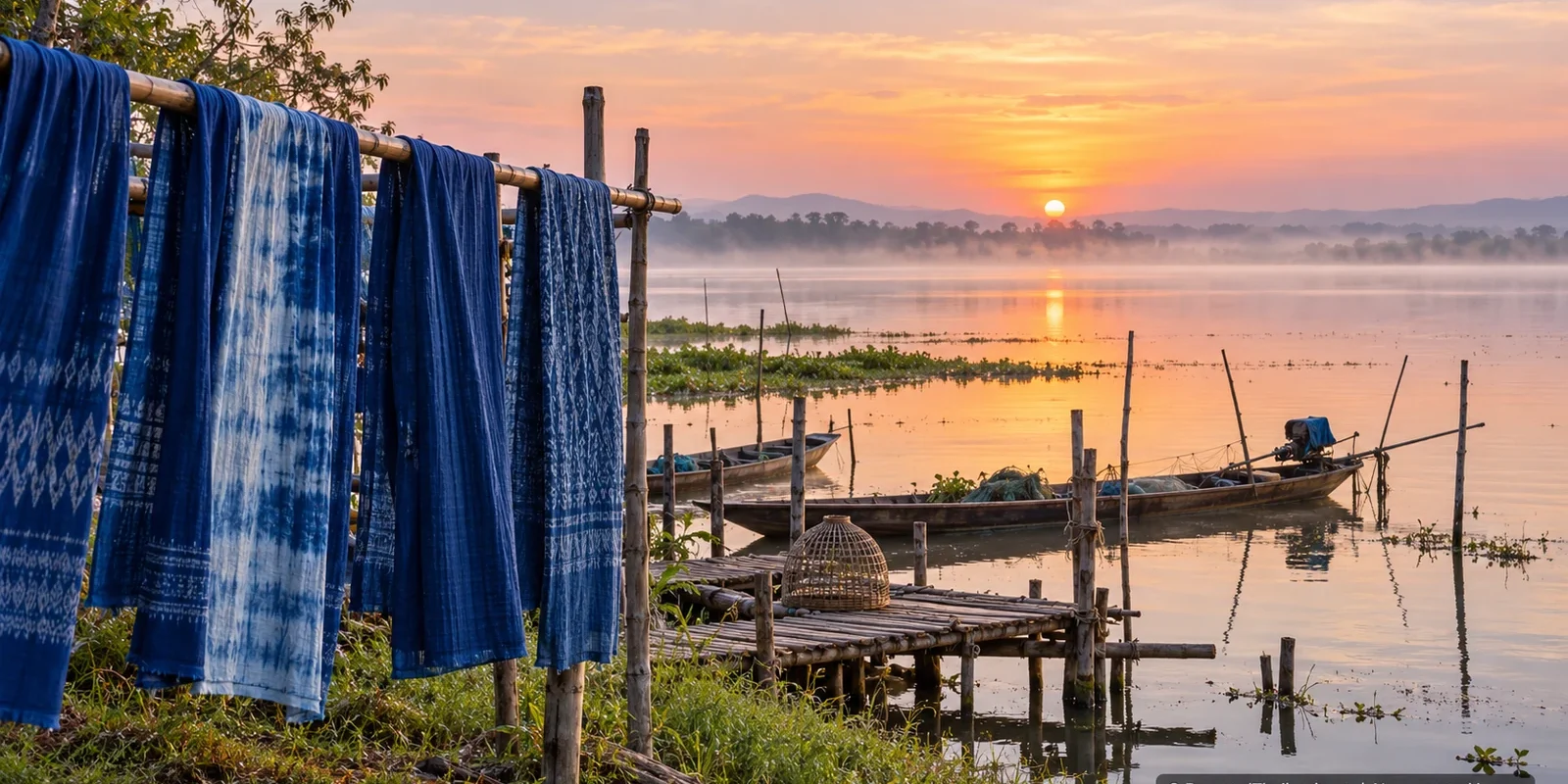
Sakon Nakhon is a rewarding Isan destination for people who want to connect landscape, Buddhist traditions and working craft communities. The province is associated with Nong Han lake, religious landmarks and indigo-dyed textiles. None of these experiences requires racing around every district; a carefully paced visit can offer a more convincing impression of local life than a checklist of distant sights.
Nong Han and the lake landscape
Nong Han is a significant freshwater lake near Sakon Nakhon town. Its broad waters and surrounding communities give the city a different rhythm from Thailand's beach resorts. Early morning can be a pleasant time for a lakeside stop, especially when heat and glare are lower. Depending on season and local conditions, vegetation and flowers may change the appearance of the shore.
Observe the lake from appropriate public areas and never assume that an attractive patch of water is intended for swimming. Protect wetlands by keeping to paths, carrying rubbish out and giving birds and other animals space. A boat outing, where locally available, should only be arranged after checking operator safety practices.
Wat Phra That Choeng Chum
Wat Phra That Choeng Chum is among the province's best-known religious landmarks. Visitors can appreciate its architecture and importance to local Buddhist practice, but should remember that it is not just a tourist monument. Respect any restrictions on dress, photography and access during ceremonies.
The religious history of Isan is rich, and individual temples may carry important local beliefs alongside documented architectural history. When writing about such places, distinguish a tradition or belief from a fact that can be established by archaeological research. That distinction makes a guide more interesting rather than less respectful.
Indigo textiles: a craft worth understanding
Indigo dyeing is a distinctive part of Sakon Nakhon's cultural identity. The Tourism Authority of Thailand has published dedicated material about the people, processes and communities behind the textiles. Watching a skilled craftsperson prepare dye or weave cloth, when a workshop welcomes visitors, can be more memorable than simply buying a finished scarf.
Ask questions about natural and synthetic dyes, fabric care and how much of an item is actually made locally. Not every blue garment in a tourist shop is automatically hand-dyed. If you buy directly from makers, take time to learn about the technique and avoid bargaining in a way that dismisses the labour involved.
Specific workshops and street markets may have limited schedules; check current arrangements rather than assuming an event mentioned in an old article runs every day. Where photography is allowed, ask before taking close-up images of makers at work.
Forests, countryside and food
The wider province includes countryside and forested areas connected with the Phu Phan landscape. Nature outings require more preparation than a walk in town: allow for transport, weather and any park-specific access rules. Keep in mind that a hill or viewpoint named in a guide may be in a neighbouring district rather than within easy walking distance of your hotel.
Isan meals are an important part of the trip. Sticky rice, grilled food and fresh herbs frequently feature, although each cook's approach varies. Ask about spice level and hidden ingredients if you need to avoid fish sauce, peanuts or fermented foods. Support hygienic local businesses instead of relying on blanket claims that every roadside stall is safe.
A two-day introduction
On the first day, explore Nong Han, the city centre and Wat Phra That Choeng Chum. Use day two for an indigo-focused visit or a countryside excursion, depending on what is available. Travellers particularly interested in textile production may choose to spend more time in one village rather than trying to visit several in a single afternoon.
Bus and road connections can help with regional travel, but a private car or arranged local transport is often useful outside the city. Confirm return arrangements and avoid driving unfamiliar rural roads late at night after a long day.
Sakon Nakhon is strongest when its living culture stays at the centre of the journey. The lake, temples and textiles are not unrelated attractions; together they tell a story of a place with a distinctive regional identity.
Choosing a genuine textile experience
A textile purchase becomes more meaningful when you understand the process. If a community workshop is open to visitors, ask how the indigo colour is prepared, which steps involve hand labour and how to wash the final cloth. Real production varies across makers, and traditional techniques should not be reduced to a single rigid description. Avoid declaring every item chemical-free or environmentally harmless without specific evidence about that product.
If you have only one extra afternoon, give it to a reputable workshop rather than moving between many shops looking for the same souvenir. The conversation may help you distinguish hand-dyed pieces from mass-produced lookalikes, while your purchase supports the people who practise and teach the craft.