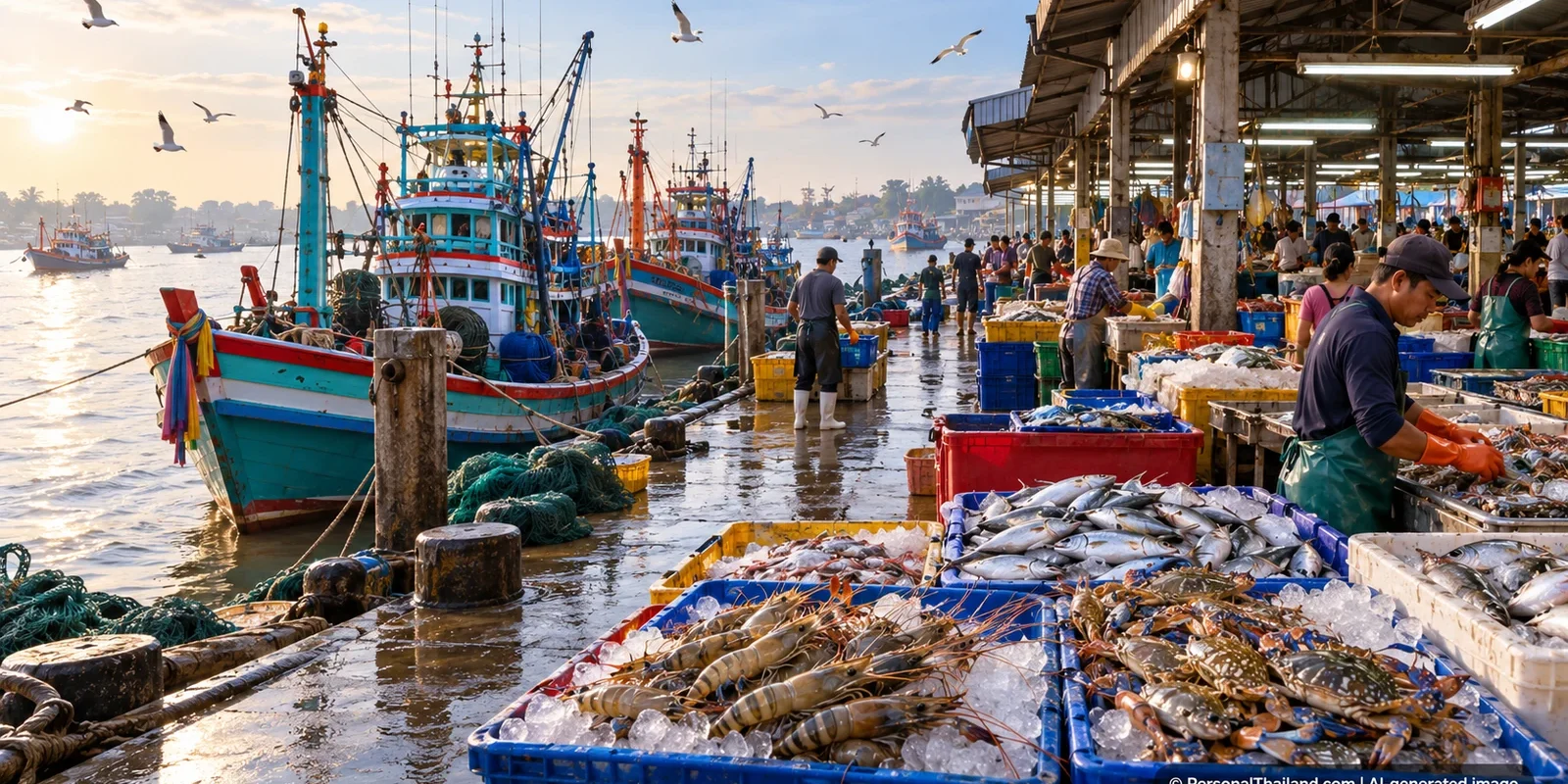
Samut Sakhon is close enough to Bangkok for a short outing, but its identity is different from that of the capital. The province has a working coastal economy shaped by fishing, seafood trade, the Tha Chin River and small industries. Visitors who enjoy markets, local history and the practical life of an estuary town will find more here than an ordinary stop along the road.
Mahachai and the seafood economy
Mahachai is a useful introduction to Samut Sakhon. Its market is known for fresh seafood and the bustle of a working commercial area. The Department of Tourism's destination information identifies Mahachai Market as an important local seafood destination. Visit to observe the activity, sample a reputable restaurant and learn about the products that connect the province with the Gulf of Thailand.
A working fish market can be crowded and wet. Wear shoes with grip, keep clear of loading operations and avoid blocking vendors while taking photographs. Not every market stall is designed for leisurely browsing, and visitors should ask before photographing workers at close range.
The Tha Chin River and coastal landscapes
The Tha Chin River reaches the Gulf of Thailand in this area. Estuary viewpoints, fishing boats and waterside settlements provide a different kind of coastal experience from a sandy beach resort. Tides and river activity change throughout the day, so the shoreline seen in a photograph may look quite different when you arrive.
Treat jetties, docks and industrial quays as working spaces. Do not enter restricted areas for an unobstructed photo. If you use river transport, confirm where to board, follow the crew's instructions and check lifejackets before departure.
Temples and the Pan Thai Norasing tradition
Samut Sakhon has local temples and historical traditions beyond its seafood industry. The Tourism Authority of Thailand highlights Wat Chong Lom and the Pan Thai Norasing story among the province's points of interest. A visit to a religious site can give useful context to the communities around the estuary.
Pan Thai Norasing is a figure from Thai historical tradition associated with loyalty and duty. Treat accounts of specific incidents as historical narratives that may be told differently in local interpretation, rather than presenting every dramatic detail as independently verified fact. At shrines and temples, dress appropriately and respect ceremonies.
Ceramic crafts and small communities
The province is also associated with traditional ceramics, particularly Benjarong-style decorated wares in craft communities. A workshop visit can be worthwhile where artisans offer demonstrations or guided experiences. Arrange access in advance; a craft village is not the same as a museum with guaranteed opening hours.
Inspect individual pieces before purchase and ask whether a vessel is decorative or suitable for food use. The price of a handmade item reflects labour as well as materials. Visitors can help preserve traditions by purchasing thoughtfully and asking about how work is produced.
A sensible day-trip route
A practical first visit could begin with Mahachai Market, include a riverfront stop and finish with one nearby temple or craft community. Make the route geographically manageable rather than fitting multiple distant towns into a single day. If a market is your main reason to travel, check its current activity patterns first.
Samut Sakhon and Samut Songkhram are different provinces with different headline attractions. In particular, the famous Maeklong Railway Market belongs to Samut Songkhram, not to Samut Sakhon. When following rail-related online advice, check both the province and station rather than assuming that every market near a railway refers to the same place.
Transport and practical safety
Road and rail options connect the area with Bangkok, but timetables can change. Check the operator's current information and leave a margin for local transfers. Busy roads, commercial vehicles and seafood trucks call for extra care when crossing streets.
Samut Sakhon is a good example of why travel need not always mean beaches and monuments. If you approach the province respectfully, its markets, riverfront and craft skills offer a grounded view of working coastal Thailand.
Keeping the itinerary local and realistic
Samut Sakhon's appeal is concentrated in everyday commercial life, so a visitor does not need an elaborate multi-day plan. Start when the market is active, eat nearby and leave time for an estuary view or a cultural stop. If you want to photograph fishing boats, use public areas and respect loading operations. Workers should not have to change their routines for an attractive travel photograph.
Travellers who plan to continue to Samut Songkhram should make that a separate, clearly labelled leg of the journey. Confusing the two provinces leads to wrong station names and missed connections. Look at the route, then confirm the correct operator and departure information rather than following outdated times copied from older tourist websites.