Last checked: November 5, 2026. Rules can change; confirm the requirements that apply to your situation with the relevant official authority.
Voice-over work from Thailand may appeal to someone who enjoys reading, recording and editing. The old article advertised an external service and suggested that work was readily available. Its recruitment claims and the service’s current status have not been verified, so they are not recommendations here.
Voice-over work from Thailand: begin with the recording
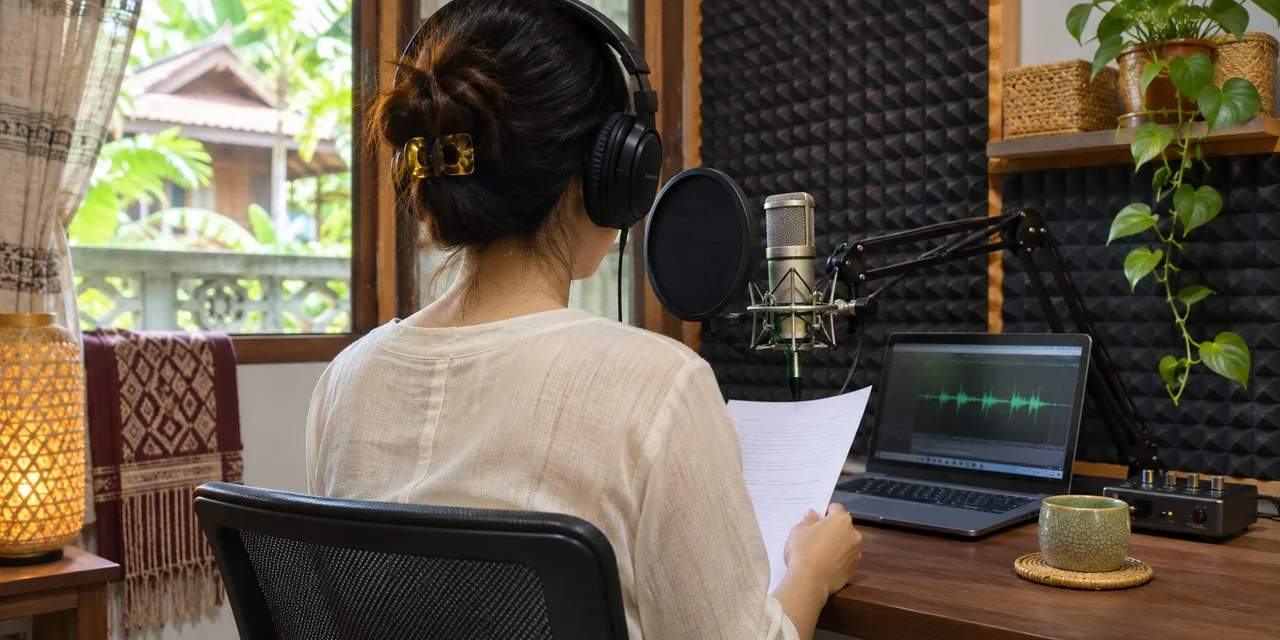
Choose a quiet space and make a short sample that reflects your natural delivery. A basic microphone and headphones can be useful, but clear speech and a room with little echo matter too. Listen for traffic, air-conditioning, clothing noise and sudden changes in volume before buying more equipment.
Try a few styles using scripts you have permission to record. A sample for an instructional video will sound different from an audiobook or an advertisement. Label samples clearly, and avoid imitating a recognisable person or using someone else’s work without permission. Ask potential clients what format, length and revisions they expect.
Auditions, contracts and payment
Read the job description and agree the script, delivery date, payment method, usage and revision terms in writing. A recording for one internal video is not necessarily the same commercial use as a worldwide advertising campaign. Ask whether the client expects exclusive use or permission to alter the recording.
Do not assume that a large fee, a famous project name or an unsolicited message proves a job is real. The US Federal Trade Commission warns about fake casting calls that demand payment or financial details to secure work. Independently check the client and be wary of pressure to pay upfront for a promised role.
Permission to work while in Thailand
Being able to record at home does not establish a right to perform paid work under a particular immigration status. Rules depend on the person, activity and permission held. Before accepting paid work while physically in Thailand, check the current requirements with Thai immigration and labour authorities or a qualified adviser. For the Non-Immigrant O-A category specifically, Thailand’s foreign ministry and the Royal Thai Embassy in Oslo state that employment is prohibited. That category-specific statement is not a determination of the treatment of every remote-work arrangement.
This article cannot determine the status of a specific remote job. Ask the actual authorities how your circumstances are treated and keep written confirmation where available. Tax, contracts and insurance may need separate advice too.
The overseas team communication guide considers remote collaboration.
FAQ
Do I need a professional studio to begin practising?
No. A quiet space and a clear sample can help you assess what equipment you need.
Does a retirement stay automatically allow voice-over work?
Do not assume it does. Check the applicable work and immigration conditions for your situation.
Should I pay a stranger to secure an audition?
Treat an upfront payment demand as a warning sign and verify the job independently.
Does one sample grant unlimited commercial rights?
No general rule follows from sending a sample. Agree the intended use and permissions in writing.
More from Personal Thailand
If you enjoy practical reporting and personal perspectives on Thailand, you can support my work and explore member-only content through either platform:
- Subscribe to Personal Thailand on X — creator membership with access to applicable subscriber-only posts and benefits.
- Join or support Personal Thailand on Buy Me a Coffee — browse available memberships and support options.
These are separate services with different charges and membership benefits. Paid access may be required; subscribing on one does not automatically grant access on the other. The main information in this article is free to read above.