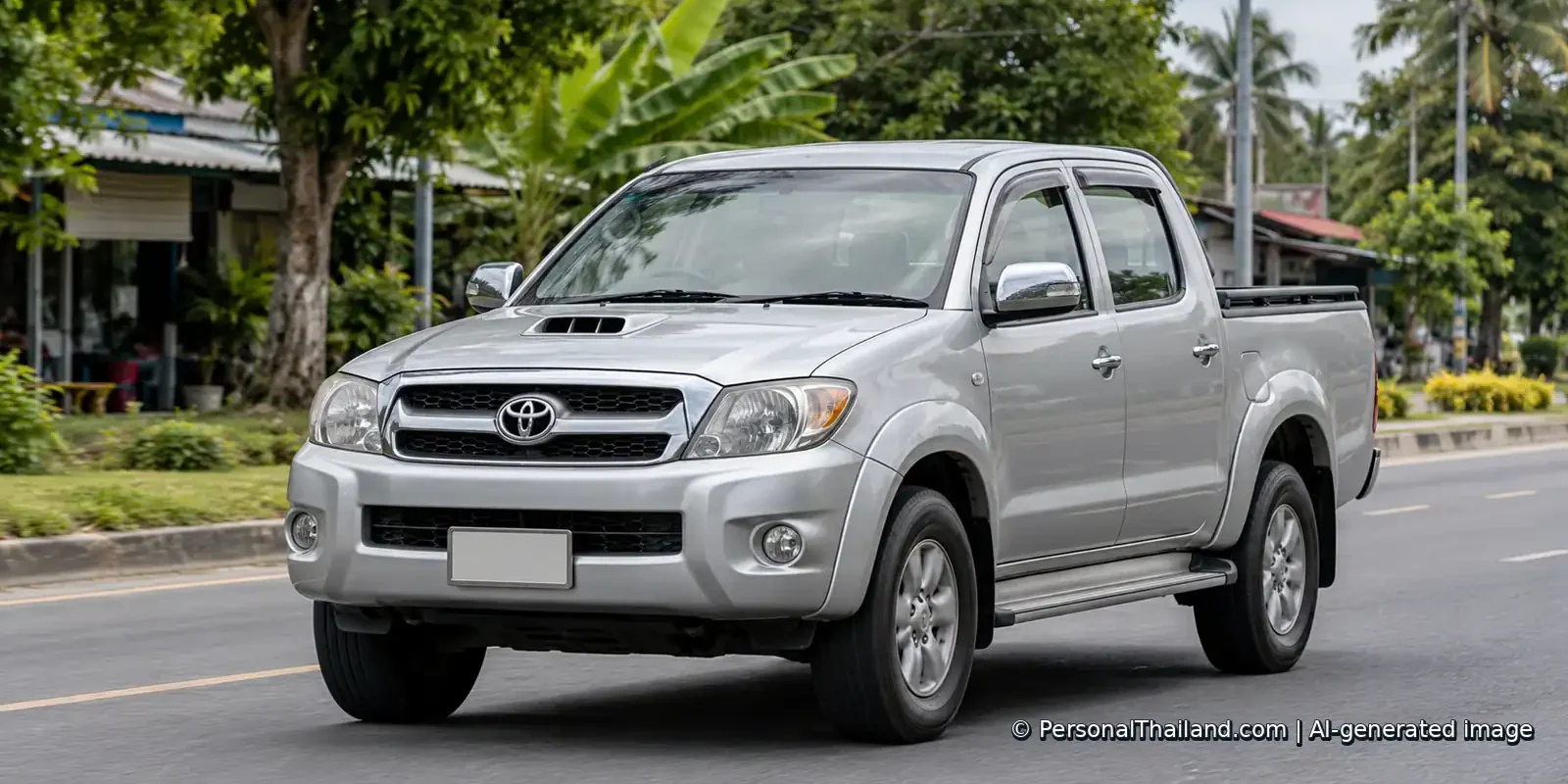
In November 2007, a Toyota Hilux attracted headlines after a Swedish emergency-avoidance test raised concerns about stability. The original post on this site went further, suggesting Toyota had declared the Hilux generally unsafe. That is too broad a conclusion from a test involving a particular vehicle specification nearly twenty years ago.
The more useful story is how a dramatic safety test, the configuration of a vehicle and a manufacturer’s response should be interpreted when deciding whether a pickup is safe to buy or drive.
What is the moose test?
A moose test, also called an emergency lane-change or obstacle-avoidance test, simulates a driver suddenly steering around an unexpected object and then returning to the original lane. The manoeuvre is designed to reveal how a vehicle responds during sharp, rapid steering rather than during ordinary gentle cornering.
For taller vehicles such as pickups and SUVs, lateral movement and the transfer of weight from one side to the other are especially relevant. Tyres, loading, suspension, electronic stability systems, road conditions and driving inputs can affect the outcome. A video of wheels lifting is important evidence about a test, but it does not by itself describe every version of that model.
What happened in Sweden in 2007?
Swedish motoring magazine Teknikens Värld tested the Toyota Hilux and reported concerning behaviour during an abrupt manoeuvre. Contemporary Norwegian automotive reporting published on 13 November 2007 documents Toyota’s decision to temporarily halt sales in Europe of a version associated with 16-inch wheels while it investigated the test.
The contemporary account also records Toyota Norway’s position that vehicle configurations differed between markets. That distinction matters: the issue was discussed in relation to particular wheel and tyre arrangements, not as an independently proven finding that every Hilux in every country and model year was unsafe.
Later retrospective accounts describe further work to address the concerns. But a historic stop-sale, a technical remedy, a formal safety recall and an ongoing present-day defect are not interchangeable terms. None should be asserted for a particular vehicle without checking the manufacturer’s applicable records and identifiers.
Why wheel and tyre specifications matter
Tyres affect grip, steering response and how force reaches the suspension during an abrupt lane change. Wheel diameter alone does not determine safety: overall tyre construction, dimensions, pressure, approved fitment and vehicle setup are relevant too.
Never change the wheel or tyre combination simply because an old article suggested one size is inherently safer. The correct fitment depends on the exact model, manufacturing year, variant and approved specifications. Use the vehicle’s documentation and qualified local service advice.
Does that 2007 test tell us which Hilux to buy today?
Not on its own. A truck sold in Thailand years later may have a different platform, suspension, tyres and safety electronics. Even within the same model year, variants can be equipped differently. A historic Swedish test should prompt careful questions rather than a blanket verdict on contemporary Toyota vehicles.
When shopping for a used pickup, verify the vehicle identification number (VIN), accident history, maintenance records, tyres and whether any manufacturer-issued safety campaign applicable to that exact vehicle remains outstanding. Ask the authorised manufacturer representative or dealer to check the VIN rather than relying on a forwarded list.
Check the vehicle’s braking, steering, shock absorbers and tyre condition with an independent qualified mechanic where possible. For a work truck, also consider the type and weight of cargo you plan to carry and whether the load is appropriately secured.
Everyday ways to reduce rollover risk
- Keep speed appropriate: lower speed gives a driver more time and room to respond to sudden hazards.
- Maintain tyres: use approved sizes and inflation pressures; replace damaged or excessively worn tyres.
- Respect load limits: avoid excess cargo weight and secure cargo so it cannot shift unexpectedly.
- Leave more space: sufficient following distance can reduce the need for a last-second steering manoeuvre.
- Keep safety systems functioning: investigate warning lights rather than assuming a stability or brake system is working.
- Practise prevention, not stunts: do not recreate emergency handling tests on public roads.
On wet Thai roads, especially after the first rain following a dry spell, traction can change quickly. Standing water, poor visibility and motorcycles sharing the road require a defensive approach. None of those conditions are unique to the Hilux.
What a responsible automotive headline should say
Safety reporting is most useful when it names the model year, specification, tyres, loading, test method and the manufacturer’s documented response. Statements such as “Toyota says the Hilux is unsafe” collapse important distinctions and can unfairly alarm drivers of unrelated vehicles.
The 2007 episode is a reminder that independent testing can identify problems worth investigating. It also illustrates why a serious buying decision should use model-specific current documentation, professional inspection and clear evidence rather than a sensational decades-old headline.