Women’s dating safety in Thailand can involve a simple conversation with a friend before meeting someone new. Sharing experiences can be helpful, but no website, background check or recommendation can guarantee that a date will be safe.
An earlier version of this page promoted a website where women discussed men they had met. I cannot verify that the service still operates, its old survey figures or its promised donations, so I have removed those claims. The useful question is how to look out for each other without exposing private information or repeating rumours as facts.
Women’s dating safety in Thailand: start with a plan
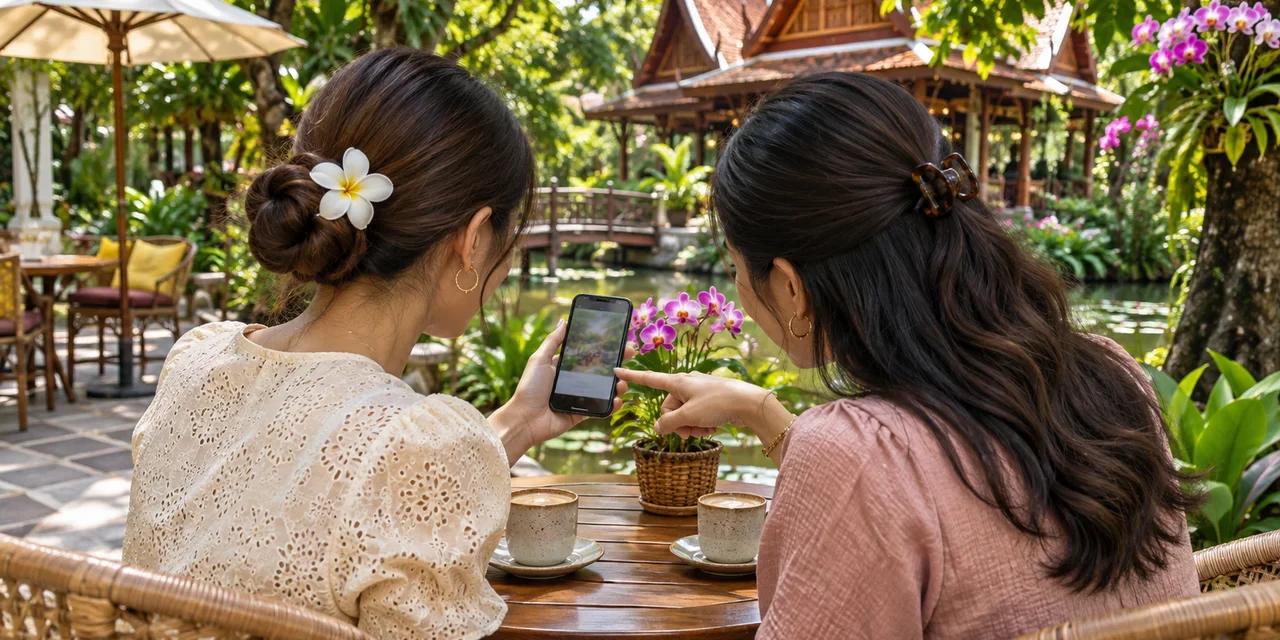
Choose a public place for a first meeting and make your own arrangements for getting there and home. Tell a trusted person where you plan to be, share the venue and agree when you will check in. Keep your phone charged and enough money available for a different route home.
A short coffee or meal leaves room for both people to decide whether they want to meet again. You can leave if the conversation makes you uncomfortable, decline a lift or say no to a change of venue. A person who responds angrily to a small boundary is giving you information worth noticing.
Our guide to finding restaurants in Thailand can help with choosing a public place. For unwanted approaches in everyday settings, the article on handling persistent approaches discusses ways to set boundaries.
What is reasonable to check?
Before meeting, you may want to confirm that a profile is consistent, arrange a video call or ask a mutual acquaintance what they know. Use information that has been shared with you appropriately, and remember that a profile can be misleading or out of date. A video call is useful but is not proof that every claim is true.
If a friend gives a warning, ask what they directly experienced and what they heard from someone else. Dates, context and the limits of someone’s knowledge matter. You do not have to meet a person when you feel uncertain, but a private decision to decline is different from publishing an accusation.
A person refusing to respect a boundary, asking for money early or pressuring you to share intimate images is a reason to pause. You can block and report an account through the service. Keep relevant messages if you may need to show them to a platform or authority.
Sharing concerns without exposing someone
Consider speaking privately with a trusted friend rather than posting a person’s address, workplace, identification, family details or photographs in a public group. Sharing sensitive information widely can affect people who are not involved and make a difficult situation harder to resolve.
Be accurate about what you know. “This happened to me” and “someone told me this happened” are different statements. Avoid presenting suspicion as a proven offence or encouraging others to contact or harass someone. If an allegation concerns a crime, ask a relevant authority or qualified support organisation how to report it safely.
Online groups can contain useful support and serious errors. Membership numbers, screenshots and repeated posts do not establish that a claim has been checked. Group administrators can set rules about privacy, harassment, corrections and how to handle a request for removal, but a group cannot replace an investigation.
Protect your own information
Review the privacy settings of your dating and social accounts. Avoid posting your home address, regular travel route, financial information or passport details in a profile. If you share plans with a friend, decide what information is needed and where it can be stored safely.
Be cautious with intimate photographs and unexpected requests for money. If someone threatens to publish images or messages, save evidence where safe, stop sending money or material and contact the platform or police for guidance. You do not deserve threats because you trusted someone.
Do not hand over your passport or bank access to a date, and do not carry a package for a person you have just met. If a conversation quickly becomes an investment proposal, verify it independently before taking any financial step. It is fine to slow down or end the contact.
If something has happened
If you are in immediate danger in Thailand, call police on 191. For urgent medical help call 1669; Tourist Police on 1155 may assist with communication. Move somewhere safer if you can and ask a trusted person to stay with you.
If you have experienced sexual assault, you can seek medical care without first deciding whether to report. UK government guidance on Thailand describes hospital support and One Stop Crisis Centres. Ask the hospital about interpretation, confidentiality and the options available in your location.
A friend can help by listening, arranging transport or staying nearby. Avoid demanding details or publishing a warning on the person’s behalf. Ask what they want and what feels safe, while taking urgent medical or immediate safety concerns seriously.
Supporting each other over time
Women can share practical knowledge about public venues, transport and services without turning dating into a public ranking of strangers. A private check-in after a date is often more useful than a dramatic post written from incomplete information.
Privacy law, defamation rules and reporting procedures depend on the facts and jurisdiction. If you are deciding whether to publish a serious allegation, seek independent legal advice. Sharing information responsibly protects the person raising a concern as well as the people affected by it.
FAQ
Can a dating website guarantee that a person is safe?
No. Online checks and recommendations have limits. Make plans that leave you free to leave and seek help if needed.
Should I publish someone’s address to warn others?
Avoid sharing private addresses or identity documents publicly. Consider a private conversation or advice from a relevant authority.
What can I do if a date pressures me for money?
You can refuse, end contact and report the account. Keep evidence if it may be needed.
Can I get medical care without making a police report first?
UK guidance for survivors in Thailand says medical treatment is available without first reporting to police. Ask a hospital about local procedures.
More from Personal Thailand
If you enjoy practical reporting and personal perspectives on Thailand, you can support my work and explore member-only content through either platform:
- Subscribe to Personal Thailand on X — creator membership with access to applicable subscriber-only posts and benefits.
- Join or support Personal Thailand on Buy Me a Coffee — browse available memberships and support options.
These are separate services with different charges and membership benefits. Paid access may be required; subscribing on one does not automatically grant access on the other. The main information in this article is free to read above.