
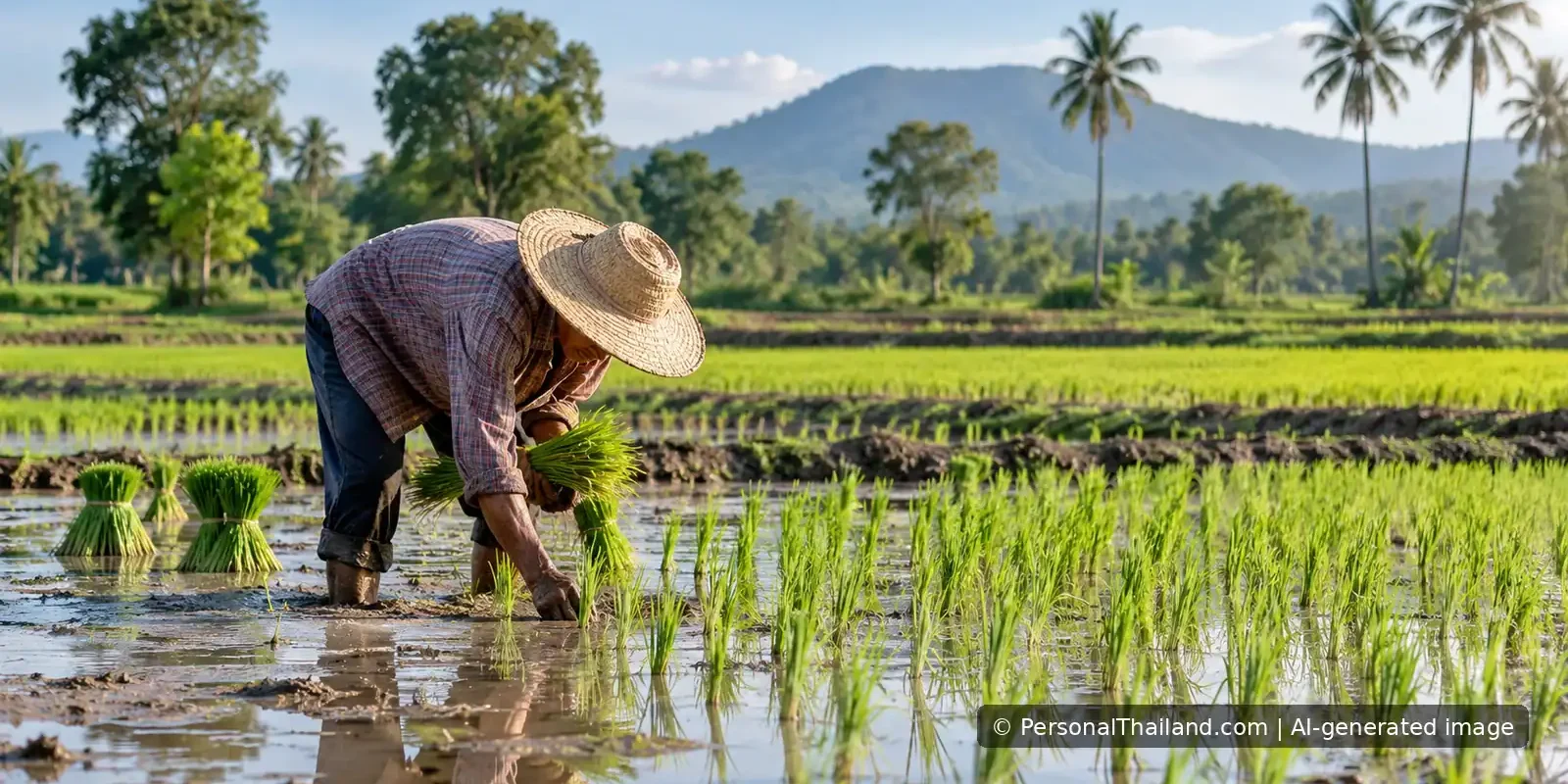
Thailand’s farms are central to its landscape, food culture and rural economy. Visitors see rice fields, fruit orchards, rubber plantations and family-run enterprises. Some foreigners become interested in investing in a farm or helping a partner’s agricultural business, but the rules are more complicated than choosing a plot and starting work.
A PersonalThailand article from August 2009 questioned restrictions on foreign farmers and suggested that operating through a Thai company made the problem disappear. That was an oversimplification. The key is to distinguish three separate matters: who owns the land, which entity may carry on the farming business and what physical or professional work a foreign individual may perform.
Foreign ownership is not the same as a right to farm
Thai land ownership rules are not a simple reflection of business ownership. A foreigner holding shares in a company should not assume this permits personal ownership or use of agricultural land. A company also needs an appropriate lawful business structure and must comply with applicable land and foreign-business requirements.
In particular, using nominees to hold property or company shares while concealing the real arrangement can create legal risks. A signed document that calls a deal a lease, investment or management agreement is not conclusive if the substance of the arrangement violates restrictions.
What the Foreign Business Act restricts
The Board of Investment’s One Start One Stop service sets out categories in the Foreign Business Act. Its List One includes farming, cultivation and horticulture, along with animal husbandry and other activities. This is not a general invitation for a foreign-owned company to start a farm by applying for an ordinary licence.
Other agricultural activities may require a more specialised analysis. Processing produce, manufacturing equipment, providing technology services and conducting research are not automatically identical to growing crops. Some investment incentives or legal exceptions may exist for particular sectors, but they must be established from a current authorised decision, not inferred from a website advertisement.
What about physically working on a farm?
Foreign-business restrictions apply to an enterprise, whereas occupational rules apply to work performed by individuals. BOI guidance on restricted occupations distinguishes agricultural labour and ordinary agricultural work from certain specialised activities or supervision. The precise rules can depend on a person’s immigration status, job description and employment authorisation.
Even unpaid help may require a proper legal assessment. Someone who lives next to a farm should not assume that calling regular productive labour a hobby makes it exempt from employment rules. Equally, foreign professionals working in agricultural science, equipment engineering or technical supervision should not assume every role is prohibited without examining the relevant category.
A Thai partner or relative owns the farm: what changes?
Having a Thai spouse or partner does not automatically transfer a right to perform any occupation, nor does it make every commercial arrangement lawful. Clear records of ownership, investments, loans and work responsibilities protect both parties. Do not put assets in another person’s name without understanding the legal and financial consequences.
Family relationships can be supportive, but a business still needs ordinary accounting, tax and licensing discipline. Written agreements should explain what happens if the venture is sold, if one person dies or if the relationship ends. Land rights and agricultural employment should be reviewed separately rather than bundled into one vague promise.
Questions to ask before investing
- Who legally owns the land, and has the title and any encumbrance been checked independently?
- What activity will the company actually carry on: crop cultivation, processing, logistics, research or another service?
- Does the proposed ownership comply with foreign-business restrictions?
- What work, if any, will the foreign investor personally undertake, and is permission required?
- Are local agricultural, environmental, construction and product licences relevant?
- How are losses, profits and decisions recorded, and who is responsible for taxes?
These questions should be taken to a qualified Thai lawyer and accountant who can examine the actual documents. A forum post about a foreigner farming successfully in one province is neither a legal precedent nor proof that the same arrangement is compliant elsewhere.
Why the old 2009 debate still matters
The archived debate reflected a genuine interest among expatriates in rural life and agricultural investment. But the answer is not simply that all foreigners are forbidden from setting foot on farmland, nor that registering a Thai company solves every restriction. Ownership, business licensing and permitted work must be assessed separately.
Before paying for a field, farm lease, machinery or shares, confirm the precise activity with current official sources and independent advisers. That will usually be less expensive than trying to untangle a structure built on an inaccurate assumption.





You got that right!
I guess in Thailand farming for foreigners also includes mowing the lawn, picking fruit trees and taking the dog for a walk.