A PersonalThailand post from early 2008 warned readers about prank calls to Thai emergency services. It quoted a proposed fine and a striking number of false alarms. Those old figures have not been independently verified for today. The useful lesson, however, is timeless: an emergency line is a shared resource, and knowing how to use it can make a stressful situation less confusing.
Emergency numbers worth saving in Thailand
The Thai government’s tourist assistance guidance, updated in November 2025, lists several distinct services. Save them before a journey rather than looking for them during a crisis.
- 191: emergency police assistance.
- 1669: emergency medical response.
- 1155: tourist police assistance.
These are not three identical call centres. If someone is unconscious, struggling to breathe or seriously injured, a medical emergency service is the relevant starting point. If a crime or immediate threat requires police intervention, police emergency assistance is appropriate. Tourist police may be able to help visitors with travel-related problems, but a hotel complaint without immediate danger is not the same as an ambulance emergency.
What to say when an emergency operator answers
Start with the place. Give the building name, street or soi, district and a recognisable nearby landmark. Bangkok contains many streets with similar names; do not assume an operator knows your exact location just because you mention a shopping centre or hotel. If a map application can display coordinates or a pin, have those details ready.
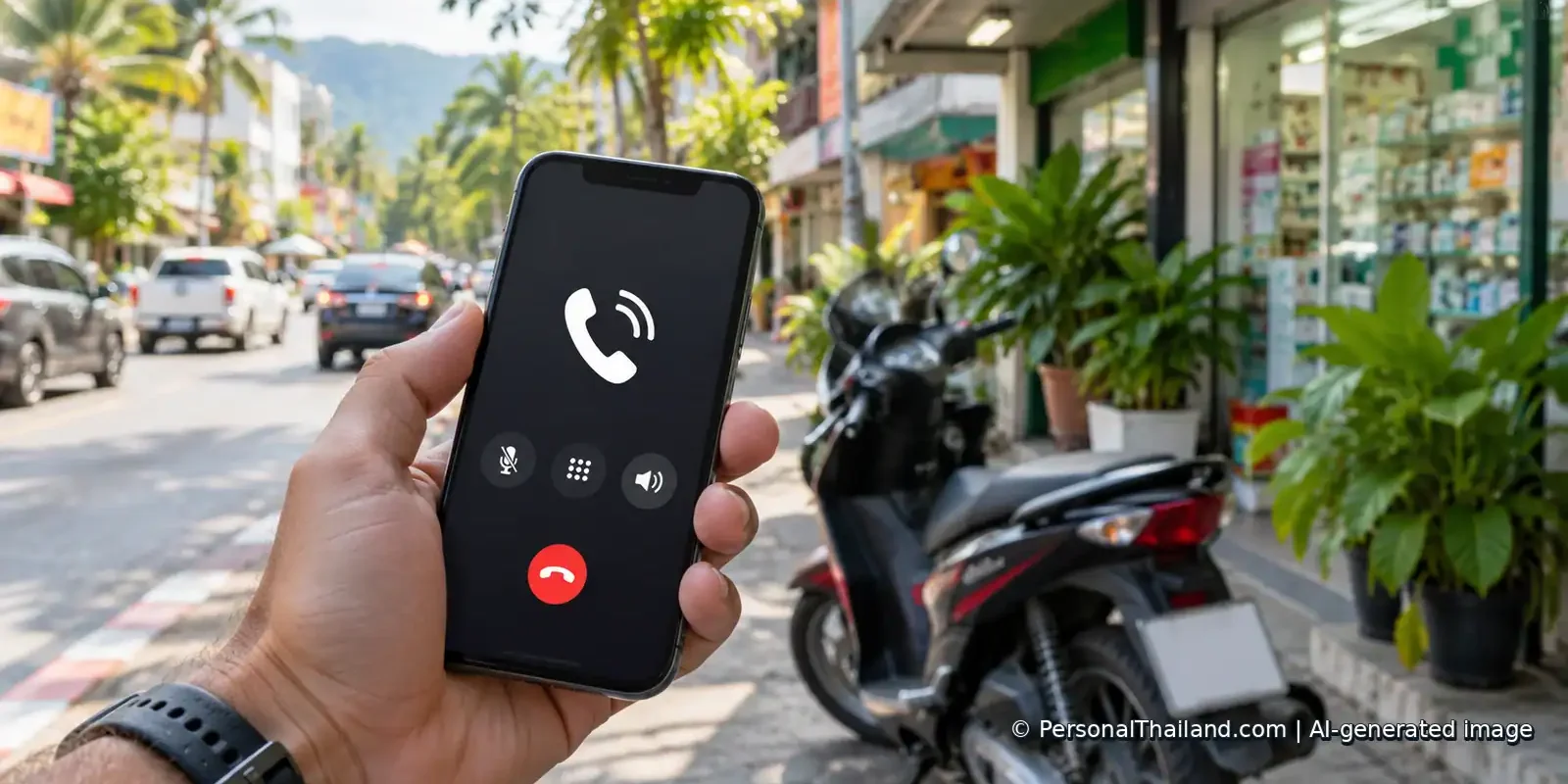
Next, explain what has happened in plain language. Say how many people appear to be injured, whether the danger is ongoing and whether someone needs urgent treatment. If you do not know an answer, say that you do not know rather than guessing. The 191 emergency centre advises callers to give their location, describe the incident and provide a callback number.
Language barriers and unreliable connections
Tourists may not be fluent in Thai, and not every call handler will speak the same languages. Short sentences, the exact location and a useful local landmark are often more helpful than a long story. If another person at the scene can help with translation without delaying urgent care, ask for assistance. Avoid transferring a phone between several people who each provide contradictory descriptions.
A mobile phone can lose signal or battery at the worst moment. Before travelling to isolated places, keep your phone charged, share your itinerary with someone you trust and note the name of your accommodation in Thai script where practical. Do not assume that a social-media message will reach professional responders quickly enough.
Why false and prank calls are serious
A hoax can tie up a person who should be helping someone with a genuine crisis. It may send responders to the wrong place and make it harder to determine which reports are real. Thailand’s police emergency information explicitly warns that false or disruptive emergency calls can be illegal and can cost lives.
The old 2008 article stated that a precise 5,000-baht penalty would apply under a new rule. Treat that figure as an unverified historical claim, not a current statement of the law. Exact offences and penalties depend on the applicable legislation and circumstances, and they should be checked against authoritative legal sources before being quoted.
Accidental dialling is different from a deliberately false report
People make mistakes, especially when frightened. If you dial a number accidentally, explain promptly that there is no emergency and follow the operator’s instructions. Do not invent an incident to justify the call or repeatedly ring back without a real reason. Equally, do not be afraid to request help when you genuinely believe someone is in danger but cannot yet confirm every detail.
Prepare a small emergency information card
Save your hotel’s address, room or building number, one local contact, important medical information you choose to share, and the emergency numbers in your phone. A paper copy can help when a battery dies or somebody else needs to contact responders on your behalf. If you travel with children, tell them how to identify a real emergency and how to explain where they are, without turning it into a frightening game.
It is also useful to tell a companion where essential medication or allergy information is stored, if you are comfortable doing so. That detail is not a substitute for professional care; it can simply make communication clearer if an emergency occurs.
After the immediate danger has passed
Follow up with the relevant hospital, police office or insurance provider as appropriate. Keep an incident reference number if one is given, record basic facts while you remember them and use official complaint or reporting channels for non-urgent matters. The best use of an emergency line is neither to test the system nor to wait until a situation becomes catastrophic. Call when real help is needed, communicate clearly and leave the line available for others.