
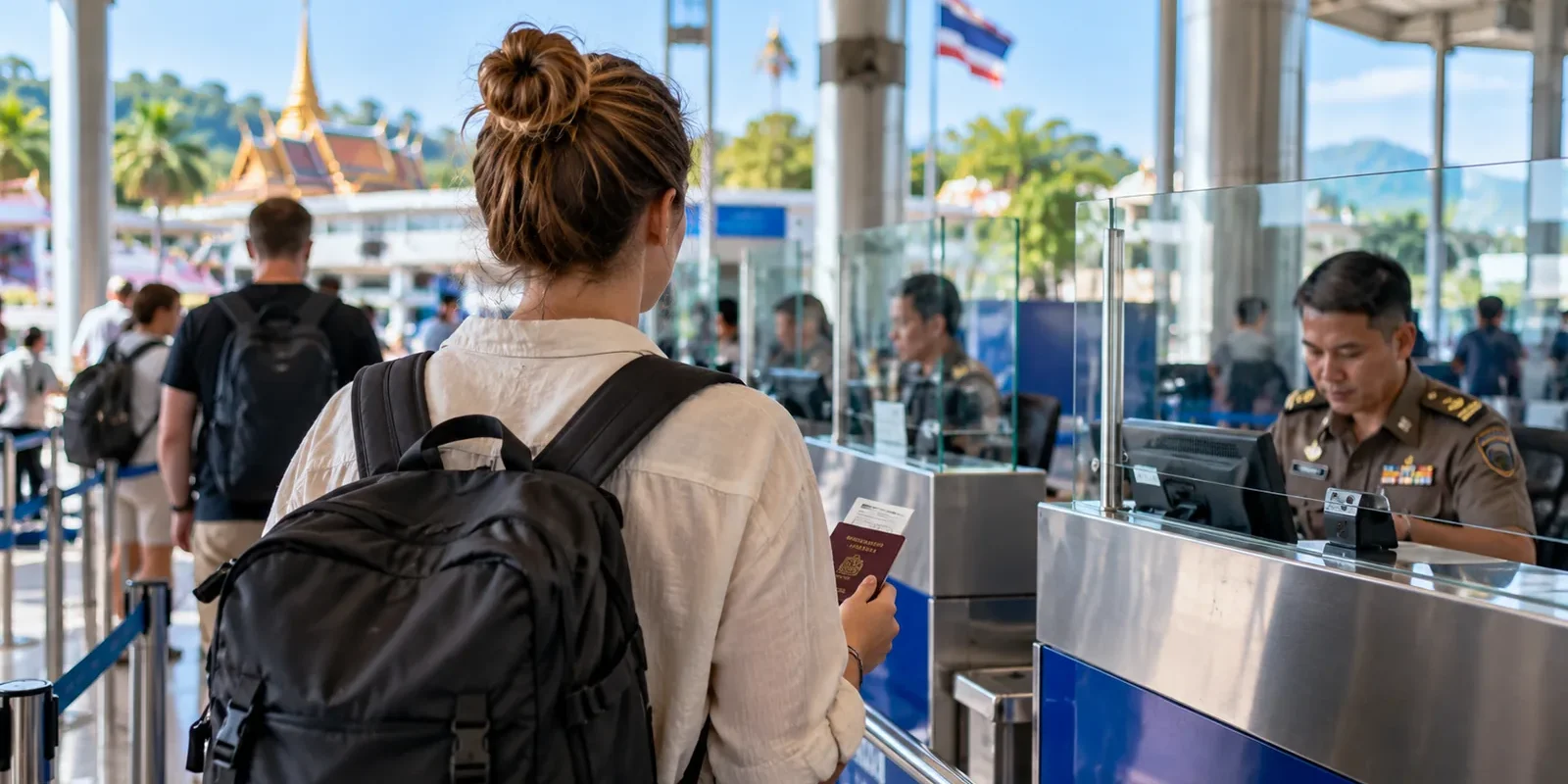
Updated 16 October 2026. Immigration rules can change: verify your passport-specific eligibility with Thailand’s Ministry of Foreign Affairs and Thai Immigration before travel.
Years ago, many visitors talked about a “visa run” as a simple way to reset their permitted stay: leave Thailand briefly, then return and receive a fresh entry stamp. That assumption can be expensive in 2026. A visa exemption is permission to enter without obtaining a visa in advance; it is not a promise of unlimited repeat admissions.
Thailand made a significant change on 15 September 2026. The Ministry of Foreign Affairs announced the cancellation of the broad 60-day tourism visa-exemption scheme, alongside a revised 30-day exemption for eligible countries and a narrower 15-day arrangement for certain others. The applicable route depends on the traveler’s nationality and the entry rules in force on the arrival date.
What changed in September 2026?
In its 3 September briefing, the Foreign Ministry confirmed that the updated measures had been published in the Royal Gazette on 31 August and would take effect on 15 September. The revised framework includes a 30-day tourism visa exemption for 60 eligible countries or territories, a separate 15-day exemption for two, and changes to visa-on-arrival eligibility. This is a summary of the national policy, not a personalized determination of eligibility.
People who entered Thailand before the effective date under the previous arrangements could remain until the date already granted in their entry stamp, according to the ministry. Do not shorten or lengthen that stamp in your own calculations because the published general rules changed.
What exactly is a visa run?
The phrase usually describes traveling out of Thailand and seeking re-entry soon afterward, rather than applying for an extension or an appropriate visa. A genuine holiday to a neighboring country is not automatically prohibited. However, an officer may examine a pattern of frequent short exits and returns, especially where it appears the traveler is living or working in Thailand while using tourist entry privileges.
There is an important distinction between being eligible to request visa-exempt entry and actually being admitted at the border. Officers can ask questions about the purpose of travel, planned accommodation, finances and onward travel. Border practices can also differ by crossing. Avoid relying on a travel forum’s anecdote about a guaranteed entry or a supposed universal number of permissible border runs.
Can you leave and immediately return?
Sometimes a traveler will be admitted after a short trip, but there is no sensible way to promise that outcome to every reader. Before making a border trip, check the official entry conditions for your passport, any applicable bilateral agreement and the documents the immigration authorities may require. If you are already close to the limit of your permitted stay, seek advice before your stamp expires.
Be particularly cautious with third parties promising a “guaranteed stamp.” Never accept altered documents, false accommodation information or assurances that an agent can override an officer’s decision. Those arrangements can create more serious problems than a refused entry.
Better options for longer stays
- Tourism beyond a short visit: Check whether an appropriate tourist visa is available for your passport through an official Thai mission or the Thai e-Visa portal.
- Study: Use a genuine, qualifying educational program and the proper visa category; do not treat school enrollment as a paper-only immigration shortcut.
- Work: Obtain the relevant immigration status and employment authorization before working; visa exemption does not itself grant work permission.
- Retirement or family residence: Investigate the rules and evidence for the specific route instead of trying to live indefinitely on repeated tourist entries.
- Already in Thailand: Ask a Thai immigration office whether an extension is legally available in your situation. Extensions are not automatic.
Before traveling to a land border: a checklist
- Read the entry policy published by the Thai government for your passport and purpose of visit.
- Check the destination country’s own visa and entry requirements; leaving Thailand also means entering another jurisdiction.
- Keep copies of relevant reservations, travel plans and evidence supporting the purpose of the trip.
- Review the expiration date of your present permission to stay, not merely the validity date printed on an older visa.
- Allow for transport delays, public holidays and the possibility that your planned crossing does not offer the service you expect.
- Have a contingency plan in case re-entry is not approved.
Frequently asked questions
Did Thailand abolish all visa-free travel?
No. The 60-day scheme was replaced by revised arrangements, including 30-day exemption for eligible nationalities. Some travelers may qualify under different bilateral or visa categories. Check nationality-specific guidance rather than assuming the same rule applies to everyone.
Does a re-entry permit solve visa-run problems?
No. A re-entry permit is a different mechanism designed to preserve an existing permitted stay when someone leaves and returns. Read our re-entry permit guide for that distinction.
What about overstaying?
Do not rely on a planned future border trip to excuse a current overstay. If you may have overstayed, contact immigration or qualified legal counsel promptly to understand your options and possible consequences.
Official sources and further reading
- Thai Ministry of Foreign Affairs: 3 September 2026 briefing
- Thailand Government PRD: revision of visa-exemption rules
- Official Thai e-Visa portal
Bottom line: A border trip is not a substitute for planning the right immigration status. Use your actual entry stamp, your passport’s eligibility and current official advice—not a 2009 visa-run story—to decide what to do next.






Sorry for those near the border, but farangs living on a shoestring have got no right to complain… they are guests in Thailand, and Thailand wants farangs with money, not the backpacker bums of days gone by!
30 day stamps are still good for those arriving at airports, plenty enough for ‘real tourists on a proper holiday, usually…