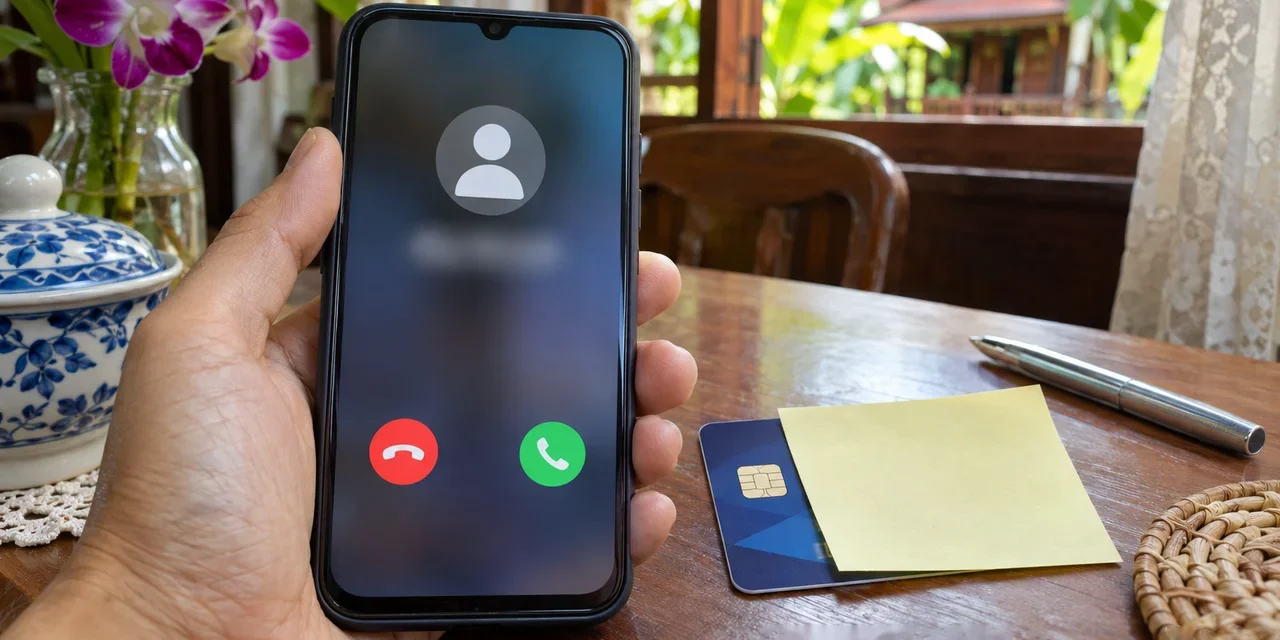
A phone call claiming to be from the Revenue Department can sound official right up to the moment someone tells you to transfer money. Government impersonation scam Thailand cases can begin with a tax refund, a supposed investigation or a parcel problem. The useful response is the same: stop the call and check through a number you find yourself.
The older version of this article described callers pretending to offer tax refunds and directing people to an ATM. The story is old, but a refund should never require you to move your savings into someone else’s account. I have removed the unverified details of the old arrest rather than repeat them as established fact.
How a government impersonation scam Thailand call works
The caller may claim to be a tax officer, police officer or delivery employee. An automated message can make the first contact sound routine. The next person may know your name or quote information about a delivery, but that alone does not prove who they are.
Some callers promise money; others invent a problem with a parcel, a bank account or an alleged criminal case. Both approaches aim to keep you following instructions before you have time to check. A caller might ask you to open a link, install software, share a verification code or use a cash machine.
A conversation can switch between polite and threatening very quickly. You are allowed to end a call and verify it through the agency’s own published contact details. Do not use the callback number in the suspicious message.
The ATM refund trick
Read the transaction on the machine before you confirm it. A screen asking you to select an account and send funds is a transfer, even if someone on the phone calls it a refund. If the language on the screen is unfamiliar, cancel and ask a bank employee for help. Do not hand the phone to a stranger to finish the process for you.
If you are waiting for a genuine refund, contact the Revenue Department independently and ask about the normal process. Keep your bank card and one-time passwords private. No official-sounding uniform or confident voice changes what a transfer does.
What about parcels and police calls?
A message saying that a package contains something illegal may be designed to frighten you into paying or providing personal information. Check the shipment using the delivery company’s own app or website, entered independently. A link supplied by the caller can lead to a convincing copy.
In a supposed police investigation, ask for the officer’s name, station and case reference. Then end the call and contact the station via an independently obtained number. If you need a lawyer or interpreter, ask for one. Do not send money to an account described as a temporary safe account simply because the caller demands secrecy.
If you already paid or gave access
Contact your bank immediately using the number on your card or its official app. Explain when and how the payment was made, ask the bank what it can do to secure your account, and follow its instructions. If remote-access software was installed, tell the bank and ask for help securing the device from a different, trusted device.
Preserve transaction references, messages, phone numbers and screenshots. Do not delete the conversation in embarrassment; it may help the bank or police understand what happened. A person who fell for a convincing impersonation deserves help, not a lecture.
Thailand’s Anti Online Scam Operation Center lists hotline 1441. Cyber police also identify the online reporting site thaipoliceonline.go.th. Type the address yourself or reach it through an official government site, because fake reporting services also exist. For an emergency, call police on 191; tourist police can be reached on 1155.
Make a family plan before the call
Agree with relatives that anyone can end a pressured call and ring back through an official number. Tell an older family member or a visitor that asking for help is sensible, even if the caller has warned them not to tell anyone. Keep your bank’s number somewhere other than inside the message you are trying to verify.
For more practical precautions, see safer internet banking and our article about organising finances when moving. Neither replaces contacting your bank promptly after an unauthorised transaction.
Official-looking messages and familiar details
A copied logo, a document formatted like an official notice or a caller who already knows your address can make a message feel convincing. Those details are reasons to verify carefully, not proof of authority. Look up the organisation yourself, close the suspicious message and start a new conversation through a published channel.
If someone presses you to move the discussion to a private chat, rushes you through a form or asks you to hide the conversation from your bank, treat that pressure as a reason to stop. Ask the bank directly what information it requires. Never read a one-time verification code to a caller simply because they say it will cancel a transaction.
Keep a written note of what you have done after a suspected fraud: the time you contacted your bank, any reference number and the steps staff asked you to take. This helps you follow up without relying on memory during a stressful day.
FAQ
Should I use an ATM to receive a tax refund?
Do not send or transfer money because a caller describes it as a refund. Check the request with the department using independently sourced contact information.
What if I have already sent money?
Call your bank immediately, retain the transaction details and ask about reporting to the cybercrime hotline and police.
Can I trust the number displayed on my phone?
Do not use a displayed number as your only proof of identity. End the call and find the organisation’s published number independently.
Where can I report a scam call in Thailand?
Call the Anti Online Scam Operation Center on 1441 or report online at thaipoliceonline.go.th. For an emergency, call police on 191.
More from Personal Thailand
If you enjoy practical reporting and personal perspectives on Thailand, you can support my work and explore member-only content through either platform:
- Subscribe to Personal Thailand on X — creator membership with access to applicable subscriber-only posts and benefits.
- Join or support Personal Thailand on Buy Me a Coffee — browse available memberships and support options.
These are separate services with different charges and membership benefits. Paid access may be required; subscribing on one does not automatically grant access on the other. The main information in this article is free to read above.