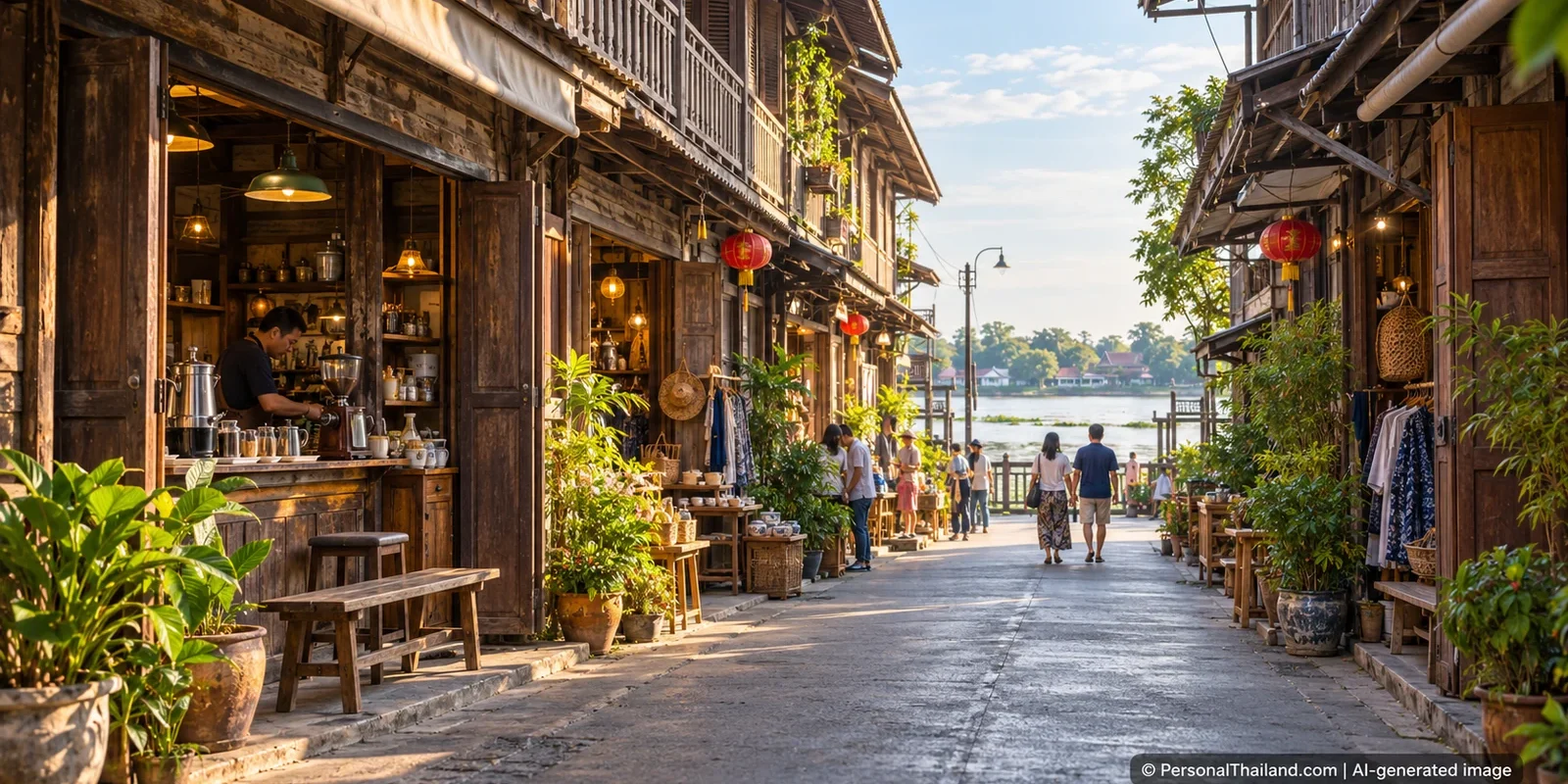
Suphan Buri offers a useful change of pace from Bangkok: heritage towns, riverside markets, Buddhist landmarks and day-trip landscapes. The province is often passed over in favour of farther destinations, yet it can be rewarding for travellers interested in the places where Thai people shop, worship and spend weekends. A comfortable visit combines one historical area with a leisurely market stop.
Sam Chuk Old Market
Sam Chuk Old Market is one of Suphan Buri's best-known heritage attractions. The Tourism Authority of Thailand describes its traditional wooden shophouses and long-established Chinese-Thai community. Visiting gives you a chance to look at old commercial architecture, browse small shops and try local snacks in a setting that still feels connected to everyday life.
Explore at a relaxed pace. Small shops may sell sweets, household goods and souvenirs, while older buildings and displays help explain the area's commercial past. Take care when moving through narrow passages, and ask permission before taking portraits of traders. An old market is still a place of business, not a staged film set.
Wat Pa Lelai and provincial history
Suphan Buri has an important Buddhist and historical landscape. Wat Pa Lelai is widely associated with the province and can make a meaningful part of a temple-focused day. Other temples and museums offer different perspectives on regional history, but they should be selected with realistic travel times in mind.
Temple etiquette matters even at places that welcome many visitors. Cover shoulders and knees where required, remove shoes at designated entrances and avoid disrupting people in prayer. Heritage buildings may have rules about flash photography or access to fragile areas; follow the signs rather than copying behaviour seen in social media videos.
The Tha Chin River and town life
The Tha Chin River is an important geographical thread through the province. Riverside neighbourhoods, local markets and roads reveal how settlements developed in relation to water and trade. Stop for a meal and look for regional specialties rather than rushing between monuments without seeing the town itself.
Markets can be busier on weekends and holidays, but the presence of a favourite stall should not be assumed from an old travel article. If there is a particular food or craft you want to find, ask locally or check the vendor's current opening arrangements.
Bueng Chawak and nature-focused stops
The Tourism Authority of Thailand also lists Bueng Chawak among the province's attractions. It offers a different experience from old-market browsing, so families may want to allocate a separate half-day rather than treating it as a quick detour. Facilities and admission arrangements are subject to change; check current site information rather than quoting an old ticket price.
For travellers who prefer green landscapes, the wider province includes forest and countryside destinations. Not every natural attraction is accessible after heavy rain, and some roads or trails may be unsuitable for an unprepared day-tripper. Choose a site that matches your fitness and transport rather than following a broad 'must see' list without checking conditions.
What to eat and buy
Suphan Buri is associated with regional sweets, including the locally known Sali Suphan cake, as well as market dishes and produce. Ask vendors which items are fresh and how best to store them if you are travelling in warm weather. If you have an allergy, clarify ingredients before tasting sweets or sauces.
Handmade items can also make meaningful souvenirs. An informed purchase starts with a conversation about materials, origin and care rather than buying solely because an object is labelled traditional.
A one- or two-day plan
For a day trip, concentrate on Sam Chuk, one temple and a meal by the river. If you have an overnight stay, add a museum or Bueng Chawak the following day. This creates a balanced route that avoids spending most of the daylight hours driving between unrelated attractions.
Suphan Buri can be reached by road from Bangkok, but traffic, local transport availability and exact attraction locations matter more than a headline distance. Confirm return transport before leaving town if you are not driving.
Suphan Buri is particularly enjoyable when you allow ordinary experiences to matter. A conversation in a wooden shophouse, a quiet temple visit and a good local lunch can be a richer memory than a crowded itinerary.
Travelling respectfully through old communities
The charm of a historic market depends on the people who continue to use it. Photograph building details without obstructing doorways, keep noise moderate in residential lanes and ask before using a close-up image of a shopkeeper. If a museum or display is closed, do not try to enter through an unstaffed door. A quiet visit is just as rewarding as a busy market day when the historic architecture can be appreciated without crowds.
Regional museums and temples offer useful historical context, but not every traditional story should be presented as a settled academic fact. Read the site's interpretation and distinguish documented events from community legends. This approach makes a travel guide more reliable while respecting the importance of stories to local identity.