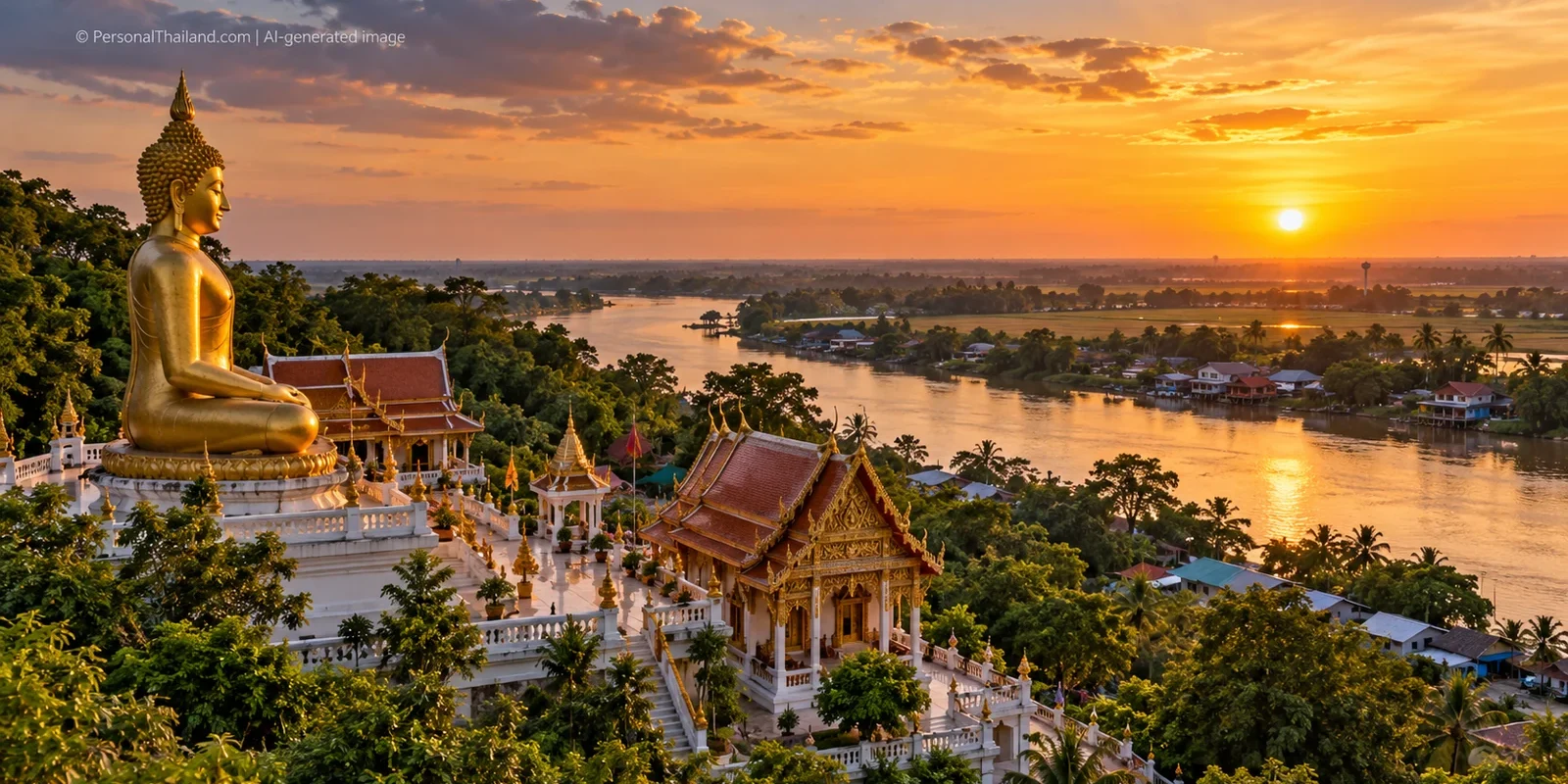
Sing Buri is a central Thai province with connections to river life, religious landmarks and important stories in the country’s history. It is not a place that needs to offer resort-style entertainment to reward a visit. Temples, local markets and the heritage of Bang Rachan provide enough material for a well-paced day or overnight stop.
Wat Phra Non Chak Si and local Buddhist heritage
Wat Phra Non Chak Si is one of the province’s most recognisable religious sites and is noted by the Tourism Authority of Thailand for its large reclining Buddha image. As at other working monasteries, visitors should dress respectfully, speak quietly and give worshippers priority. If the temple is busy with ceremonies, observing calmly may be more appropriate than taking photographs.
Nearby religious heritage includes Wat Phikun Thong and Wat Na Phrathat, both named in the official provincial guide. Do not assume that every shrine or historic building has unrestricted visitor access. On-site notices and community practice are more reliable than old travel descriptions.
Bang Rachan and the distinction between memory and legend
Bang Rachan is associated with the story of local resistance during the wars preceding the fall of Ayutthaya. The area’s monuments and commemorations are important to Thai historical memory. However, a good guide distinguishes the documented existence of memorial places from every dramatic detail of a popular retelling.
Visitors interested in history should read local museum displays and official interpretation rather than using the most colourful account as established fact. Memorial sites are places to learn and reflect, not merely backgrounds for playful photographs. Avoid blocking ceremonies or entering restricted areas.
Wat Phra Prang and archaeological remains
The Tourism Authority documents Wat Phra Prang in the Bang Rachan area, with a corn-shaped pagoda and remains connected with Ayutthaya-period architecture and pottery kilns. It can provide a useful contrast to a modern temple complex. Stay off fragile masonry and respect any conservation barriers.
Old attraction descriptions sometimes offer specific dates for structures that underwent rebuilding or later alterations. Where the evidence is unclear, it is better to describe the style and historical period cautiously than to invent a definite founding year.
River landscapes and Mae La fish
Sing Buri lies within the Chao Phraya river system and is associated with local fish dishes, particularly Mae La catfish. Food traditions are a reason to try a provincial restaurant, but ingredients and preparations vary. Ask what is fresh, check prices and tell staff about allergies. A famous regional speciality does not mean the same dish is always on every menu.
Riverside settings can also be appealing for a walk or meal. Keep a safe distance from steep or unprotected edges and avoid treating working docks as public sightseeing spaces. The river is part of daily community life, not a guaranteed venue for water sports.
Plan a calm day or night
Start with one prominent temple, continue to a Bang Rachan heritage stop and finish with a market or local meal. If you want to see more outlying monuments, an overnight stay removes the pressure of a quick return drive. Confirm museum hours and transport arrangements before departure, particularly on religious holidays.
Some older articles describe fixed annual race dates and administrative statistics. Those are not reliable travel instructions for the current year. Check a contemporary official event notice if a boat race or local festival is the focus of your trip.
Sing Buri works best for travellers who value context: religion, historical memory and local food are the attractions. Give each place time, and the province becomes more than a dot on the highway.