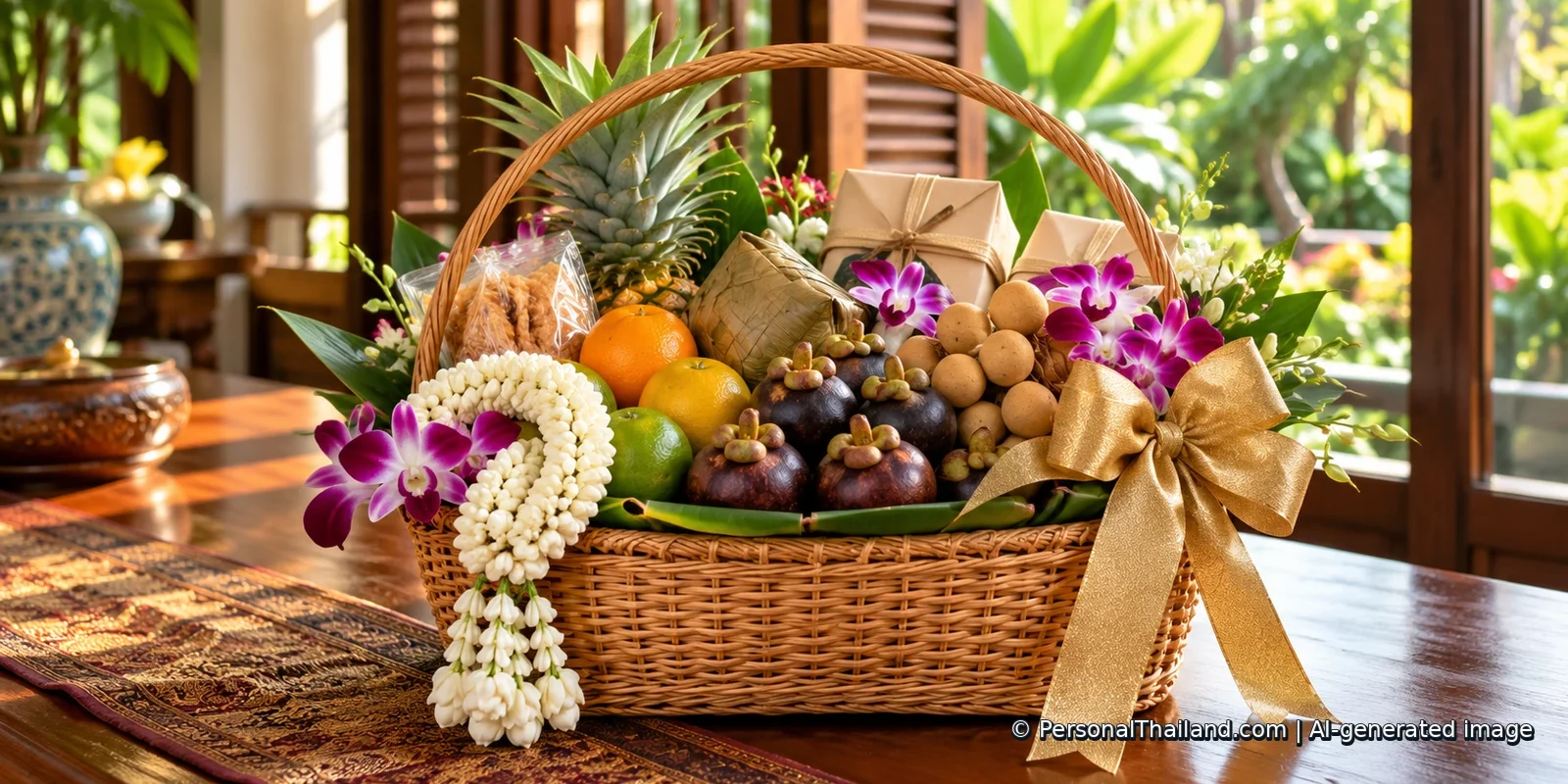
Around the end of the calendar year, gift baskets and hampers appear in supermarkets and shops across Thailand. The original PersonalThailand article from 2007 noticed the displays alongside imported fruit, nuts and Christmas decorations. It also made sweeping accusations about officials and money changing hands. The more useful distinction is between a thoughtful social gift and a gift that creates a conflict of interest.
Why people exchange gift baskets at New Year
Giving something to family members, friends, customers or colleagues can be an expression of appreciation at the turn of the year. Thai gift baskets, often described as krachao khong khwan, may contain packaged foods, drinks, fruit or other useful items. The choice of contents varies enormously with the people involved and the recipient’s tastes.
A Bangkok district government’s public guidance describes traditional New Year gifts, baskets and vouchers while warning that gifts to public officers can raise legal and ethical concerns. The tradition itself is not evidence of wrongdoing.
Choosing a gift that someone will actually use
Before selecting a ready-made basket, consider the recipient rather than the size of the packaging. A large hamper full of items someone does not eat is rarely as thoughtful as a small selection that suits their preferences.
- Check ingredients: look for allergens, dietary restrictions and foods the recipient can enjoy.
- Inspect packaging: ensure seals are intact and each product has a clear shelf-life indication.
- Consider storage: items that spoil in the heat are not ideal if they will be transported for hours.
- Choose manageable size: a basket that is easy to carry may be more appreciated than a heavy display.
- Think locally: regional products or crafts can make a distinctive alternative to generic imported packaging.
Food labels and offers should be checked at the time of purchase. No basket should be described as a standard official selection or mandatory cultural requirement.
A social gift is not the same as a work-related favour
If the recipient has a public position or influence over a decision, extra care is needed. Thailand’s National Anti-Corruption Commission has promoted policies restricting gifts connected with official duties. Its English guidance explains why officials should not accept benefits in exchange for performing their work, and its 2026 No Gift Policy announcement confirms that the principle remains active.
Rules and exceptions are not the same for every situation. In particular, an older reference to a possible monetary threshold must never be understood as permission to influence a public official. The safest practice for a public-duty relationship is to follow the organisation’s latest written no-gift rules, not an informal promise that an inexpensive gift is always acceptable.
What about gifts at private companies?
Many businesses also have policies limiting the receipt of gifts, entertainment and hospitality. A client may be allowed to send a seasonal greeting card but not an expensive hamper. Ask about the employer’s policy before delivering a gift to an office, particularly during procurement or contract negotiations.
It is perfectly reasonable to decline a gift or ask that its value be donated to a suitable cause, provided the donation is consistent with the organisation’s policies. A polite refusal need not be a rejection of the relationship.
How to present a basket graciously
A brief greeting and a personal message are often more meaningful than a dramatic presentation. Avoid pressuring someone to accept a gift. If an item needs refrigeration, tell the recipient. If a gift is being taken on an international flight, check customs and food-entry restrictions in the destination country.
When sending to a person you do not know well, steer away from products that create medical, dietary or religious difficulties. An ordinary packet of tea, local food or a handmade item may be a safer choice than a luxury collection.
New Year in Thailand is not only a commercial season
The international New Year on 1 January is one celebration; Thailand also marks its traditional New Year with Songkran in April. They are separate occasions with different customs. New Year baskets around December and January are a social and business practice, not a definition of Songkran or the whole of Thai festive culture.
The essential lesson is simple: thoughtful giving is about the recipient, transparency and respect. You do not need a costly hamper to say thank you, and no gift should be used to purchase special treatment.