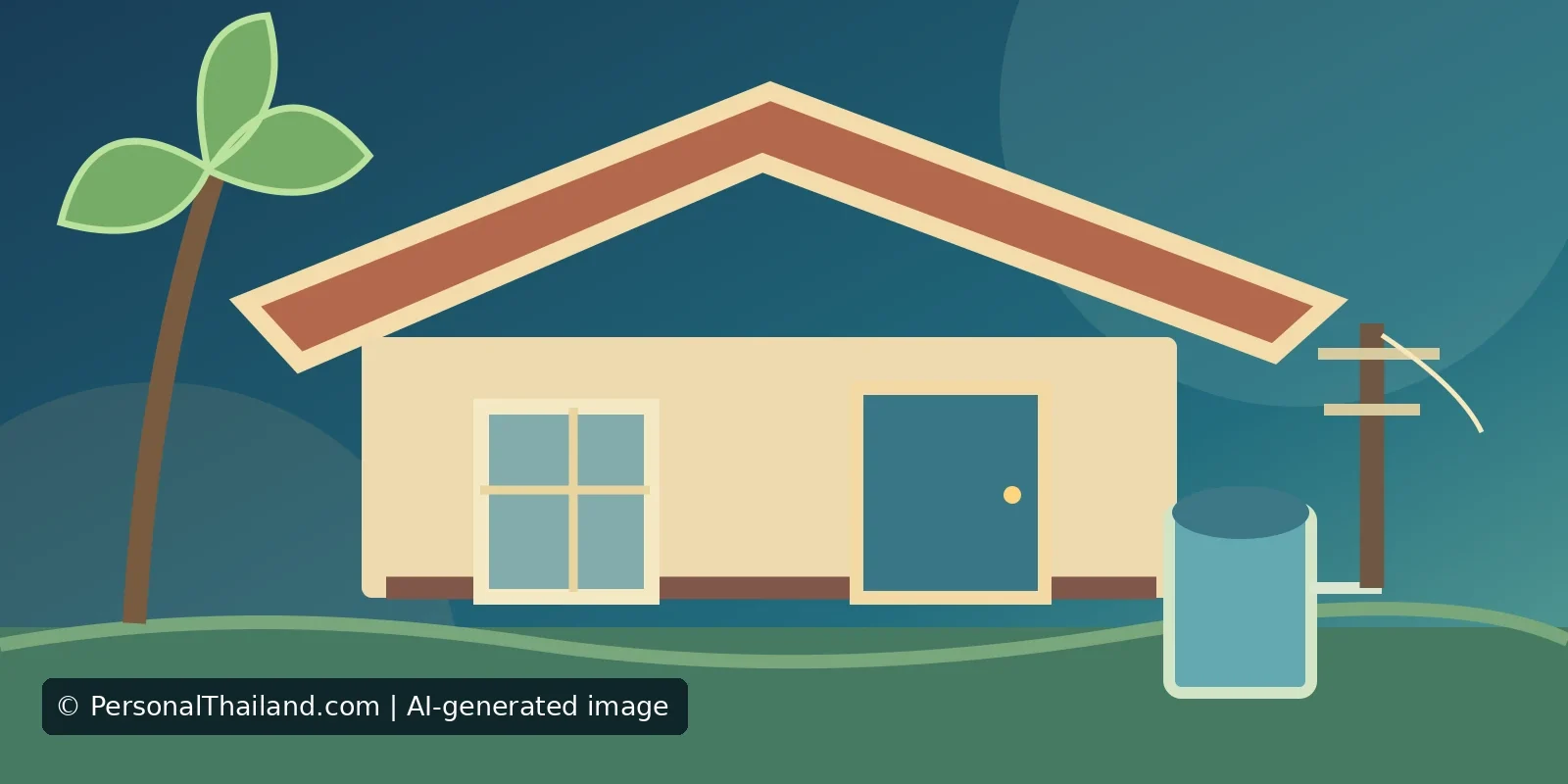
Living in a Thai village can offer a rhythm that feels very different from central Bangkok, Pattaya or a large beach resort. There may be more space, strong community relationships, local markets and quiet evenings. There can also be practical questions about water, electricity, repairs and transport that are easier to solve before moving into a house than during your first urgent problem.
Not every village is remote, and rural Thailand is not one uniform experience. A home on a main road with reliable services may need little preparation; another property nearby may use a private well, an on-site water tank or a complicated access road. The useful approach is to inspect the specific address and build a small local support network.
Check your house and the surrounding area
Visit the property at more than one time of day if you can. Observe road access in rain, drainage around entrances, mobile phone reception and the condition of the roof, windows and electrical installation. Ask residents or a reliable neighbour whether the lane floods seasonally and how quickly municipal or private repairs can normally be arranged. Treat these as local observations, not a guarantee about future conditions.
Look at your planned journey to groceries, medical care, banking and the nearest major road. A house that seems close to town on a map may involve an inconvenient route without your own transport. Ask whether deliveries can locate the address and whether couriers need directions in Thai.
When you rent, record existing defects and clarify maintenance responsibilities in writing. When you buy, consider a qualified inspection and independent advice before committing money.
Understand your electricity supply
Find the actual electricity provider serving the property and learn where the meter, main switch and consumer unit are located. Do not work on live wiring or improvise a generator connection. A qualified electrician should assess exposed cables, poor earthing, water-damaged outlets or overloaded circuits.
In many provincial service areas, electricity is supplied by the Provincial Electricity Authority (PEA). Its official contact page lists 1129 for its contact centre. Save the relevant account or meter details so an outage can be reported efficiently, but confirm that PEA—not another provider—serves your exact location.
If you depend on the internet for work, consider a small properly sized backup supply for your modem and computer. It can help during a short interruption, but no ordinary UPS provides unlimited runtime. A mobile-data connection on a different network can offer a second option where signal coverage permits.
Water supply is not the same everywhere
Ask whether the house receives piped water from the Provincial Waterworks Authority, a municipality, a village network, a private supplier or a well. Examine the tank, pump, pressure system and accessible pipework. If water pressure is inconsistent, ask who is responsible for the public line and who maintains equipment inside the property.
The PWA website provides service guidance, and its contact centre uses 1662. These contacts only help if that authority serves your home. Other systems need their own local contacts, billing methods and repair arrangements.
If there is an on-site tank, ask when it was last cleaned and how the cover and inlet are protected. Arrange appropriate testing and treatment advice if you rely on an independent water source. Avoid assuming that the quality at a treatment plant automatically describes the quality coming from every household tap.
Drainage and wastewater need attention too
Identify any septic tank, wastewater treatment tank, drainage channel or shared system. Ask a knowledgeable installer where access points are and who arranges maintenance. Poor drainage or a hidden blocked pipe can be far more disruptive than a cosmetic defect.
During a heavy storm, do not enter floodwater near unknown electrical installations or submerged drains. Have a plan to move valuables and documents above likely water levels where local flood history warrants it. Report public infrastructure issues through the actual responsible office rather than calling an unrelated utility.
Find repair people before an emergency
Keep a small vetted contact list: electrician, plumber or pump technician, air-conditioner technician if needed, locksmith, local property manager and a trusted transport provider. Recommendations from neighbours can be helpful, but obtain a written scope, cost basis and timing for anything substantial.
Avoid paying a large deposit for work that has not been clearly specified. Photograph faults, compare reasonable quotes for complex repairs and keep receipts. It is wiser to judge a contractor by credentials, references and work quality than to rely on stereotypes about nationality or the kind of neighbourhood where someone lives.
If you are away for weeks at a time, agree who may enter the property, when it should be checked and how maintenance decisions are approved. Make sure keys and alarm details are handled securely.
Medical access and an emergency plan
Locate the nearest staffed clinic, hospital and pharmacy and ask which facility handles emergencies during evenings and weekends. Save the address in Thai and English. The Tourism Authority of Thailand’s useful calls directory lists 1669 for medical emergencies, 191 for police and 199 for fire. Your local administrative office may have additional instructions worth noting.
If you take regular medication, plan refills before you run low and verify how to obtain your prescriptions locally. Transport can take longer from a rural village than from a city centre, so keep fuel, vehicle condition and a second route to assistance in mind.
Food, connectivity and daily routines
Visit the closest fresh market, general store and town centre to learn the normal pattern of shopping. Talk to local businesses about delivery addresses and accepted payment methods. Check broadband or mobile coverage inside the actual house, not just on a provider’s coverage map.
Learning essential Thai phrases helps you describe a broken pump, give directions and greet neighbours. Building relationships respectfully matters, but it does not replace written agreements for paid work or official advice on legal and property issues.
Your moving-in checklist
Before you move, confirm who supplies water and power, save outage contacts, test mobile reception, inspect locks and wiring, understand drainage, locate healthcare and collect the details of reputable repair workers. Keep important documents securely backed up and identify a local contact who can assist when you are away.
Good rural living starts with understanding one particular house and community—not assuming every Thai village has the same services or problems.