Phichit is a lower-northern Thai province whose appeal lies in waterways, temples, local markets and a famous crocodile story. Many old descriptions emphasise administrative facts or dramatic legends, but a visitor will get more from a leisurely exploration of its lakeside and riverside neighbourhoods. This guide focuses on verifiable places and realistic planning rather than treating folklore as biological or historical evidence.
Start beside Bueng Si Fai
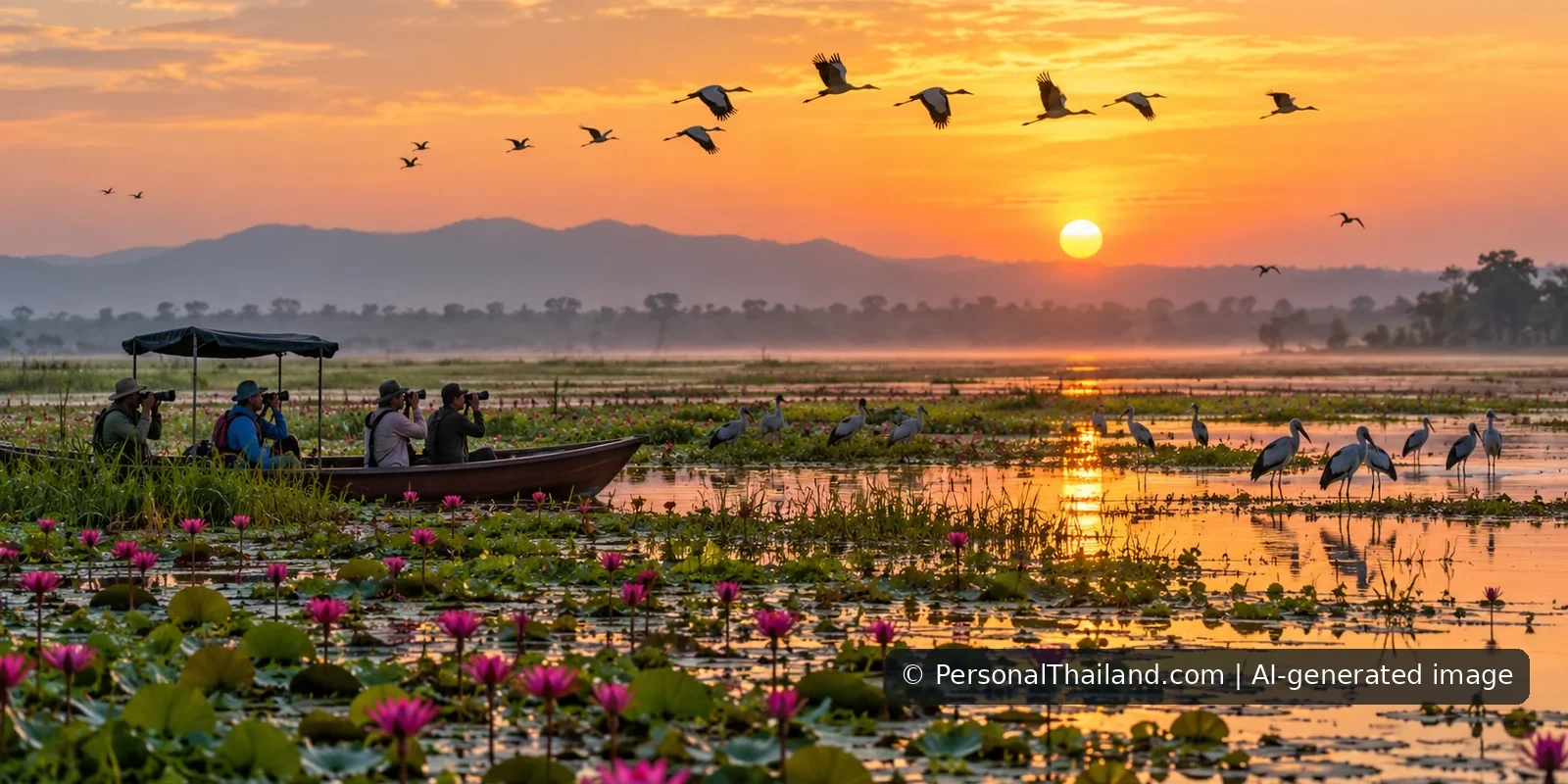
Bueng Si Fai is one of Phichit’s recognised landmarks, a substantial freshwater wetland and recreation area. The Tourism Authority of Thailand lists it among the province’s highlights. It offers a setting for an easy walk, photography and quieter moments away from traffic. Conditions vary by season, and the lake’s size and the availability of visitor facilities should not be confused with guaranteed swimming access.
A freshwater lake supports plants, fish and other wildlife. Watch from designated areas and follow signs near edges or enclosed animal facilities. In particular, do not treat the province’s crocodile folklore as evidence that an unsupervised encounter with wildlife would be safe or expected.
Crocodile folklore and the story of Krai Thong
Phichit is connected with the Thai folk tale of Krai Thong and the crocodile Chalawan. The province’s official visitor introduction uses this legend as part of Phichit’s identity. It is best understood as cultural storytelling rather than a verified account of a specific historical crocodile. The story adds interest to a trip, especially if you notice related sculptures or symbols around town.
Travellers can appreciate folklore without promoting dangerous wildlife interactions. Do not approach crocodiles or other animals for photographs, and never feed wildlife. If an animal-focused attraction is part of your plans, check its current welfare practices and visitor standards before going.
Wat Tha Luang and the town’s religious life
Wat Tha Luang is an important temple associated with the Buddha image Luang Pho Phet. A temple visit offers a connection to the community’s religious practices. Dress modestly, avoid interrupting worship and observe any posted rules on photography. Some buildings may be more appropriate for quiet reflection than casual sightseeing.
The Tourism Authority also lists the Phichit Old City Park and several other temples. If archaeological remains are visible, stay on paths and avoid climbing fragile structures. Interpretation signs and official heritage information are more reliable than a travel blog’s precise but unsupported construction date.
The Wang Krot old-market neighbourhood
The old Wang Krot area is associated with traditional commercial buildings and the Nan River. Markets can be pleasant places to try regional snacks, browse small shops and appreciate the continuity of local life. However, stall activity may vary across the week. Confirm any advertised walking-street event instead of assuming it takes place every day.
When shopping, ask where handicrafts were made and compare quality before buying. Food allergies require direct questions about ingredients, including fish sauce, shellfish and peanuts. A polite conversation with a vendor often makes a market visit more memorable than a rushed purchase.
Long boats and changing festival dates
Long-boat racing is another part of Phichit’s cultural identity, and the tourist authority mentions annual competitions. The correct festival dates, river restrictions and crowd arrangements are set for each year. Treat past calendars as examples of tradition, not current event announcements.
When races or crowds are present, stay behind safety barriers and avoid stepping onto private boats or working docks. If you are visiting mainly for the festival, verify a current official programme first.
How to spend one or two days
Use a first day for Wat Tha Luang, the town and a leisurely visit to Bueng Si Fai. With additional time, explore Wang Krot or selected temples in outlying districts. The main sites may be separated by more travel time than an overview map suggests, so arrange transport and return connections in advance.
Phichit provides an engaging mix of nature, religion and narrative tradition. Keep the crocodile story in its proper folklore context, use current sources for events and enjoy a province that deserves attention beyond an old list of facts.