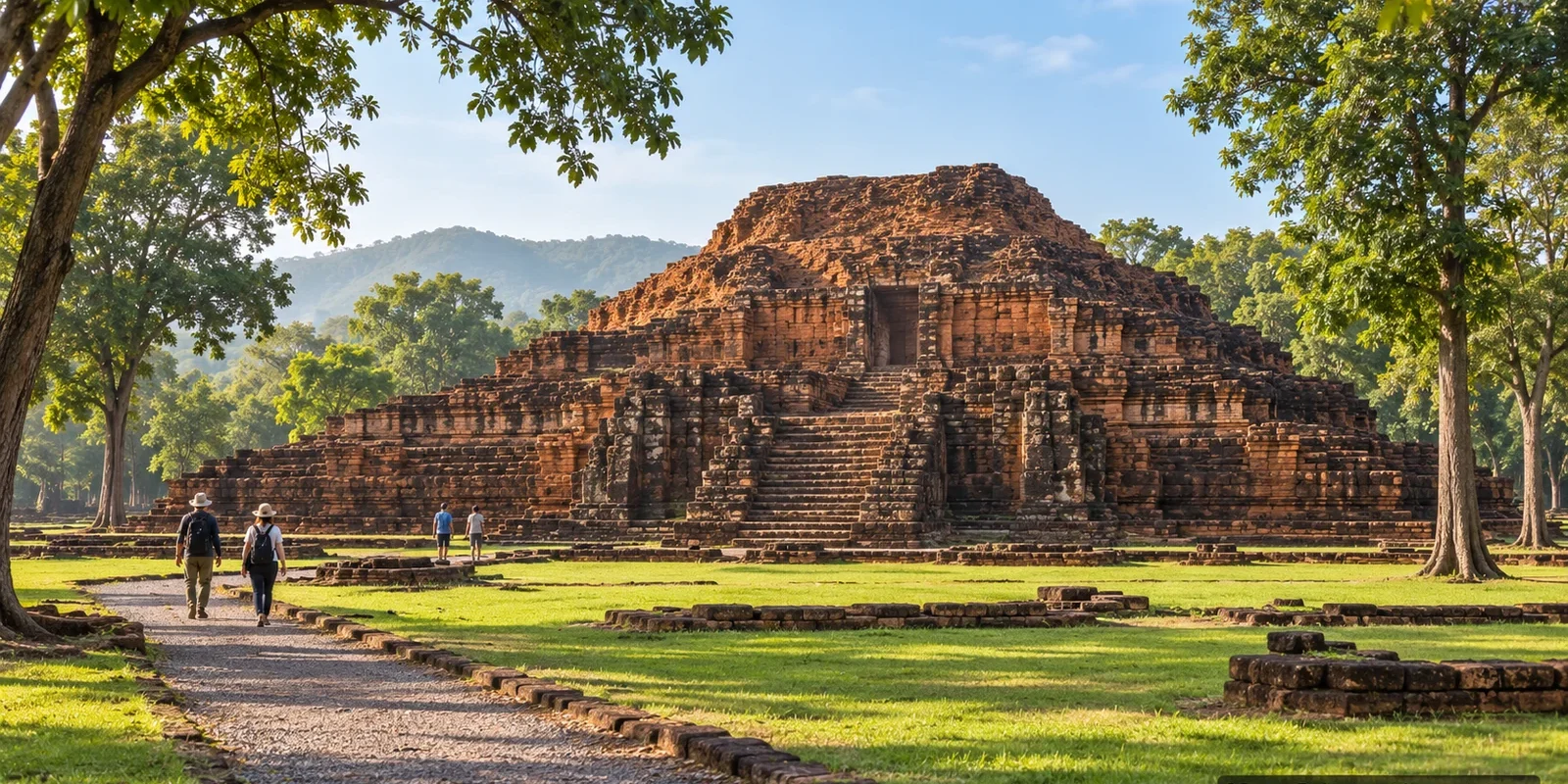
Phetchabun combines two very different journeys: ancient heritage in the lower part of the province and mountain landscapes farther north. Travellers who only have time for one should decide which they value more, because the distances between archaeological sites, viewpoints and national parks are substantial. With a realistic route, the province offers some of Thailand's most rewarding contrasts between history and scenery.
Si Thep: an officially recognised World Heritage landscape
The Ancient Town of Si Thep and its Associated Dvaravati Monuments was inscribed on the UNESCO World Heritage List in 2023. This is a documented heritage designation, not a general claim that all of Phetchabun is UNESCO-listed. The site is an important archaeological landscape whose monuments and interpretation deserve more than a hurried roadside stop.
Visitors can explore the historical park while respecting boundaries, protective barriers and any current restrictions. Archaeological material is fragile, and climbing on monuments or moving loose stones is inappropriate. Read the site displays and use the official heritage information to understand the different cultural periods represented.
Si Thep is not directly beside Phetchabun's northern mountain highlights. Anyone combining them needs to calculate driving time carefully. Avoid relying on old admission fees or opening times: the Fine Arts Department and park offices can provide the latest visitor arrangements.
Khao Kho and the mountain viewpoints
Khao Kho is one of the best-known areas for broad mountain scenery. The attraction is the landscape itself: ridges, valleys and changing light rather than a guaranteed sea of mist every morning. Fog depends on weather, so booking a hilltop room does not ensure the classic photograph on a chosen date.
Wat Phra That Pha Son Kaew is another distinctive place associated with the mountain region. The temple's visual character is well known, but remember that it remains a religious site. Visitors should dress modestly, respect worshippers and check photography restrictions before entering.
Phu Thap Boek and national parks
Phu Thap Boek is popular for high-elevation views and a cooler mountain atmosphere at certain times of year. Steep roads, sharp bends and rapidly changing weather deserve attention. Do not attempt unfamiliar mountain driving in poor visibility or after a long day on the road.
Other recognised nature destinations include Phu Hin Rong Kla and Nam Nao national parks, both of which extend into Phetchabun from neighbouring provinces. Park entrance rules, trail availability and seasonal closures are subject to change. A scenic viewpoint may be accessible when another trail is closed; confirm conditions from the relevant park rather than assuming that the entire site has identical rules.
Local food and town life
Mountain resorts are only one part of Phetchabun. Lower-lying communities, markets and small towns offer an opportunity to experience more ordinary provincial life. Stop for a local meal and ask what is fresh or seasonal. Food traditions vary within the region, so an unfamiliar dish is an invitation to ask questions rather than guess its ingredients.
The province also has agricultural landscapes, including highland cultivation in suitable areas. Enjoy the scenery but respect farmers' land and do not park on working access roads for photographs. Buying from local stalls may be a pleasant part of the journey when the products and prices are clearly displayed.
How many days do you need?
Two days can work if you choose either the heritage focus or the mountains. A more comfortable itinerary covering both is longer and should account for travel between areas. For heritage, stay near the southern route and plan a substantial Si Thep visit. For scenery, base yourself around Khao Kho and add selected highland viewpoints when the weather suits.
A private vehicle is convenient for dispersed places, but drivers should check forecasts, road conditions and safe parking. If you rely on public transport, make the onward connection to each attraction part of the plan before reserving accommodation.
Phetchabun is at its best when approached as two complementary stories. Explore UNESCO-listed Si Thep with historical care, enjoy the mountains with realistic expectations, and you will discover much more than a generic 'cool-weather' travel destination.
Photography and responsible mountain travel
Mountain photographs often make roads appear easier than they are. Some viewpoints require driving on winding or steep sections, and fog can reduce visibility rapidly. Choose a route that matches the vehicle and the driver's experience, and avoid stopping abruptly in the road to take pictures. At crowded viewpoints, use designated parking and keep clear of the edges even when a low cloud layer creates a dramatic backdrop.
A protected park is not simply an extension of a resort's garden. Stay on permitted routes, carry sufficient water and take rubbish away. Cultural sites deserve the same care: a photograph should never require stepping on delicate archaeological masonry or standing in the way of a religious ceremony. Planning responsibly is part of enjoying both sides of Phetchabun.