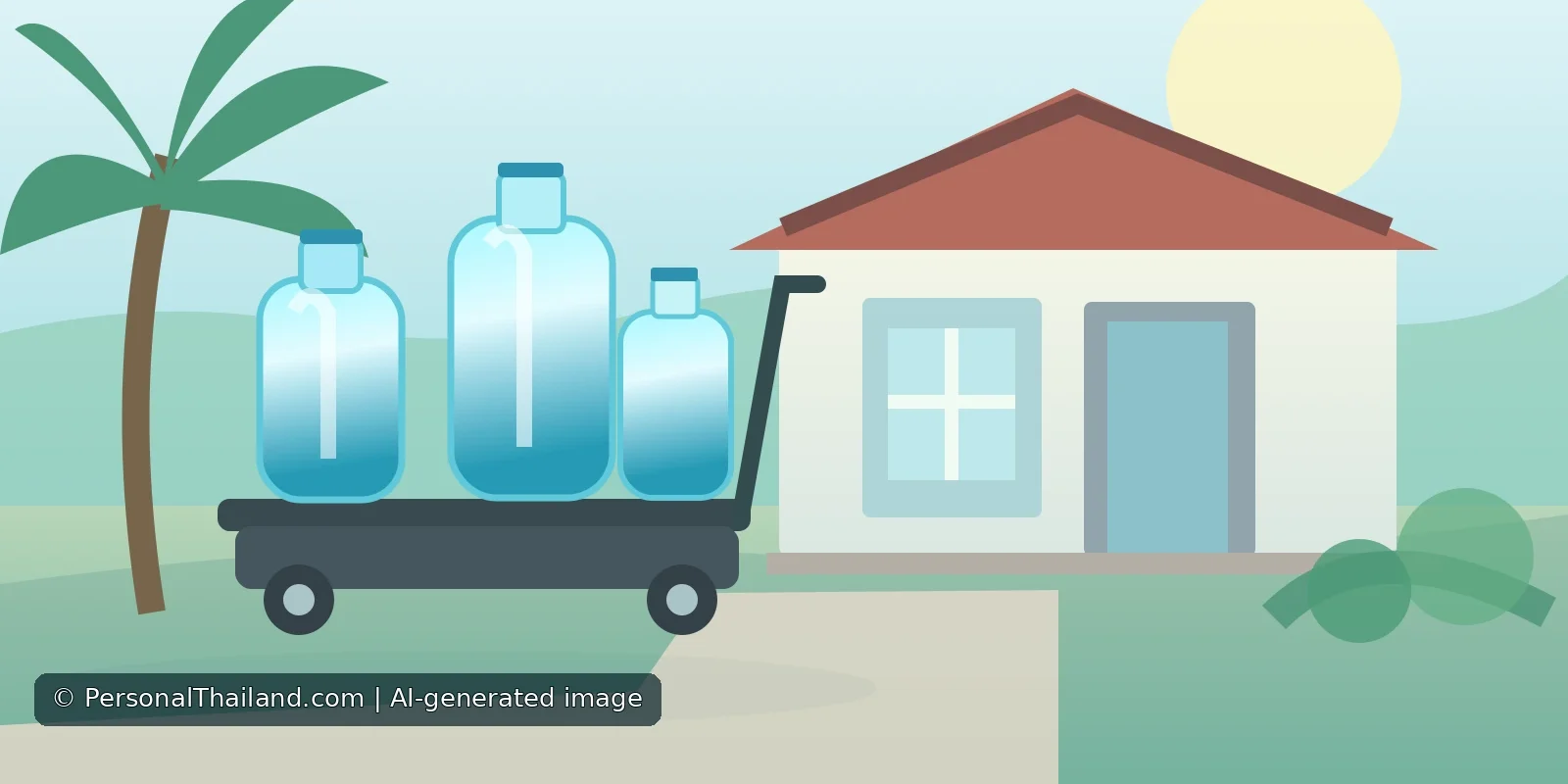
Carrying heavy bottles home in Thailand’s heat gets old quickly. If you stay in a condominium, house or serviced apartment for more than a few days, arranging drinking-water delivery can be a convenient alternative. But a good service is about more than price: you also want to know where the water comes from, how its containers are handled and what happens when a delivery is missed.
Do you need bottled water in Thailand?
It is misleading to claim that every tap in Thailand supplies unsafe water. Water quality depends on the local utility, the distribution network and the condition of pipes and tanks inside a property. Thailand’s Provincial Waterworks Authority describes its Potable Tap Water programme, including work with public-health authorities to verify drinking-water quality in selected service areas. Even where the public supply meets drinking-water standards, quality can change inside a property: pipes, storage tanks and connections are generally the responsibility of the owner or building manager.
In Bangkok, the Metropolitan Waterworks Authority has also been working with public-health partners on water-safety systems, according to a World Health Organization feature published in October 2026. None of this proves that an individual tap or building tank is safe today. If you are uncertain about the water supplied to your accommodation, ask the property manager and supplier for local advice or use a reliably treated drinking-water source.
The main ways to buy drinking water
Sealed small bottles
Sealed bottles from established retailers are straightforward for a short visit and useful as a backup if a regular delivery does not arrive. Look for an intact cap, a clear product label and sensible storage away from excessive heat. Buying many single-use bottles can, however, create unnecessary packaging waste.
Larger refillable containers
For long stays, large returnable bottles or jugs may be easier to manage. Delivery arrangements can include a refundable container deposit, an exchange system or a pump or dispenser supplied separately. The exact model depends on the seller. Never assume that a container is included in the quoted water price.
Filtered or treated water at home
Some households use maintained filtration or other water-treatment systems. Treatment devices are not interchangeable: a filter designed to improve taste does not necessarily remove every microbial or chemical hazard. Choose a system that addresses the local water-quality problem, and follow replacement and sanitation instructions. If safety is uncertain, obtain professional advice rather than relying on taste or appearance.
Questions to ask a drinking-water delivery service
- What is the source of the water, and how is it treated and tested?
- Is the container sealed when delivered, and how are reusable bottles washed?
- What is the total cost for the water, deposit, dispenser and delivery?
- Is there a minimum order or recurring commitment?
- Which days and buildings are served, and will the driver bring the bottles upstairs?
- How do you return empty bottles and recover any deposit?
- What happens if a container leaks or arrives without a proper seal?
Keep order confirmations and deposit receipts. If you live in a condominium, ask whether the building has preferred delivery procedures or limits on access by outside drivers.
Safe storage at home
Water quality can deteriorate after delivery if a container, dispenser or transfer vessel becomes dirty. The World Health Organization’s guidance on safe water emphasises clean, tightly closed storage containers to avoid recontamination. Wash hands before changing bottles, keep dispensing taps clean and place containers away from direct sunlight and sources of dirt.
When pouring water into another container, use a clean vessel intended for drinking water. Avoid touching the inside of lids or openings. Do not keep using a damaged or visibly contaminated jug simply because it still contains water. If your supply has an unusual odour, visible particles or a broken seal, contact the supplier rather than guessing whether it is safe.
How to choose a service without relying on old recommendations
Search for businesses that currently serve your exact district and address, then compare their written offers. An advertised nationwide brand may not deliver to every apartment or suburb. Ask a building manager or neighbour for an introduction, but still confirm the supplier’s hygiene practices and the terms of the agreement yourself.
An old telephone number or favourable review from years ago is not reliable proof that a business still operates. Water delivery contracts, product ranges and prices change. Focus on service quality and traceable water handling, not a claim that one brand tastes better or is the only acceptable choice.
Make your arrangement easy to maintain
Start with a small order, track how much your household uses and establish a simple return routine for empty containers. Keep a sealed backup supply if deliveries are irregular. If you move, settle deposits and return dispensers before handing back your keys.
Reliable drinking water should be a simple part of everyday life in Thailand. A little care choosing a supplier and keeping containers clean can make the convenience of home delivery worthwhile.