
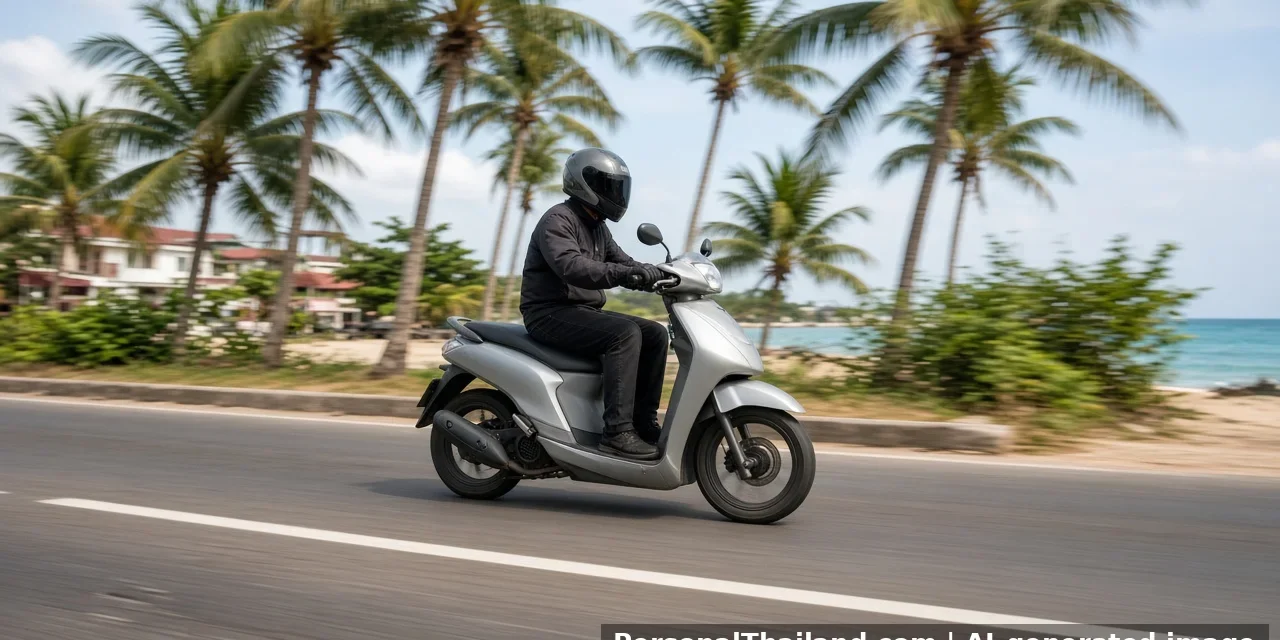
A motorbike can make short journeys around Pattaya tempting, especially when traffic is slow and parking space is limited. But a scooter is still a powered motorcycle—not an exemption from road rules. For visitors who are unfamiliar with Thai traffic, the most important decision comes before turning the key: do you have the correct licence, appropriate insurance and enough riding experience?
Start with your licence, not the rental price
A vehicle being offered for hire does not mean you are legally entitled to ride it. Check that your driving entitlement covers motorcycles, including the engine size you intend to use, and verify which international permit or Thai licence applies to your nationality and residence status. Car-only permissions may not cover scooters. International driving permit rules vary by issuing country; do not assume another traveller’s documentation advice applies to you.
The UK government’s Thailand travel safety guidance gives specific documentation advice for British travellers and warns that riding without the correct licence can invalidate insurance. The US State Department's Thailand advice likewise says an International Driving Permit is required to drive a car or motorcycle and that helmet use is mandatory. Riders from other countries should consult their own authorities and insurer.
A helmet is not optional
Thai law requires a motorcycle helmet. Wear a well-fitting, securely fastened helmet every time, including for short journeys and as a passenger. A poorly fitting or damaged helmet offers less protection, and a helmet balanced on the head without the strap fastened is not a sensible substitute.
Consider protective footwear, abrasion-resistant clothing and eye protection. Light clothing may feel comfortable in the tropical heat, but exposed skin is vulnerable in even a low-speed fall. Carry a light rain layer for sudden showers and avoid riding if poor visibility or road conditions exceed your skill level.
What makes Pattaya traffic challenging?
Pattaya mixes cars, buses, delivery vehicles, pedestrians, motorcycles and larger tourist traffic on busy streets. Expect abrupt stops, vehicles changing lanes and road users entering from side streets. This is a reason to maintain a generous following distance, not a reason to label every local rider as reckless.
Thailand drives on the left. That matters at junctions and especially when leaving a car park or making a turn after years of driving on the opposite side. Look both ways before pulling out. Do not rely on another rider’s indicator, and do not treat a clear-looking crossing as a guarantee that traffic will stop.
Watch for wet paint, drain covers, potholes, parked vehicles opening doors and loose sand near construction sites or the coast. Rain can change the grip of a road surface rapidly. If you are distracted by navigation, stop in a safe place before consulting your phone.
Check the bike before accepting it
- Photograph all sides of the motorcycle with the rental representative present.
- Test the front and rear brakes, lights, horn, indicators and tyres.
- Check registration and whether the bike is approved for road use.
- Ask about existing damage, maintenance, fuel, security deposit and return conditions.
- Read the rental contract and ask which charges apply to damage or loss.
- Do not leave your original passport as a security deposit. The UK travel advisory specifically warns against this practice.
Decline a vehicle if something feels unsafe or documentation is unclear. A slightly cheaper daily rental is not worth riding a poorly maintained motorcycle.
Understand what your insurance actually covers
Travel insurance is not automatically motorcycle insurance. Some policies exclude larger engines, riders without the right licence, alcohol-related incidents or particular activities. Ask your insurer about the exact vehicle and licence type, and understand any excess or medical-evacuation limitations. Keep emergency contact details accessible, including your insurer’s assistance number.
Ride defensively, especially at night
Avoid sudden braking, tailgating and squeezing through gaps you cannot judge confidently. Slow down near pedestrian areas, markets and intersections. After dark, glare, reduced visibility and unfamiliar roads add to the workload. Never ride after drinking alcohol or when exhausted.
If you are new to motorcycles, Pattaya’s busy streets are not the place to learn by trial and error. Walking, licensed local transport or a booked car with a driver may be the better option. Riding should be a choice based on competence—not a holiday challenge.
One last check before every trip
Helmet fastened, lights working, route understood, licence valid, insurance confirmed: these basics matter more than riding fast or trying to imitate people around you. Pattaya offers plenty to explore, but getting home safely is more important than saving a few minutes in traffic.



Riding a motor bike is cool but you need to be careful because when you are riding a motor bike your other foot is on the grave. Some motor bike riders doesn’t have discipline so accidents occur.