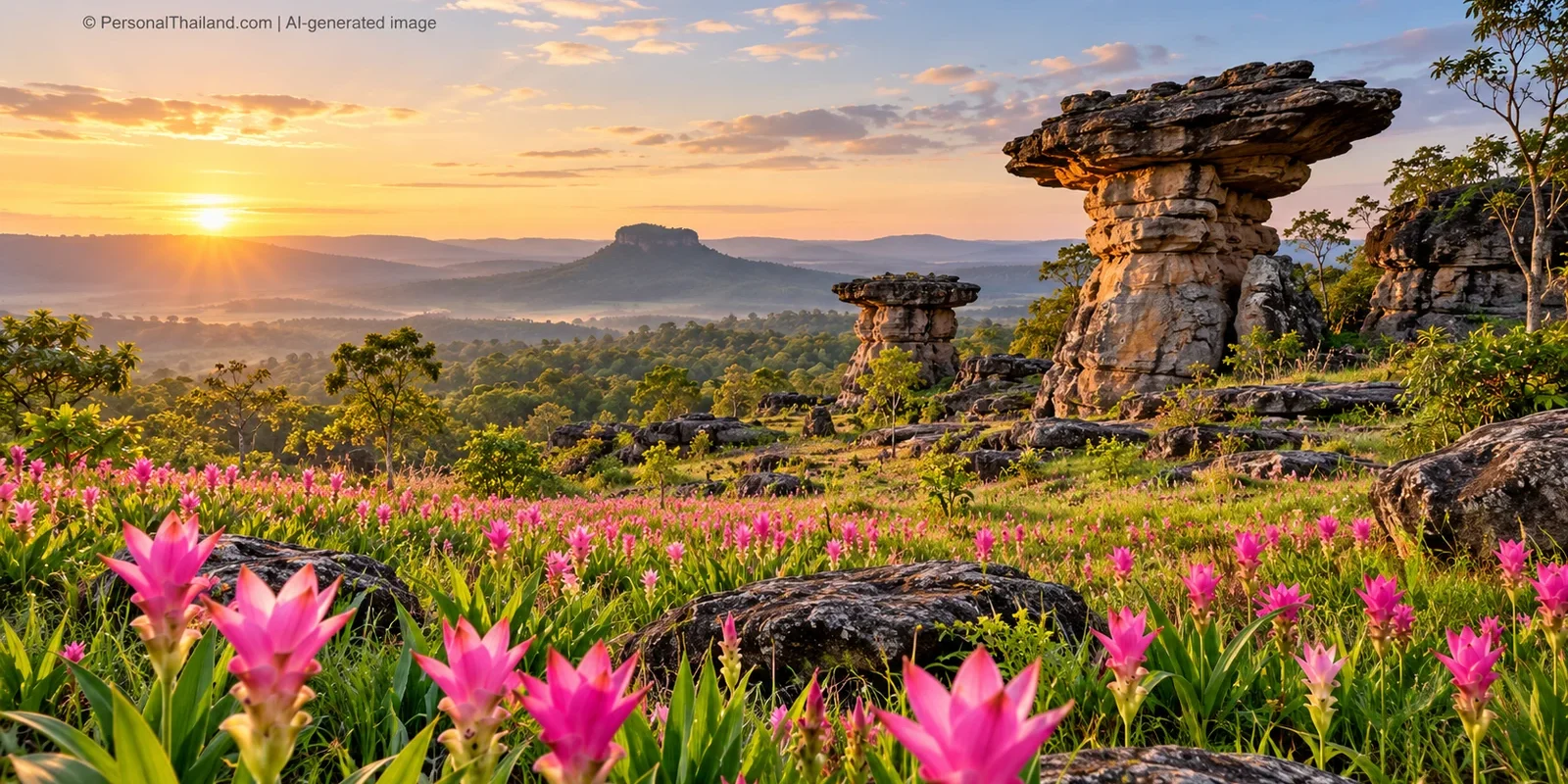
Chaiyaphum is one of northeastern Thailand’s rewarding provinces for visitors who enjoy unusual geology, seasonal flowers and quieter national parks. Its main natural attractions are not all close to one another, so a car or carefully arranged local transport can be more useful than a rushed day trip. This guide focuses on documented sights instead of the old ethnic and population claims often repeated in descriptions of the province.
The giant stones of Mo Hin Khao
Mo Hin Khao is a striking rock landscape in the Phu Laenkha National Park area. The Tourism Authority of Thailand describes groups of large sandstone formations, including a cluster known for five prominent stone pillars. The formations invite photographs from different angles, but visitors should remain on permitted paths and respect protected areas rather than climbing on fragile rock.
The nickname ‘Stonehenge of Thailand’ is a colourful comparison, not a historical claim that the rocks were built by people. Their interest lies in natural geology and the surrounding countryside. Weather, trails and viewpoints can differ between seasons, so confirm present access with park staff if you are planning to hike or camp.
Pa Hin Ngam and the seasonal flowers
Pa Hin Ngam National Park offers another landscape of weathered rocks and viewpoints. It is especially associated with Dok Krachiao, often called Siam tulips. Despite that popular name, these plants are relatives of ginger rather than the European tulip. Flowering usually takes place during the rainy season, roughly June to August, but timing and density depend on the weather each year; a trip outside the main flowering period may be scenic without the famous pink fields.
The national park also contains viewpoints and paths where slippery ground can be a problem after rain. Do not assume the same trail is open year-round. Verify park access and follow signs, especially at cliff edges. The Tourism Authority of Thailand documents both the rock shapes and the seasonal flowers, but old attraction listings may still contain outdated admission fees or visitor procedures. The park’s current guidance takes priority.
Nature without a fixed checklist
Chaiyaphum has more than two headline attractions, including farming landscapes and rural communities. The most rewarding approach is to combine one significant nature site with a local town or market visit. Travelling between distant viewpoints can consume more time than visitors expect, particularly on smaller roads.
Carry drinking water, sunscreen and footwear with grip. Take litter out with you, and do not collect plants, stones or flowers. In the Siam tulip fields, visitors are expected to stay on the boardwalk and use the designated photo areas rather than walking into the flowers. If a campsite is part of your plan, check whether camping is currently allowed and what facilities actually operate.
Local culture and food
Chaiyaphum is part of Isan, a region with varied language practices and cultural traditions. It is not accurate to reduce all residents to one ethnic label. Thai and regional languages may be heard in different settings, and local identities are more complex than a statement from a decades-old travel blog.
Try a local market for northeastern food and seasonal produce. Ask about chilli heat and ingredients. Vegetarians should ask specifically about fish sauce and fermented seasonings rather than assuming vegetable-based dishes contain no animal ingredients. Buying directly from a small vendor can be a pleasant experience when the exchange is respectful.
A practical two-day outline
Use one day for Mo Hin Khao and another for Pa Hin Ngam if the drive and current park opening arrangements permit. Alternatively, choose one park and spend the rest of your stay exploring ordinary provincial life. Book accommodation based on the attractions you prioritise, not simply a province-wide map label. For rainy-season travel, allow a flexible schedule and check forecasts.
Chaiyaphum is best approached as a landscape destination. Geology, flowers and open countryside provide the interest, but the experience improves when you verify seasonal conditions and allow time for changes rather than relying on a perfect promotional photograph.