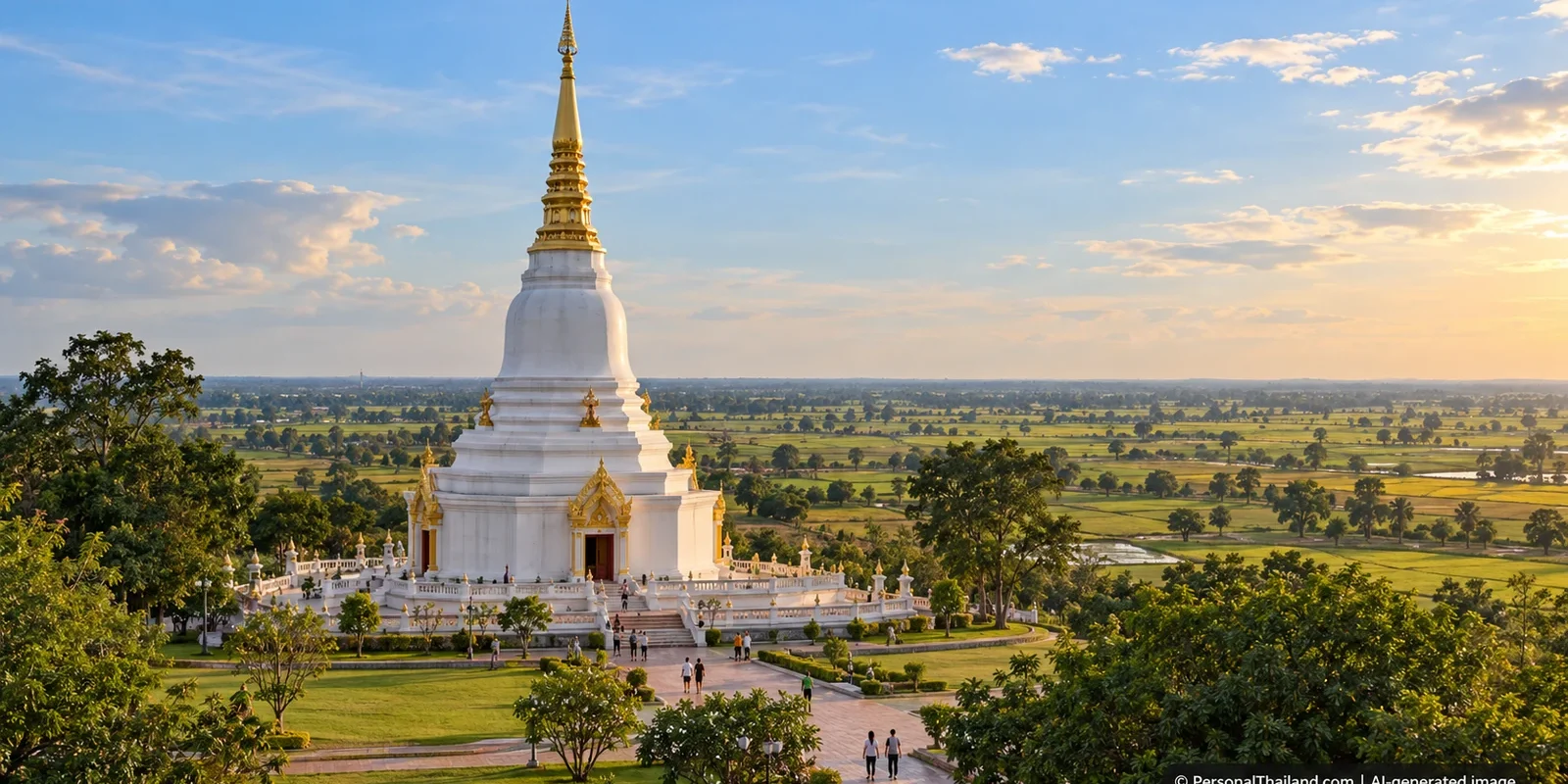
Maha Sarakham sits near the centre of Thailand's northeastern Isan region. Visitors expecting a resort scene may overlook it, but the province has another appeal: a university-town atmosphere, Buddhist heritage, craft traditions and rural communities. It is a practical addition to a longer Isan journey for travellers who enjoy local food, history and places that do not revolve around large tour groups.
An Isan university town
Maha Sarakham is known for its educational institutions, and the Tourism Authority of Thailand notes its role as an academic centre in the region. This makes the town feel different from a purely agricultural district. Cafés, small restaurants and student-oriented neighbourhoods sit alongside markets and everyday services.
Spend time in the centre before driving out to distant attractions. Markets provide a chance to observe ordinary life, buy seasonal fruit and try local dishes. If a place looks quiet during university holidays or outside term time, that may simply reflect the local calendar rather than a lack of interest.
Na Dun and Buddhist heritage
The Na Dun area is central to a heritage-focused visit. Archaeological discoveries and Buddhist traditions have helped establish the district as an important religious landscape. Phra That Na Dun is associated with this heritage and is a major reason to travel beyond Maha Sarakham town. The site is suitable for a calm visit focused on the religious and historical context rather than rushed photography.
Descriptions of ancient kingdoms and the dates of specific finds can become exaggerated in old tourist writing. It is better to consult the latest interpretation at the site, a museum or an official tourism source than to repeat unsupported claims about exactly how old every object is. Remember that sacred buildings are still part of a living religious landscape.
Temples, shrines and smaller sites
Within town, the City Shrine offers a different type of religious stop. The Tourism Authority of Thailand identifies it as a local spiritual landmark. Buddhist temples and community shrines serve different functions; visitors should avoid treating them as interchangeable photo backdrops. Observe dress rules, remove shoes where required and avoid stepping into restricted spaces.
Another worthwhile interest is the region's traditional architecture and craftsmanship. Some archaeological sites are a drive away, so it helps to group nearby places on the same day rather than jump back and forth between districts.
Local cloth, food and craftsmanship
The province is associated with handmade silk and cotton textiles. Ask sellers how a cloth was made, what its pattern represents and how to care for it. Differences between handwoven and factory-made pieces may be noticeable in texture, but do not assume that a higher price automatically proves origin. Buying from a recognised cooperative can help you learn more about the makers.
For meals, Isan cooking is a natural place to start. Grilled foods, sticky rice and vegetable dishes are common themes, although recipes and levels of chilli vary by cook. Travellers with allergies should ask specifically about fish sauce, fermented products, peanuts and other ingredients rather than making assumptions based on a dish's appearance.
About the old 'rocket festival' description
Some older accounts identify Maha Sarakham chiefly with rocket festivals. These festivals are part of wider Isan culture, but dates, locations and even whether a public event will take place depend on local organisers and the year. A province should not be described as the permanent host of a fixed festival without a current event announcement.
If cultural events are important to your trip, check official announcements shortly before travel. The presence of a festival also changes transport and accommodation demand, which is another reason to avoid a plan based entirely on an old article.
Suggested itinerary and travel tips
For a short first visit, spend the first day in Maha Sarakham town, with a local market, food stops and a religious landmark. Reserve a second day for Na Dun and a textile-focused detour if suitable opportunities are available. These are broad planning suggestions, not a promise that workshops or museums will be open at a particular hour.
Maha Sarakham works well as part of a road trip across Isan. Intercity bus services may help with the main journey, but reaching outlying attractions often requires a local driver. Confirm prices before accepting a ride and arrange your return journey in advance.
The province rewards an interest in everyday places. Its value is not measured by how many headline attractions you can complete, but by the time you give to learning about its communities, textiles and religious history.
Respecting everyday university and village life
A university town has its own schedule and public spaces. If you visit a campus-related exhibition or educational institution, check visitor access before entering buildings; ordinary academic premises are not necessarily sightseeing attractions. Markets and temple areas are better places for a spontaneous walk without interrupting study or work.
In craft communities, avoid asking people to pause their normal activities solely for photographs. A workshop arrangement provides a more appropriate opportunity to ask questions and learn. This matters particularly for weaving, where a design may have local significance. A respectful travel experience can be as simple as asking where a cloth was made, listening carefully and thanking the maker for their time.