Editorially updated 18 October 2026. This travel guide replaces dated information from the original article with practical advice. Check current local arrangements before visiting.
Lop Buri is one of central Thailand’s most distinctive historic towns. Ancient Khmer-influenced monuments stand near everyday streets, a royal palace preserves the memory of King Narai and macaques have become one of the city’s most recognisable — and sometimes challenging — features.
The original article devoted much space to an old district list and the idea that monkeys were the provincial landmark. This practical update focuses on what a visitor can see, how to understand the history and how to deal with wildlife responsibly.
Start at Phra Prang Sam Yot
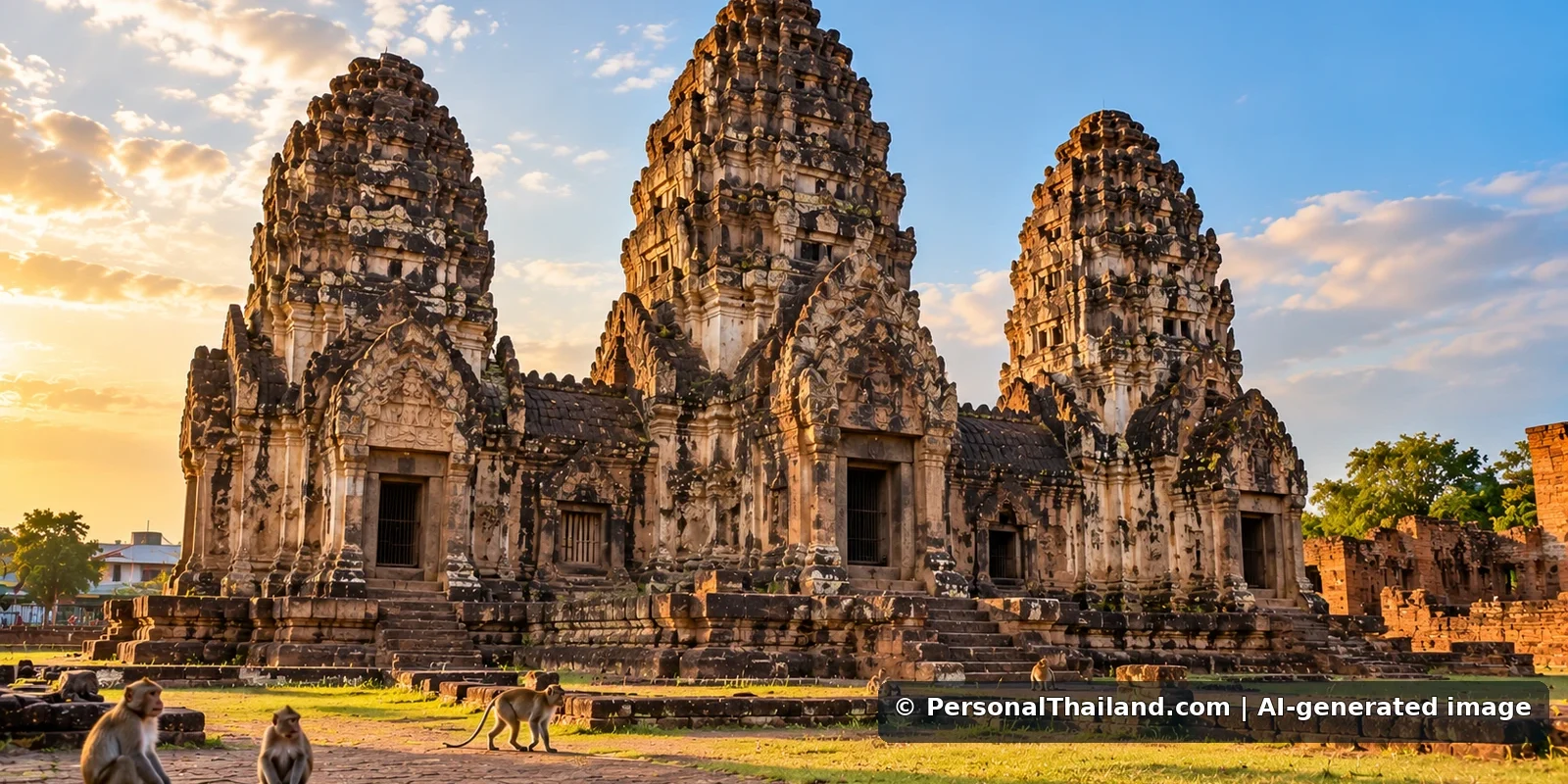
Phra Prang Sam Yot is perhaps the clearest visual introduction to Lop Buri’s older architecture. The Tourism Authority of Thailand identifies three linked prangs, or sanctuary towers, with design features associated with Khmer Bayon-style art. Their weathered forms create a memorable contrast with the modern streets around them.
Take time to look at the composition of the towers and the surface detail rather than treating the monument only as a monkey-photo location. Stonework changes with the light, and the site rewards a slower visit. Follow barriers and any instructions from on-site staff, especially around fragile masonry.
The area’s monkeys can be fascinating to watch from a reasonable distance. However, they are wild animals, not performers. They may approach bags or food, and their behaviour is not predictable simply because they are accustomed to people.
How to behave around the monkeys
Keep food packed away, secure loose belongings and avoid holding snacks visibly while walking near monkey groups. Do not feed, touch, provoke or try to take a close-up selfie with an animal. A bite or scratch should be taken seriously: wash the wound promptly with soap and running water and seek medical assessment without delay.
Families should supervise children closely, and visitors should avoid positioning themselves between animals or cornering a monkey for a photograph. If local authorities have restricted access to an area, follow that guidance. The city has had changing arrangements for managing monkey populations, so old anecdotes are not reliable instructions for today.
Discover the King Narai period
Lop Buri has a second historical story that is different from the older Khmer-influenced remains. King Narai’s Palace, also known as Phra Narai Ratchaniwet, is associated with the Ayutthaya-period court and the town’s importance during the reign of King Narai. TAT’s Lop Buri visitor guide lists the palace and the Somdet Phra Narai National Museum as leading cultural stops.
This is a useful place to move from architectural sightseeing to a broader understanding of the city’s history. Allow enough time for displays and interpretation. Museum access and weekly closures can change, so check current information before travelling rather than relying on an older online guide’s stated timetable.
Wat Phra Si Rattana Mahathat and nearby streets
The remains of Wat Phra Si Rattana Mahathat, across from the railway station, are another prominent heritage site. TAT describes its old structures and architectural features connected with later religious and royal patronage. Together with Phra Prang Sam Yot, it makes a strong case for exploring Lop Buri on foot where pedestrian routes allow.
The central area includes roads, active businesses and traffic as well as monuments. Observe carefully when crossing streets and do not step into the road for the perfect image of a tower. Where the historic centre is busy, leave room for local people going about their day.
Beyond the centre
Lop Buri province also has rural scenery and attractions such as Pasak Jolasid Dam and seasonal sunflower fields, highlighted in TAT’s regional suggestions. The appeal of the fields depends on planting and flowering conditions; a photograph from a previous season is not evidence that blooms will be visible on your chosen date.
For countryside excursions, arrange reliable transport and confirm the destination before setting off. A relaxed plan for the central ruins is usually better than rushing between far-apart stops in one afternoon.
Practical planning
Bring sun protection, water and walking shoes. Consider a day focused on old-town heritage, with additional time if you want to visit museums or rural sights. Avoid carrying food openly around macaques and keep important documents secure in a closed bag.
At temples, dress respectfully and treat any worship or offerings as private religious activity. Visiting a place because it is famous for monkeys does not remove the need to respect the people who live there.
Frequently asked questions
Is Lop Buri only about monkeys?
No. The historic towers, Ayutthaya-period palace and other temples are important reasons to visit.
Should visitors feed the monkeys?
No. Feeding can encourage aggressive behaviour and increases close contact between people and wild animals.
Are the main ruins near one another?
Several central monuments are relatively close, but distances and safe walking routes should be checked before planning your day.
Official sources
Featured image disclosure: AI-generated editorial illustration. It is not an authenticated documentary photograph of the exact named attraction.
Practical note: Entrance fees, boat schedules, access restrictions, weather and transport arrangements may change. Confirm time-sensitive details directly.