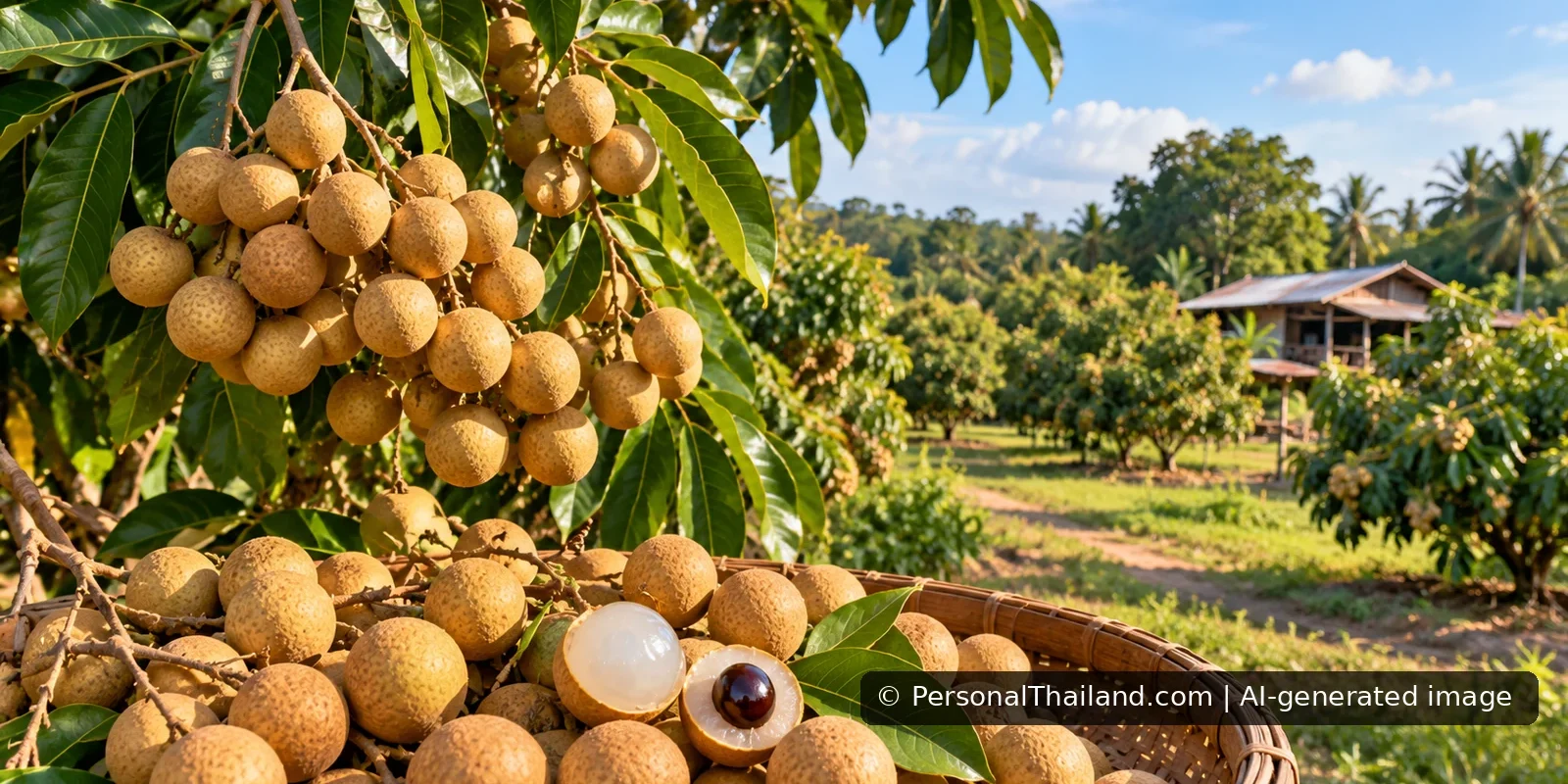
Lamphun is easy to overlook when planning a trip in northern Thailand, especially with Chiang Mai drawing so much attention nearby. Yet the province has a distinctive combination of orchard agriculture, local crafts and Hariphunchai-era religious heritage. Longan fruit is an especially useful starting point: a modest brown-skinned fruit that connects local food to the countryside surrounding the old city.
The Tourism Authority of Thailand specifically lists sweet longan among Lamphun's notable local products, alongside weaving and historic attractions. It is more accurate to describe Lamphun as a well-known longan-producing area than to declare, without evidence, that it produces all or most of Thailand's harvest. You can explore the fruit as part of a wider visit without claiming that every farm offers public tours.
What is longan?
Longan is a small round fruit, usually sold in clusters. Beneath a thin light-brown skin is translucent flesh surrounding a glossy dark seed. It is related to lychee but has its own flavor, often described as floral, gently sweet and aromatic. The seed is not something to eat, and the fresh flesh should be handled hygienically just like other fruit.
Look for fruit that is sound rather than leaking or obviously damaged. Local markets may sell it fresh or in processed forms, while seasonal and regional availability varies. Ask vendors which fruit is locally grown and what is currently in season rather than assuming that every basket in a tourist market came from nearby orchards.
Where visitors can experience the fruit
A local fresh market is often the easiest way to sample longan without arranging a private farm visit. Compare fruit sold on the branch with loose or packaged options, ask the seller about ripeness, and start with a small quantity so you can judge the flavor. Some products are dried or made into drinks and sweets, but ingredients and sugar content differ by product.
If you hope to visit an orchard, make arrangements with a specific farm or local guide in advance and confirm that it welcomes visitors. Farms are working businesses, not automatically public attractions. Respect harvesting schedules, do not pick fruit without permission and avoid entering private agricultural land simply because an online image shows attractive trees.
Lamphun's old town makes a natural pairing
The historic center of Lamphun is an appealing counterpoint to the agricultural countryside. Wat Phra That Hariphunchai is a central landmark known for its golden chedi and religious importance. Lamphun's provincial tourism authority documents the temple's history and its location in the city; visitors should approach it as a living place of worship.
A relaxed itinerary might include a temple in the cooler morning hours, a look at local shops or a market around lunch, and a prearranged countryside stop later. The idea is not to cram every museum and village into one visit but to connect local food, historic streets and the area's older traditions.
Hariphunchai heritage beyond one temple
Lamphun's cultural story includes Queen Chamadevi and the old Hariphunchai kingdom. The Tourism Authority of Thailand highlights sites such as Ku Chang–Ku Ma and the Hariphunchai National Museum as possible stops. These places provide context that a single photograph of a golden stupa cannot give.
When visiting museums, check the latest timetable before traveling, particularly around holidays or maintenance periods. Labels and exhibits vary in how much English information they provide, and a local guide can help with background. Avoid repeating precise founding-year claims from conflicting summaries without checking specialist historical sources.
Textiles and local spending
Lamphun is also associated with woven textiles. A tourism-authority itinerary includes the Wiang Yong fabric area, making craft shopping a reasonable complement to food-related exploration. Handwoven products involve time and skill; ask about the material and method if authenticity matters to you.
Buy from sellers who explain their products clearly and avoid pressure to purchase something because of an exaggerated claim of rarity. Consider carrying reusable packaging for your purchases. The best souvenirs are often ones that reflect a personal conversation rather than a generic stop on a shopping route.
Practical planning for a short visit
Lamphun is commonly combined with a stay in the Chiang Mai region. Build your plan around actual travel times and transport connections rather than a dated distance estimate or fixed taxi fare. Starting early helps with heat, while rainy-season travel may need a more flexible schedule around outdoor stops.
Dress modestly for temple visits, carry water and confirm any special photography rules. If your day includes farm food or a local drink, check ingredients and sanitation in the same way you would elsewhere. The most satisfying visit is usually a balanced one: a little fruit, a little history and time to experience the town itself.
A useful takeaway
Longan is a doorway into Lamphun, not the province's only identity. Connect its produce with Hariphunchai temples, craft traditions and ordinary markets, and you have a stronger travel experience than a one-line claim that Lamphun is merely 'home of longans.' The details that change—harvest timing, farm access, prices and opening hours—should always be checked close to your visit.