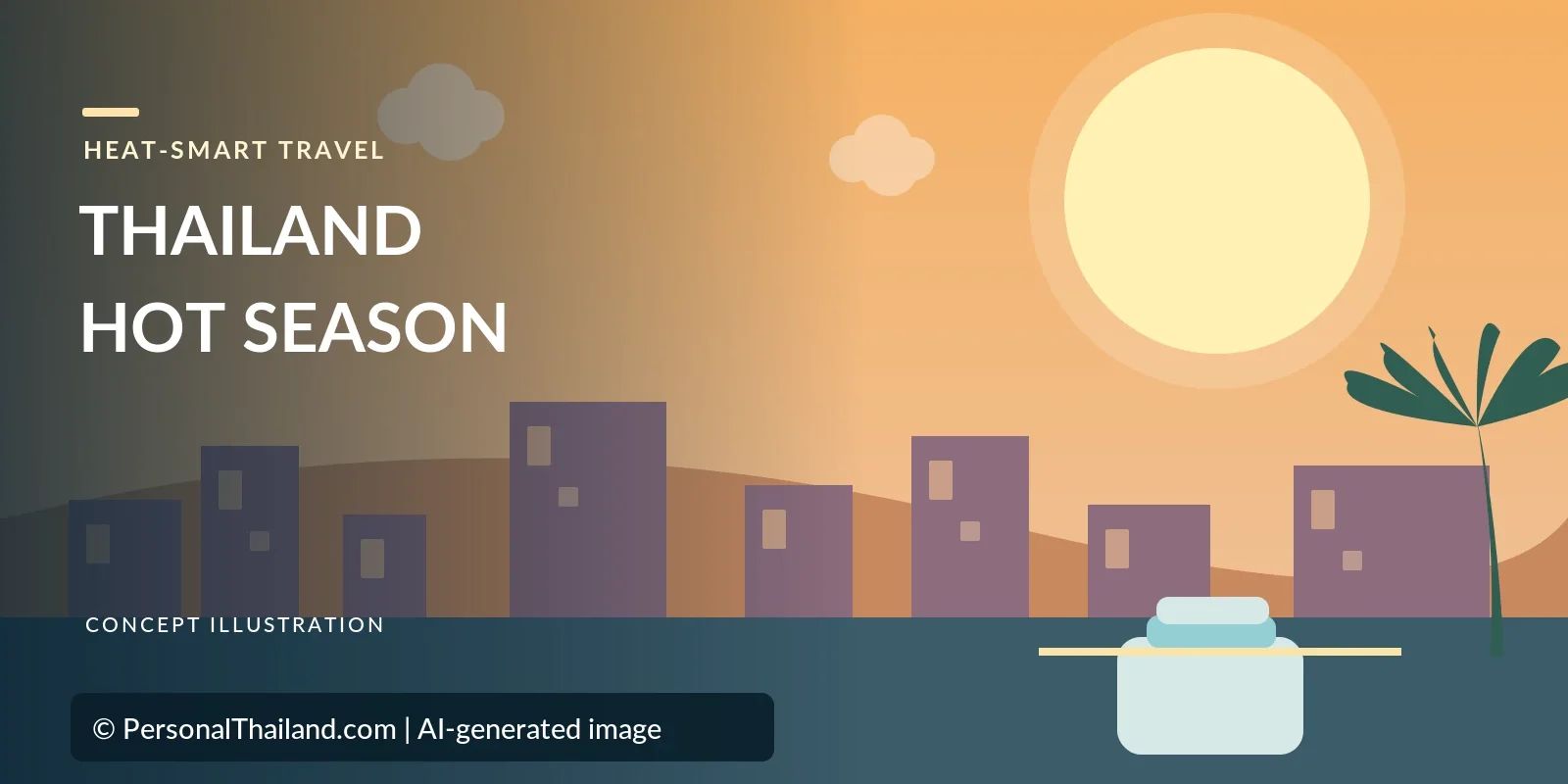
Thailand's hot weather can be a pleasant part of a holiday until a long walk, crowded transport or an afternoon outdoors becomes exhausting. Heat is not only about the temperature displayed on a phone: humidity, direct sun, physical effort and limited opportunities to cool down all affect how a day feels.
The goal is not to avoid Thailand whenever it is hot. It is to plan around conditions, notice when someone is struggling and have a practical alternative to standing in the sun through the hottest part of a trip.
Why the heat can feel more intense than expected
Sweat cools the body when it evaporates. In humid conditions that process is less effective, so a day can feel oppressive even without a record-breaking temperature. Concrete streets, queues in the sun, long boat rides and crowded open-air attractions can add to the discomfort.
Conditions vary by province, elevation and season. A fixed claim such as “the rainy season starts on exactly this date” cannot describe the whole country. Check a credible local weather forecast and adjust the day's activity rather than relying on a national rule of thumb.
Plan the hardest activities around the heat
For walking tours and exposed archaeological sites, consider an early start, a planned indoor break and a less demanding afternoon. Book accommodation where you can cool down and rest. If you are travelling with young children or older relatives, allow for a slower pace than an itinerary designed around a single energetic adult.
Shade, hats, breathable clothing and sun protection all help. A covered waiting area can be preferable to standing outside for a vehicle that might be late. Carry enough drinking water for the time you expect to be away, and have an option to purchase more.
Hydration is a habit, not one large drink
Drink fluids regularly, especially when sweating or spending long periods outside. The Thai Department of Disease Control advises frequent water intake and periodic breaks in shade for people working outdoors. Travellers can apply the same common-sense approach on a sightseeing day.
After prolonged heavy sweating, food and suitable fluids can also help replace lost salts. Avoid relying on alcohol to manage the heat. If a clinician has told you to restrict fluids or manage a medical condition in a particular way, follow that personalised guidance rather than a generic travel tip.
Learn the difference between discomfort and danger
Heat exhaustion may involve weakness, heavy sweating, dizziness, headache or nausea. Move to a cool place, stop exertion and seek help if symptoms do not improve. Confusion, fainting, seizures or a very high body temperature can indicate a life-threatening emergency.
Thailand's disease-control authority emphasises rapid cooling in suspected heatstroke and urgent medical care. Move a person out of the heat, begin cooling them with water or cold compresses if it is safe to do so, and seek emergency medical assistance promptly; in Thailand the emergency medical number is 1669. Do not delay treatment to wait for the person's symptoms to pass.
Pay particular attention to people at higher risk
Older adults, young children, pregnant people and people with certain medical conditions may be more vulnerable to heat illness. Visitors who are not accustomed to tropical temperatures should also avoid attempting a full day of strenuous outdoor activity immediately after a long flight.
Medication, illness and alcohol can alter how someone responds to heat. Ask a medical professional about any relevant personal precautions before travelling. Never leave children, older people or pets in a parked vehicle while you run an errand, even for what seems like a short time.
Build a weather-flexible Bangkok or beach itinerary
In Bangkok, a morning outdoors followed by an air-conditioned museum, meal or rest period is often easier than crossing the city on foot at midday. On islands, open boats, piers and beaches may provide less shade than expected. Plan sun protection even when a breeze makes it feel cooler.
A rainy or overcast sky does not automatically eliminate heat stress or sun exposure. Keep an eye on thunderstorms, rough seas and travel advisories too. The safest decision can be to postpone an activity rather than force it into a fully booked schedule.
Pack the small things you will actually use
A refillable water bottle, hat, light long-sleeved layer, sunscreen, comfortable footwear and a compact towel can make a day easier. A phone with offline maps and an accessible emergency contact is useful if someone needs help away from the hotel.
Choose clothing appropriate to the setting: practical sun protection for an outdoor walk and respectful coverage when visiting a temple. That balance matters more than trying to follow one universal packing list for every destination.
Travel well without treating the heat as a competition
Thailand is not more enjoyable because you tolerate every hour in direct sun. Leave gaps in the schedule, let companions say when they need a break, and stay alert to early symptoms rather than pushing on. A flexible itinerary is often the best response to the country's changing weather.