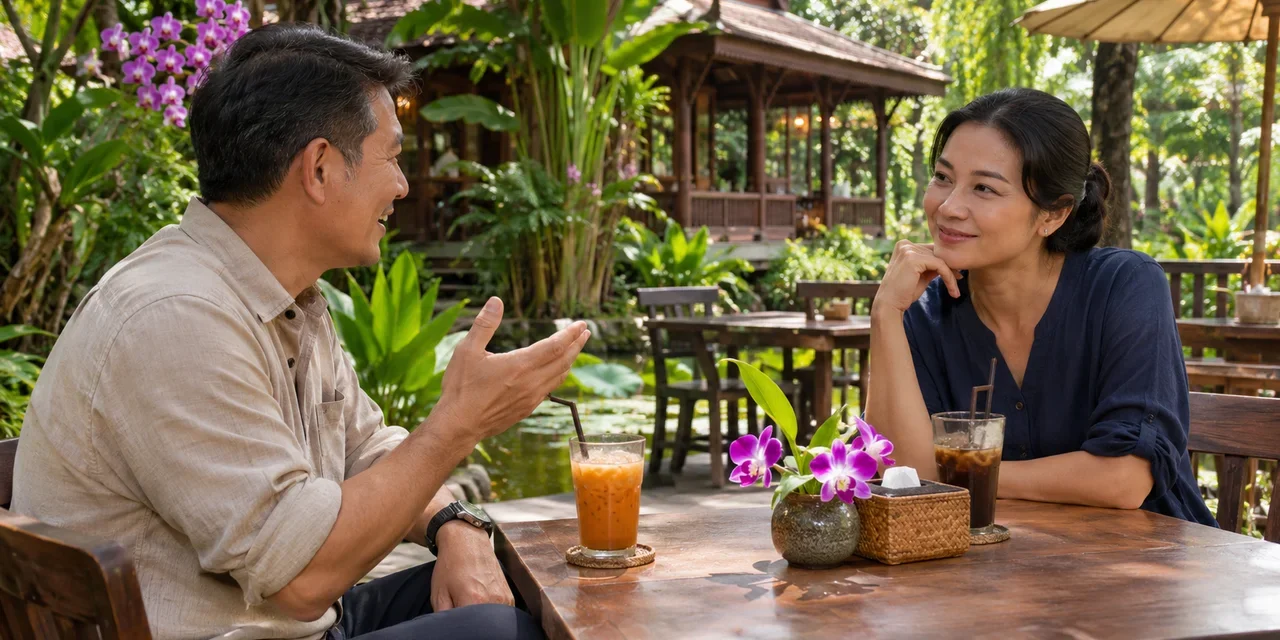
Christian dating in Thailand can begin with a shared church community, a friend’s introduction or a conversation about what faith means in daily life. Some people want a partner with the same beliefs; others are open to a relationship across traditions. Neither choice can be made for them.
The original post recommended a particular faith-based dating site. I have not checked whether that service still operates or whether its terms suit readers today, so I have removed the recommendation. A shared label is a starting point for a conversation, not proof that two people want the same things.
Christian dating in Thailand: finding community
A local church may offer services, community activities or volunteer opportunities. If you attend, go because you are interested in the community, not because everyone there should be treated as a potential date. Ask about languages, accessibility and the nature of an activity before you arrive.
Some people prefer a faith-oriented dating service; others meet through friends or ordinary social activities. If you use an app, check its privacy settings, charges and reporting tools. For another perspective on finding a community, read our guide to alternative dating.
Be honest about what you are seeking. Someone may want marriage, friendship, a slow courtship or simply a chance to get to know people. A respectful question is better than assuming that sharing a religion means sharing a timetable.
Talk about faith without an examination
Faith can involve worship, prayer, community, family history or private reflection. Two Christians may practise differently, belong to different denominations or disagree about what participation in church should look like. Ask what is important to the person rather than using a label to fill in the answers.
Questions can be simple: What traditions would you like to keep? How do you feel about attending services together? Are there parts of your faith that shape decisions about family, celebrations or charitable work? Share your own answers and leave room for the other person to decline a question.
No one owes a stranger a detailed account of their religious history. Pressure to attend a service, change a belief or disclose private experiences is not a good foundation for trust. Both people should be free to say no.
When partners have different beliefs
An interfaith relationship can bring practical questions about celebrations, food, worship, marriage and children. It can also be a relationship in which neither person wants religion to determine every decision. Talk about the matters that affect your lives rather than trying to settle an abstract argument first.
Some families in Thailand identify with Buddhist traditions, some practise another religion and some do not centre religion in daily life. Do not assume that every Thai family expects the same ceremony or response from a partner. Ask what the individual family values and what participation means to each person.
If a future ceremony matters to one partner, discuss it well before booking anything. A religious ceremony and the legal process for marriage may have different requirements. Check the relevant authorities for your own circumstances; this article does not determine whether a particular ceremony creates a legal marriage.
Family expectations and boundaries
Meeting a partner’s family can be meaningful and a little nerve-racking. Ask your partner how they would like introductions to work, what language will be used and whether there are customs you should know. It is also fair to explain your own boundaries and what you do not understand.
Questions about children, money or moving countries deserve the same care as questions about faith. If relatives have strong opinions, the couple can discuss privately which decisions belong to them. Neither partner should be treated as a translator for an entire country or asked to speak for every member of their religion.
For another perspective on communication, our guide to trust in a relationship discusses personal boundaries. Important legal or financial documents deserve professional interpretation rather than a quick online translation.
Meet safely and respect privacy
If you meet someone from an online group, choose a public place, arrange your own transport and let someone you trust know your plans. Do not feel obliged to give money, share banking credentials or provide intimate photos to demonstrate trust. The other person has the same right to keep their information private.
Faith communities can provide friendship and support, but membership of one is not a guarantee about an individual’s conduct. Take time to learn how someone treats people, responds to boundaries and handles disagreement. A shared belief may matter deeply; respect is visible in everyday behaviour too.
Making plans at a comfortable pace
Give each other time to think after a difficult conversation. A difference about a celebration or a family custom does not have to be resolved in one evening. You can return to the subject later, ask what the other person understood and discuss the practical consequences together.
If a couple needs independent guidance, they may choose a counsellor or another trusted adviser who respects both partners’ views. Neither person needs to accept pressure to change their faith or agree to a ceremony. Consent remains relevant even when relatives have strong wishes.
FAQ
Do Christians in Thailand all date in the same way?
No. People and congregations differ. Ask about the person’s own beliefs and expectations.
Can a Christian and a Buddhist have a relationship?
People of different beliefs can choose to date. Discuss the traditions and future decisions that matter to each of you.
Does a religious ceremony automatically create a legal marriage?
Do not assume it does. Check the legal registration requirements with the relevant authorities for your circumstances.
Does sharing a faith guarantee that someone is trustworthy?
No. Take time to get to know the person and respect each other’s boundaries. Do not send money or share banking credentials to prove trust.
More from Personal Thailand
If you enjoy practical reporting and personal perspectives on Thailand, you can support my work and explore member-only content through either platform:
- Subscribe to Personal Thailand on X — creator membership with access to applicable subscriber-only posts and benefits.
- Join or support Personal Thailand on Buy Me a Coffee — browse available memberships and support options.
These are separate services with different charges and membership benefits. Paid access may be required; subscribing on one does not automatically grant access on the other. The main information in this article is free to read above.