Last checked: 31 October 2026. Thai rules change often, so always confirm with the official source before you travel or apply.
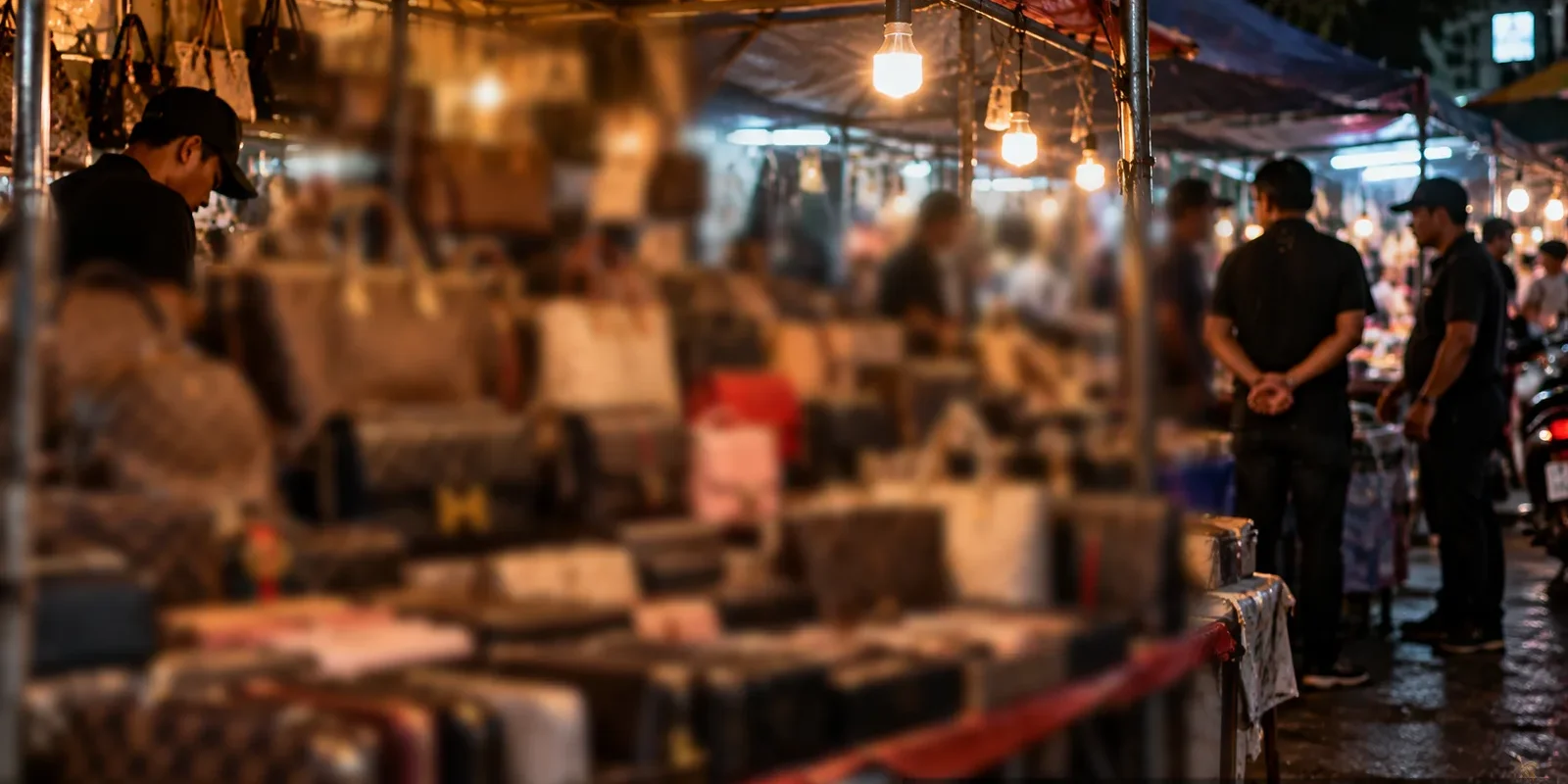
Fake goods in Thailand can look like a small holiday purchase, but the questions extend beyond whether an imitation looks convincing. This page originally linked counterfeit shopping to organised crime, sometimes making claims about individual purchases that it could not prove. I want to retain the concern while explaining the evidence, the customs issue and practical alternatives without naming brands or accusing particular sellers.
Fake goods in Thailand and the wider trade
INTERPOL describes counterfeit and pirated goods as part of a transnational illicit trade, with connections to other criminal activity. It also identifies risks to legitimate businesses, public revenue and consumer safety. That is a documented reason to take the issue seriously, rather than dismissing every fake as a harmless souvenir.
It does not follow that I can identify the destination of the money from any particular stall purchase. The original article’s stronger suggestions about what each buyer was funding went beyond the evidence available here. A general relationship between illicit markets and organised crime is not proof of a specific seller’s involvement in another offence.
I would make the shopping decision without needing that accusation. If a product is being sold as something it is not, the buyer already has a problem with provenance and accountability. Asking who made it, who stands behind it and what happens if it fails is reasonable even when the price is low.
A cheap item is not automatically counterfeit
An inexpensive locally made bag, an unbranded watch or a simple cotton shirt is not a fake merely because it costs less than a luxury product. Counterfeiting concerns misuse of another party’s protected identity or rights, rather than cheapness itself. Avoid treating ordinary market traders as suspicious simply because their goods are affordable.
That distinction offers a practical alternative. Buy an item for its materials, workmanship and usefulness instead of the borrowed prestige of a false label. Ask the seller about the maker and care instructions. A plain product with an honest description may be a better purchase than an imitation with an impressive-looking package.
Our guide to budget shopping and street food takes that approach. Enjoying good value does not require pretending a product came from somewhere it did not.
Customs allowances do not make prohibited goods lawful
Thai Customs guidance checked in 2026 lists counterfeit trademark goods and intellectual-property-infringing goods among prohibited imports and exports. A general personal baggage allowance should not be treated as permission to carry a prohibited item. The item’s nature and the customs rules matter, not only the amount paid for it.
Check the rules for the country you are entering as well as those for leaving Thailand. Different destinations can apply different procedures and exceptions. This article does not claim that one worldwide rule allows a particular number of fake items for personal use. Ask the relevant customs authority before relying on a friend’s experience at an airport.
Our separate guide to counterfeit goods and travelling home helps frame those questions. Taking off a label, discarding packaging or mailing an item separately does not provide a sound basis for assuming the legal issue has disappeared.
Think about the consequence of failure
A misleading label is concerning in any purchase, but the practical stakes differ. An item used on the body, connected to electricity or relied on for protection needs a particularly trustworthy source. Packaging and appearance alone cannot demonstrate that the contents or components meet the claimed standard.
INTERPOL’s overview gives examples of illicit products causing health and safety harm, including mechanical parts. I am not asserting that every inexpensive product is dangerous. I am saying that uncertainty about a safety-critical item’s origin is a poor trade for a small saving.
For such purchases, use a seller who can identify the supply source and provide reliable after-sales support. Keep the receipt, model details and packaging information. If something seems wrong, stop using the item where appropriate and ask a qualified professional or the relevant authority for guidance rather than testing the risk yourself.
Questions worth asking before paying
Ask whether the product is genuine, who supplies it and what evidence supports the claim. A vague phrase such as factory extra or same quality does not explain authorisation. If the seller openly describes it as a copy, do not reinterpret that as a special category of genuine bargain.
Check the total price and return terms, but remember that a written receipt cannot transform a counterfeit into an authorised product. An elaborate certificate is only useful if its issuer and meaning can be verified independently. A document supplied by the same person making the claim is not independent confirmation.
I would also resist pressure to buy immediately because the opportunity is supposedly secret or available only today. A legitimate purchase should survive a pause for checking. If you cannot establish enough confidence, leave it. The time already spent looking does not create an obligation to spend money.
Online offers need the same scrutiny
A polished listing and a large number of comments do not establish a product’s origin. Look for the seller’s identity, a clear description and a practical contact route. Be careful when the conversation is pushed away from the platform or the payment instructions do not match the business you thought you were dealing with.
Save the listing and messages if you proceed with a legitimate purchase. When comparing offers, compare the actual product and warranty rather than just the photograph. Two listings using the same promotional image may not be offering the same goods or support.
Do not send identity documents or unnecessary personal information simply to receive a discount. If a payment request seems unusual, verify it through a separate contact route. The opportunity to ask a question before paying is more valuable than an argument afterwards about what the listing was supposed to mean.
If you discover a problem later
Preserve the receipt, listing and correspondence, and contact the seller with a factual description of the issue. If a payment dispute or consumer complaint is appropriate, use the relevant official or payment-provider process. Do not make public allegations about a person’s wider criminal activity without evidence.
If you are worried about carrying the item across a border, ask the customs authority how to proceed before travel. Do not conceal it or make an inaccurate declaration. A mistake in buying something is better addressed directly than compounded by an attempt to hide it.
As a Swedish woman writing about shopping here, I want readers to feel comfortable choosing something simple and honestly made. A souvenir does not need an expensive identity to be worth keeping. The best alternative to a fake may be an item you actually like, from a seller who can explain what it is.
FAQ
Does a low price prove that something is counterfeit?
No. Many legitimate products are inexpensive. Look at the product’s identity, provenance and claims rather than price alone.
Does a duty-free allowance cover counterfeit goods?
Do not assume so. Thai Customs lists counterfeit and intellectual-property-infringing goods as prohibited imports and exports, as checked in 2026.
Can I claim that a particular stall funds organised crime?
Not without specific evidence. The documented connection between illicit trade and criminal networks does not establish an allegation against every individual seller.
What is a sensible alternative to buying an imitation?
Choose a genuine or honestly unbranded product from a seller you can identify, and judge it on quality, usefulness and support rather than a copied label.
More from Personal Thailand
If you enjoy practical reporting and personal perspectives on Thailand, you can support my work and explore member-only content through either platform:
- Subscribe to Personal Thailand on X — creator membership with access to applicable subscriber-only posts and benefits.
- Join or support Personal Thailand on Buy Me a Coffee — browse available memberships and support options.
These are separate services with different charges and membership benefits. Paid access may be required; subscribing on one does not automatically grant access on the other. The main information in this article is free to read above.