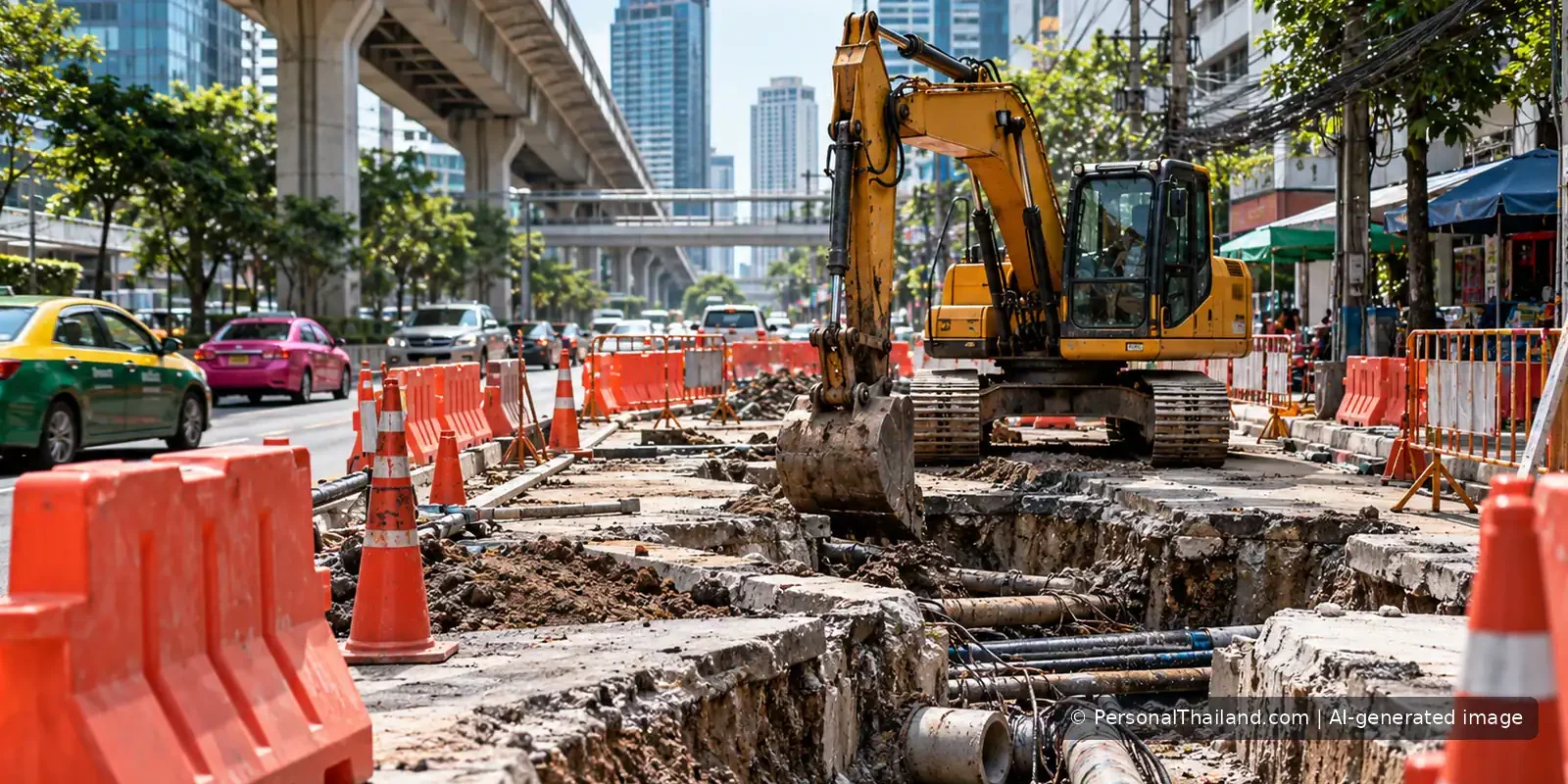
Roadworks can seem endless when the same neighbourhood street in Bangkok is opened, filled and resurfaced more than once. What looks like a straightforward repair from the pavement may involve several utilities beneath it: water distribution, drainage, electrical or communications infrastructure. For residents and shop owners, however, the most immediate questions are usually practical. How long will the disruption last, is the site safe and whom should you contact if something goes wrong?
In a short post from July 2007, a Bangkok resident described repeated excavation outside their home and a temporary water hose that appeared to leak when vehicles drove across it. That was an observation of a particular street at a particular time. It does not establish that every road in Bangkok is dug up every year or that one department was responsible for all the work.
Why one street may be excavated repeatedly
Different projects can affect the same road without being part of the same contract. A water main may need attention, while drainage maintenance and pavement renewal are scheduled separately. A road surface that appears finished can later be opened for an emergency repair if a fault develops underground. The reason for a particular excavation must be checked against the on-site project notice or the relevant authority, rather than guessed from the appearance of the hole.
Weather can also make defects more noticeable. After heavy rain, inadequate drainage may leave standing water, which is not always proof of a broken water main. Likewise, clear water appearing near a repair site might be associated with water-supply work, but the source cannot be identified reliably without an inspection.
If you see a leaking pipe or temporary connection
Do not move a temporary pipe, loosen fittings or try to repair an exposed water line yourself. The connection may be pressurised or close to other underground services. Keep children and pets away from open excavation, exposed cables and unstable barriers.
For a suspected supply-pipe problem in its service area, the Metropolitan Waterworks Authority lists its contact details and the 1125 call centre. You can describe the location, whether water is visibly escaping and whether the road surface or public access appears affected. The authority can assess whether the matter belongs to its system or another agency. Do not assume a Bangkok utility is responsible for an address outside its coverage.
If there is an immediate danger to people or passing traffic, move to a safe distance and contact the appropriate emergency service. Do not stand in moving traffic to photograph the damage. A useful report can include a photo taken safely, a nearby landmark, the date and the exact side of the street.
How to report a road or drainage problem in Bangkok
Bangkok residents have a digital reporting channel called Traffy Fondue. Thailand’s National Science and Technology Development Agency describes it as a system that lets people submit municipal problems, including damaged roads and pipe leaks, using a photo and location information. The issue can then be routed to the responsible authority and tracked. The Bangkok Metropolitan Administration also publishes progress work concerning city issues handled alongside Traffy Fondue.
Use the current official instructions for the app or LINE reporting channel; the interface and supported issue categories may change. Add enough detail for someone unfamiliar with your street to identify the problem without having to call you several times. For example: “Water is leaking from a temporary pipe beside the footpath near [landmark]; roadworks began on [date]. The pedestrian passage is partly obstructed.”
Make the report useful
- Describe the visible problem, not a guess about who caused it.
- Specify the exact location, including lane, soi or nearby building where possible.
- State when you first noticed the issue and whether it is worsening.
- Explain if there is a safety hazard, blocked footpath, access problem or loss of water pressure.
- Keep the report number or confirmation message and avoid opening duplicates unless the situation changes significantly.
What to ask the roadworks contractor or building manager
Where a site has an official notice with a responsible agency or project contact, ask for the intended work scope and estimated end date. Treat an approximate completion date as provisional: underground conditions and weather can alter the schedule. A building manager may also be able to coordinate access or clarify whether a water interruption has been announced.
For a property affected by recurring works, document the disruption factually. Photographs, dates, notices and official reference numbers are more useful than assuming a contractor is deliberately performing poor-quality repairs. You can also ask which agency is responsible for restoring damaged surfaces after the utility work finishes.
Planning around the disruption
While works are in progress, favour clearly marked pedestrian routes and avoid walking through excavations to save a few metres. Motorcyclists and drivers should slow down near uneven surfaces and temporary plates. During heavy rain, a water-filled hole may be impossible to assess from above, so do not drive or walk through it just because other people have done so.
For homes and shops, keep small practical backups: enough stored water for a short interruption, an alternative delivery entrance where available and contact information for neighbours or the building office. Any bottled water or storage should remain suitable for its intended use and hygienic.
What repeated roadworks do—and do not—prove
Multiple excavations are frustrating, and residents reasonably expect clearer coordination between agencies. But repeated works alone do not prove corruption, waste or a recurring engineering defect. The most effective response is to get the cause and responsible office established, then report specific hazards and follow up on the recorded case.
The 2007 resident was asking a fair question: why was their street being dug up again? Today’s answer begins with identifying the precise project, protecting public safety and using the correct reporting channel rather than accepting an unsupported explanation.