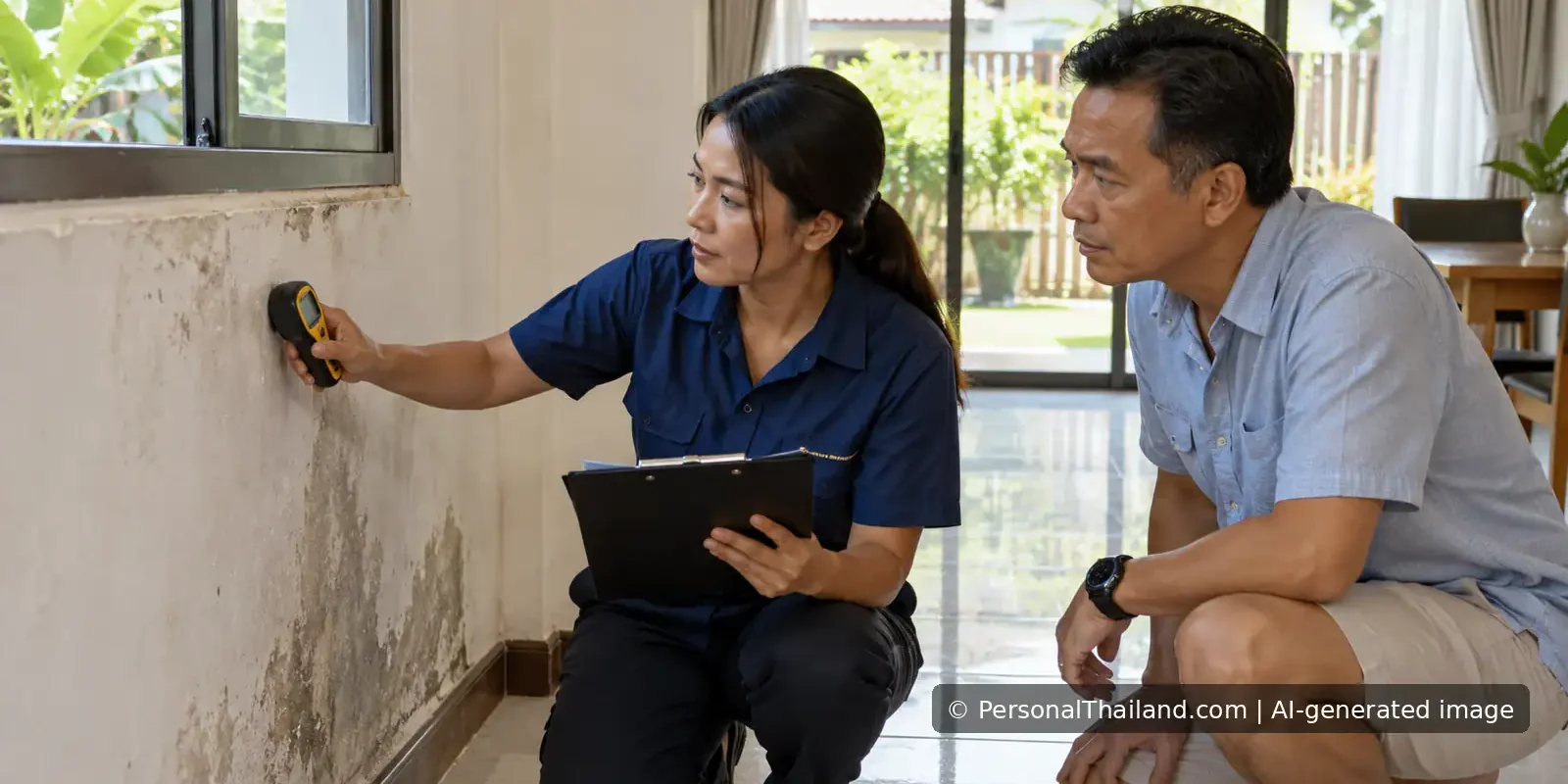
Buying a house can be exciting, especially when the property is far from where you currently live. Fresh paint, attractive photographs and an enthusiastic estate agent can make it difficult to notice a leaking roof or a cracked wall. A proper inspection gives you a clearer picture before a large financial commitment becomes hard to reverse.
The original version of this PersonalThailand article, written in July 2008, described someone living in Thailand who was planning to buy a home in the United States. A home inspector reportedly noticed foundation cracks before the purchase was completed. That is a useful illustration, but one personal anecdote is not proof that every crack is dangerous or that an inspection catches everything.
Why an independent inspection matters
An inspector engaged by the buyer should examine the condition of the property and explain observed problems in a written report. The US Consumer Financial Protection Bureau recommends arranging an independent inspection promptly, choosing someone accountable to the buyer and attending when possible. Its guidance is written for the US housing market; it is not a statement of Thai property law.
In Thailand or elsewhere, the underlying principle is the same: the party selling a house and the person checking its condition should not be assumed to have identical interests. Ask what the inspector is qualified to assess, what the fee covers and which specialist investigations may still be needed.
What to check on site
- Roof and ceilings: look for water stains, dampness, patched areas and defective drainage.
- Walls and foundations: note cracks, settlement, uneven floors and doors that no longer close properly.
- Electrical systems: look for damaged wiring, overloaded extensions and poor-quality previous alterations.
- Water supply and drainage: check pressure, leaks, blocked outlets, pump performance and signs of recurring water intrusion.
- Air conditioning and ventilation: confirm that installed units work and the space can be maintained safely.
- External areas: examine access routes, boundary walls, retaining structures and places where rainwater can collect.
The inspector may not be a structural engineer, electrician or pest specialist. Significant foundation movement, suspected termite damage or complex electrical concerns can justify additional assessment by a qualified professional. A written limitation in the report matters as much as the list of findings.
In Thailand, consider climate and construction
Rain, heat and humidity create particular maintenance demands. Visit during or after rain if you can; pooling water and small roof leaks can be less visible on a sunny day. Ask about previous flooding, water intrusion and major repairs, and request documentation where available. Check whether the property is served by public utilities or private systems that require ongoing maintenance.
For a condominium unit, do not stop at the apartment door. Common-area condition, elevators, the building’s reserve funds, governance and recurring fees may affect the costs of ownership. A good individual unit can still be inconvenient if the shared building needs extensive work.
A physical inspection is not a legal title search
A structural inspection cannot verify whether the seller owns the property, whether the land or unit is subject to an encumbrance, or whether a buyer is legally eligible to acquire it. In Thailand, foreign nationals should take independent legal advice on the distinction between land and condominium interests, title and registration, and any applicable ownership restrictions. Use the appropriate Land Office and licensed professionals to verify documents rather than treating an estate agent’s summary as definitive.
This legal check is separate from the condition report. It also differs from valuation: an appraisal may estimate market value while a building inspection examines physical defects. A high valuation is not proof of a sound roof or legal title.
Use the report to make a decision
Not every fault should end a purchase. Divide findings into immediate safety concerns, major repair costs and normal maintenance. Get independent quotes for expensive works and clarify responsibility for any repairs. If your purchase agreement is conditional on satisfactory inspection, have your lawyer explain how that condition operates under the relevant jurisdiction.
When buying from overseas, try to attend the final inspection or arrange a trusted independent representative. Request photographs, written findings and clarification on anything not accessible during the inspection. Avoid pressure to sign before the checks are completed.
The best result of an inspection is not a perfect score. It is an informed decision: proceed, renegotiate, commission specialist work or walk away because the risks are greater than expected.