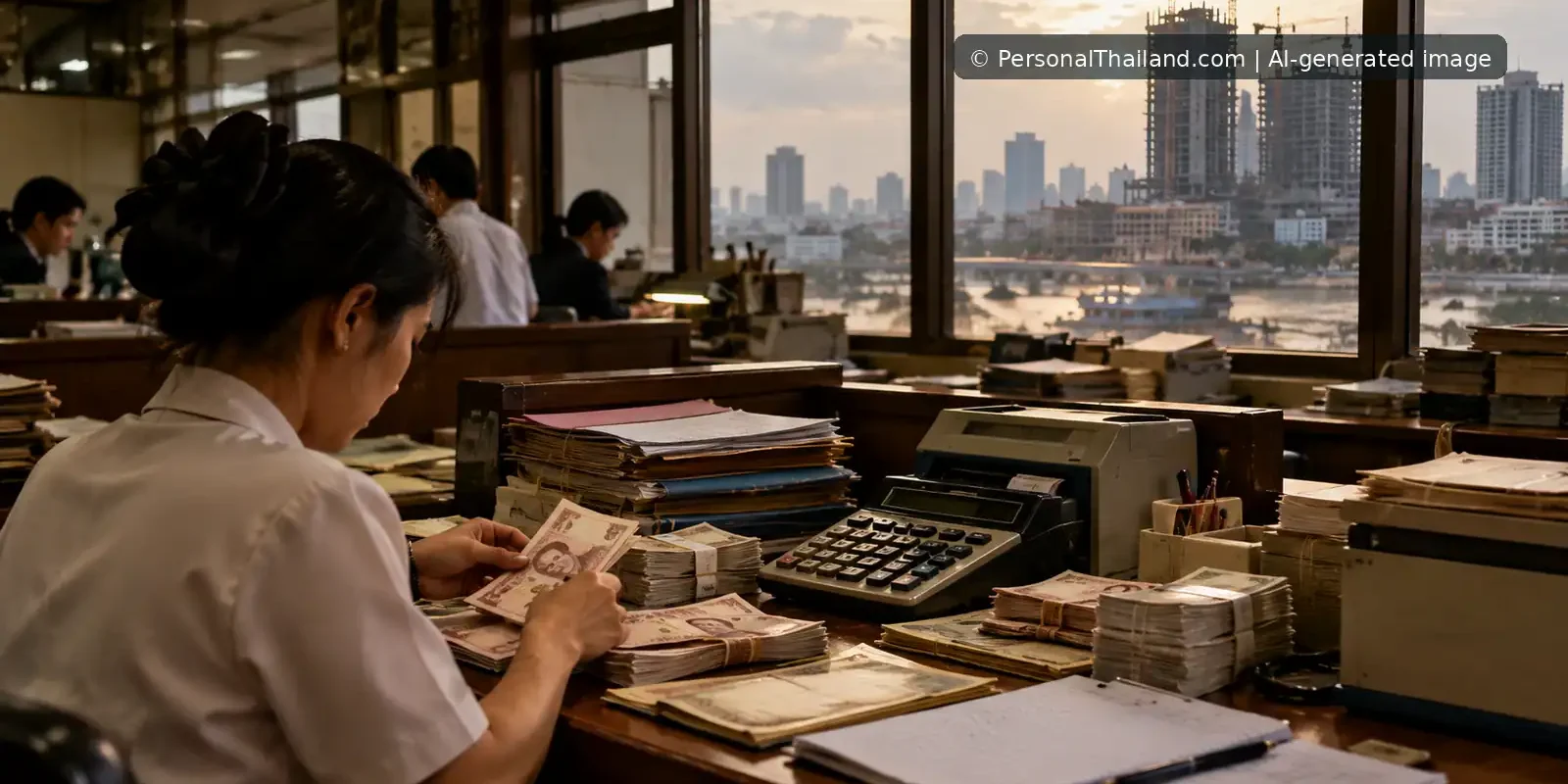
On 2 July 1997, Thailand abandoned its long-standing exchange-rate peg and allowed the baht to float. The decision marked the beginning of the Asian financial crisis, sometimes called Thailand’s Tom Yum Kung crisis. Almost a decade later, a Personal Thailand article reflected on the collapse of the “Asian Tiger” and warned about speculative property buying. The history remains important, but a warning written in 2007 should not be mistaken for a prediction about Thailand’s housing market today.
To understand the 1997 crisis, it helps to look beyond the dramatic movement in the currency. Lending, overseas borrowing, property development and weaknesses in financial supervision had become interconnected. When confidence weakened, problems in one part of the financial system quickly spread to businesses and households.
What happened to Thailand in July 1997?
Before the crisis, the baht operated under a fixed exchange-rate arrangement, with the US dollar playing a central role. That apparent stability made foreign borrowing attractive to Thai companies and financial institutions. A business earning baht could borrow in a foreign currency without fully appreciating what would happen if the exchange rate changed sharply.
The Bank of Thailand’s account of the crisis describes the build-up of private capital inflows, substantial property investment, weak loan assessment and mismatches between short-term foreign funding and long-term domestic projects. The problem was more complicated than people simply taking too many mortgages: lending institutions, developers and the wider economy were exposed to several risks at once.
As economic imbalances grew and confidence faltered, defending the baht became increasingly difficult. On 2 July 1997, the authorities moved away from the old exchange-rate system. The effects were felt across Thailand and subsequently elsewhere in Asia.
Why property development mattered
During Thailand’s boom years, property was an attractive destination for investment. Developers built homes, offices and commercial projects in anticipation of sustained growth. Rising prices could make an investment appear sound even when the number of genuine buyers or tenants was uncertain.
A property project funded by borrowed money is vulnerable when sales slow. The developer must still meet financing costs, and lenders may discover that the collateral is worth less than expected. If enough borrowers face that problem together, trouble spreads beyond individual buildings.
That is why the Bank of Thailand identifies excessive real-estate investment and weak credit assessment among the factors that made the economy vulnerable. The financial crisis was not caused by one empty apartment block or by a single group of buyers. It was a system-wide combination of exposure, incentives and insufficient safeguards.
Why borrowing in another currency can be dangerous
Imagine a company that earns its revenue in Thai baht but borrows in US dollars. When the exchange rate is stable, repayments may appear manageable. If the baht loses value, the amount of baht required to service the same dollar-denominated loan rises. The borrower can face severe pressure even if its day-to-day business has not changed.
The opposite situation matters for an individual receiving income from abroad and paying expenses in Thailand. Currency movements can make a retirement budget, rental income or property purchase feel cheaper one year and substantially more expensive the next. None of these outcomes is guaranteed, and the 1997 experience does not tell us which way today’s exchange rate will move.
Five lessons that remain useful
1. A rising price does not prove lasting demand
When considering a home or condominium, investigate comparable completed sales, the number of available units, building management and actual rental demand. A seller’s assurance that prices “always go up” is not evidence of future growth.
2. Check the debt, not only the asset
A property can be attractive while its financing is unsuitable. Consider interest costs, repayment obligations, maintenance fees, vacancy periods and how much income could decline before the investment becomes difficult to support.
3. Match borrowing to your income
Borrowing in a currency different from your income creates exchange-rate exposure. Ask how a plausible adverse currency move would affect repayments. A professional adviser can help assess risks, particularly for complex cross-border arrangements.
4. Keep access to emergency funds
Long-term investments are not a substitute for immediately accessible money. A buyer who commits nearly all available savings to a deposit may struggle with an unexpected move, repair, illness or interruption in income.
5. Distinguish history from a current warning
Thailand’s 1997 collapse is documented history. A claim that the country is experiencing another identical property bubble in October 2026 requires current lending, vacancy, price and financial-stability evidence. An old opinion column is not enough. The International Monetary Fund’s historical review is useful for understanding the earlier crisis, not forecasting the next one.
What visitors and foreign residents can take from this history
Travellers are rarely concerned with property-lending standards when booking a holiday, but the lessons affect ordinary decisions too. Avoid booking a large long-term commitment solely because a price looks favourable today. If you plan to relocate, make a budget in the currency in which you will actually pay rent, bills and other expenses. Include a margin for unexpected costs.
For a prospective property purchaser, independent legal advice matters as well as financial advice. Ownership and transaction arrangements for foreign nationals in Thailand require careful examination, and a salesperson is not a substitute for an independent professional. Do not assume that a rental yield or promised future resale price is guaranteed.
How should we remember the Asian Tiger crash?
The original Personal Thailand post was written on the tenth anniversary of the crisis. Its concern about easy money and speculative building was understandable, but some contemporary comparisons were opinions rather than proven forecasts. The lasting story is clearer: rapid growth becomes fragile when debt, currency risk and property expectations are poorly understood.
Thailand’s economic landscape has evolved since 1997. Remembering what happened is valuable precisely because it encourages a more disciplined question: what do the available facts tell us now, and what risks are we overlooking?