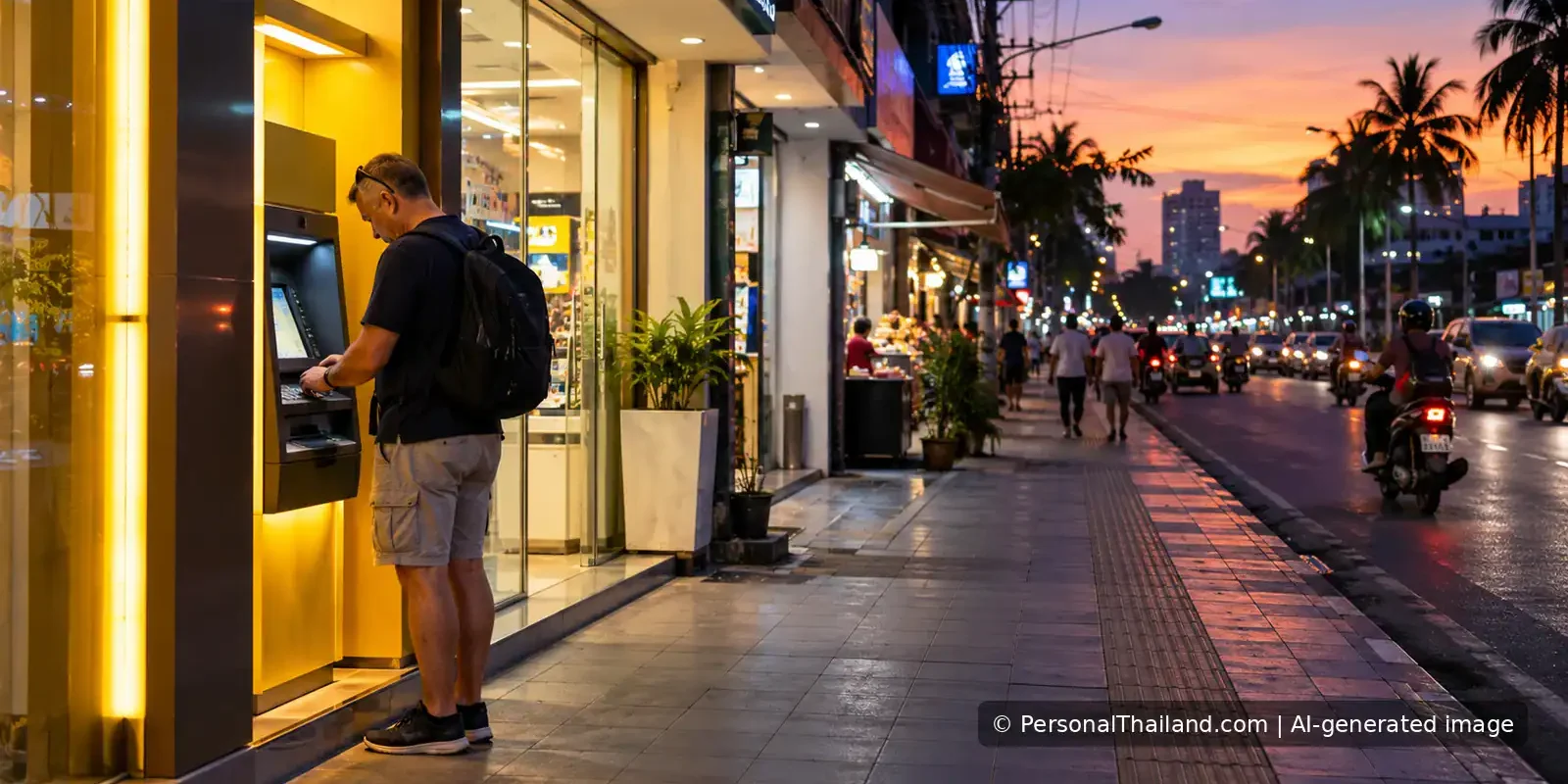
An article on this site warned about ATM skimming in Thailand in March 2009. It claimed that most machines were unsafe, but the original text did not supply a reliable nationwide survey to support its percentage. That statistic should not be recycled today. The useful subject is still important: how can a visitor or resident withdraw cash while reducing exposure to card theft?
ATM safety combines the physical machine, the payment card, the security of your PIN and how quickly you recognise an unauthorised transaction. Most users never see a skimming device, and no quick visual check guarantees that a cash machine is perfectly secure. A few sensible habits, however, can reduce avoidable risks.
What is ATM skimming?
Skimming involves collecting card information with a device placed on or near a card reader. Criminals may also try to learn the PIN by observing the keypad, installing a hidden camera or using a false keypad. Stolen details may then be used in attempts at unauthorised transactions.
The Bank of Thailand’s card-fraud guidance describes these techniques and encourages users to notice unusual attachments around the card slot and keypad. The precise technology changes over time, so a description from 2009 is not a complete account of every modern fraud method.
Check the machine before inserting your card
Look at the card-entry area, keypad and nearby panels. If something appears loose, unusually bulky or damaged, choose another machine and alert the bank. Do not force a card into a suspicious reader. If anyone offers unexpected assistance, keep control of your card and do not reveal the PIN.
A machine inside a branch or well-lit shopping centre may feel easier to use, particularly if staff can assist with a fault. That is a practical preference, not proof that outdoor machines are compromised or that indoor machines cannot be targeted.
Protect the PIN every time
- Cover the keypad with your free hand when entering the PIN, including where no camera is visible.
- Stand close enough to the machine to limit what people behind you can see.
- Never tell a stranger your PIN, even if they claim they can help recover a stuck card.
- Do not write the PIN on the card or keep it in the same wallet compartment.
- If you suspect someone learned the PIN, contact your card issuer promptly about changing it or blocking the card.
The Bank of Thailand’s debit-card information also stresses treating cards carefully and keeping the PIN confidential. Payment controls offered by your particular bank may include app-based freezing, withdrawal alerts or transaction limits, but availability and settings differ.
Chip cards improved security, but did not end fraud
Older payment cards relied heavily on magnetic stripes, which could be copied with relatively simple equipment. Chip technology and newer banking safeguards changed the risk profile. The Bank of Thailand’s historical overview of payment-card security explains why skimming became a concern and what kinds of measures were introduced.
Modern card protection still depends on multiple layers: an authentic card reader, security checks by the issuer, your PIN and alerts that flag unusual activity. Contactless and mobile payment methods introduce different considerations rather than removing the need to inspect statements.
What if the ATM retains your card?
Stay calm. Do not accept an unknown person’s offer to take you elsewhere while they supervise the machine. Use a number from your banking app or the official card issuer’s website to report the problem. A telephone number displayed on an ATM should be checked where possible before sharing sensitive information.
Depending on the bank and the circumstances, a retained card may need to be blocked and replaced. Avoid repeatedly entering a PIN if a machine behaves strangely. Keep a note of the approximate time, machine location and any transaction reference without posting your full card details online.
Report suspicious withdrawals quickly
Use banking notifications where available and review your transactions, including after you return home. If an unfamiliar withdrawal appears, contact the issuing bank through its official fraud-reporting route and ask what documentation is needed. Whether money can be recovered depends on the bank, the card network and the facts; refunds are not guaranteed.
Record details while they are fresh. If the bank asks you to file a police report, follow its instructions and local procedures. Never send a photo of the entire card, PIN or one-time banking code to somebody claiming to investigate the case.
A more accurate lesson than the old 2009 statistic
Thailand’s ATM network cannot be judged by one unsupported percentage from an archived post. Skimming is a recognised risk, but a traveller can manage it through observation, PIN protection, bank alerts and prompt reporting. The goal is not fear of every cash machine; it is a habit of checking both the terminal and the account behind it.