
Updated 17 October 2026. This guide replaces a scare headline with practical advice about counterfeit and pirated goods.
“Get arrested when buying a pirated DVD in Thailand” is catchy, but it oversimplifies the real issue. Travellers are better served by understanding that counterfeit goods and intellectual-property-infringing items can create customs or legal problems, even if a market stall makes the purchase feel casual or harmless.
Quick takeaway: If an item appears to copy a famous brand or is obviously pirated media, treat it as risky. Cheap does not always mean harmless.
What Thai Customs says
Thai Customs lists counterfeit trademark goods and IPR-infringing goods among prohibited goods. That means the subject is not just about market etiquette or bargaining; it sits inside a formal legal and customs framework.
In practice, travellers can face problems when buying, carrying or attempting to bring such items across borders. The risk is not limited to the purchase moment itself.
Why fake goods can backfire
A shopper may think a copied wallet, sunglasses case or pirated media disc is only a cheap souvenir. But customs officers, destination-country authorities or online-platform rules may view the item very differently. Goods can be confiscated, and in some situations further legal issues are possible.
Another issue is quality and safety. Fake electronics, cosmetics or accessories may not meet basic standards, and there is no dependable after-sales protection.
Common risky situations for tourists
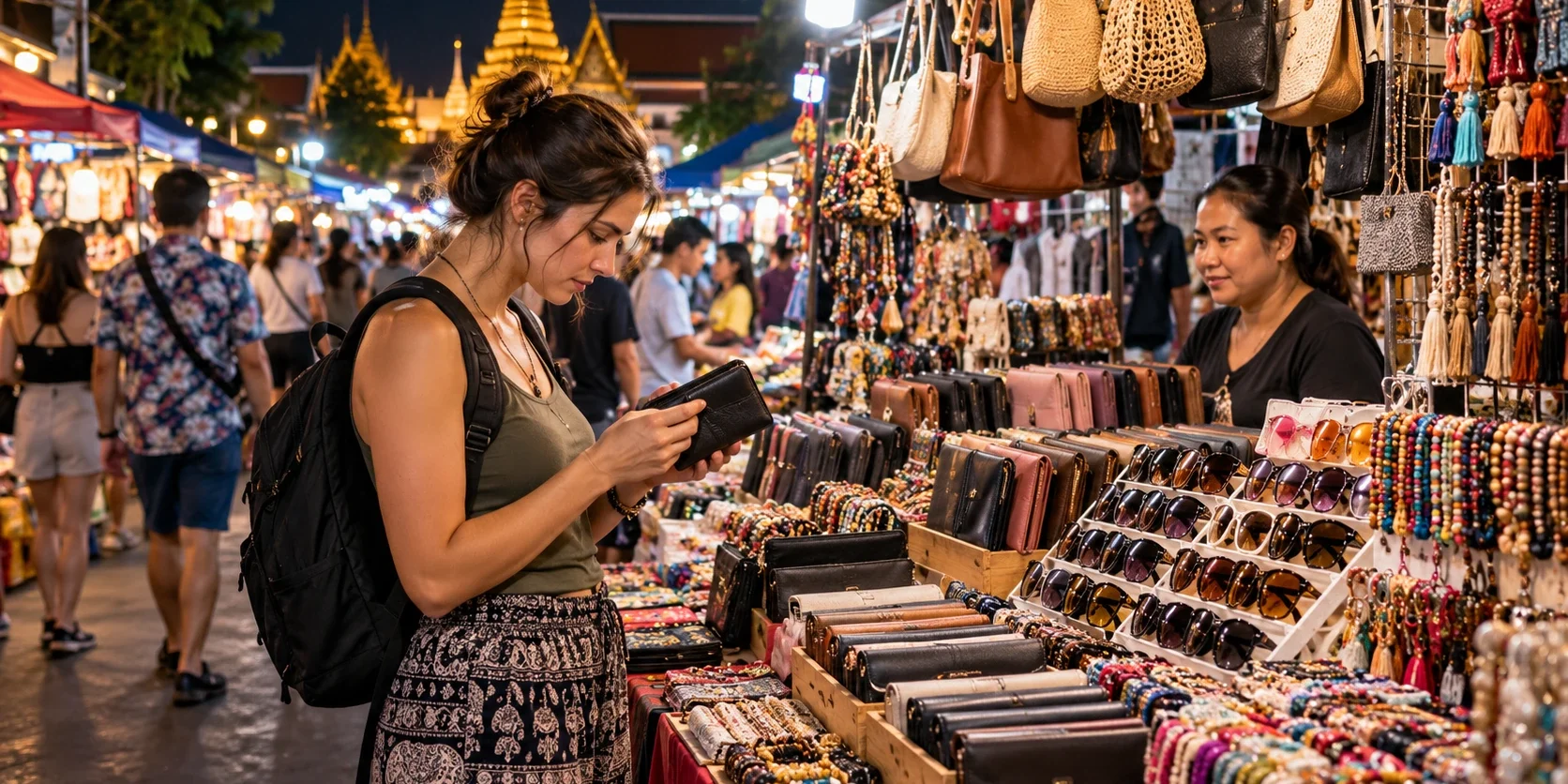
Night markets and tourist shopping zones often sell goods that imitate global brands. The most obvious red flags are items with luxury logos sold at impossible prices, copied entertainment media and products where the seller cannot explain the brand or origin clearly.
If you are unsure whether something is legitimate, the simplest response is not to buy it. Thailand has plenty of legal shopping alternatives and locally made products that do not carry the same risk.
Safer alternatives
Focus on genuine handicrafts, food products that are permitted for travel, clothing without copied branding and souvenirs from reputable shops. If a purchase matters to you, ask for a receipt and keep it.
Travellers flying onward should remember that a problem may arise not only in Thailand but also when entering another country.
Frequently asked questions
Does buying a fake item always lead to arrest?
No. But it can lead to confiscation or other legal trouble, so the risk is real enough to avoid the purchase.
Are pirated DVDs and fake designer items treated the same?
They are different products, but both may fall under intellectual-property-infringing goods.
What is the simplest advice?
If it is obviously fake or pirated, leave it alone and buy a legal alternative instead.
Official sources and further reading
Editorial note: We removed blanket arrest claims and unsupported scare language from the older article. This is general information, not legal advice.





that’s interesting please send us a picture of that
It will be interesting to see whether this crackdown extends to areas where “most” pirated goods are sold – in offices and malls. For example, I work in a complex of three office blocks where approximately 12,000 staff are employed. DVD vendors rent space from building management and sell DVD’s for 80 baht and Blu-Ray for 120 baht. You can order direct (without packaging) for 40 baht.
My guess is that it will just be restricted to the tourist areas where copy DVD’s are sold at extortionate prices anyway.