
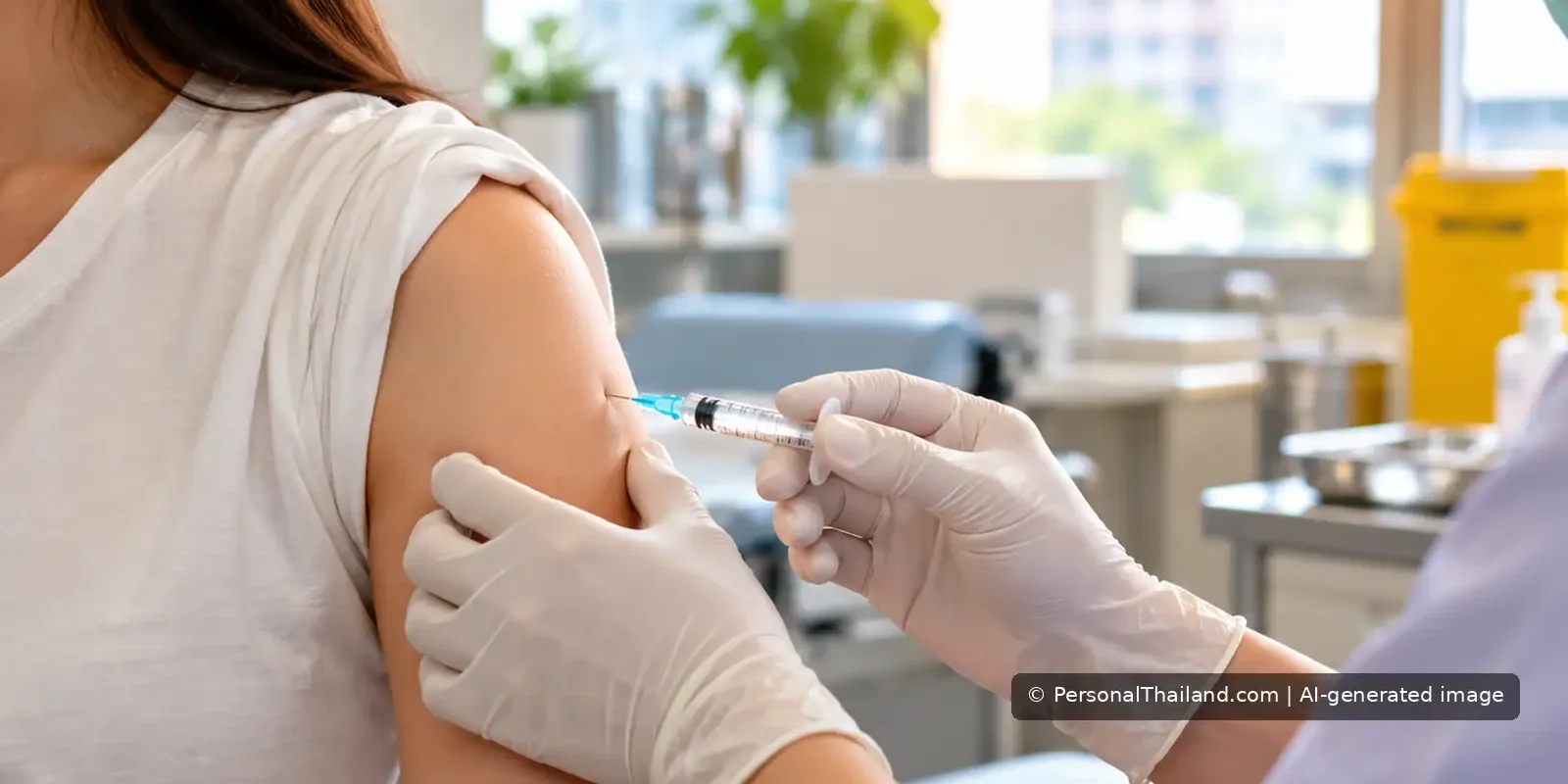
HPV vaccination is an important part of cervical cancer prevention in Thailand and around the world. A 2007 article on this site discussed Gardasil as a newly available option, but several of its medical claims no longer hold up. Vaccines do not cure an HPV infection you already have, and eligibility, dose schedules and costs should never be copied from an old hospital advertisement.
What HPV vaccination is designed to prevent
Human papillomavirus, or HPV, is a group of viruses. Certain high-risk types can cause changes in cervical cells that may develop into cancer over many years. Other HPV types cause many genital warts. Vaccines train the immune system to prevent infection with types targeted by the vaccine. Different products cover different combinations of HPV types.
The World Health Organization explains that HPV vaccination is especially effective when given before exposure to the virus. This is why programmes place a strong emphasis on vaccination at a young age, while recommendations for older adolescents and adults vary by country.
Does Gardasil treat existing HPV, warts or cancer?
No. HPV vaccines are preventive, not treatments for an existing HPV infection, genital warts, abnormal cervical cells or cervical cancer. The US Centers for Disease Control and Prevention states clearly that the vaccine prevents new infections rather than treating existing disease.
Someone who has had HPV or genital warts may still benefit from vaccination against types to which they have not been exposed, depending on individual circumstances and local guidance. But a vaccine cannot guarantee that warts will never recur. Anyone with symptoms or previously diagnosed abnormalities needs the appropriate examination and follow-up; vaccination is not a substitute.
Who should ask about HPV vaccination in Thailand?
Eligibility depends on age, vaccination history, the particular vaccine and the national or hospital programme. WHO prioritises HPV vaccination for girls aged 9–14 years as part of cervical cancer prevention. Boys and other groups can also benefit according to local public-health policies and clinical recommendations. A clinic should check whether the person has already completed an appropriate series.
There is no universal rule that vaccination suddenly becomes useless on someone’s 27th birthday. Benefit typically decreases with age as previous HPV exposure becomes more likely, but an individual adult may still need a discussion about risks, product eligibility and local approval. The CDC’s US recommendations, for example, consider shared decision-making for some adults aged 27–45 years; this should not be mistaken for automatic eligibility under a Thai public programme.
How many injections are necessary?
There is no single dose number that applies to every vaccine, age group and health condition. WHO has supported simpler schedules for eligible adolescents and certain products, while other guidance still uses two- or three-dose series depending on circumstances. An immunocompromised patient may require a different approach.
Rather than relying on an old claim that everyone needs three injections, ask the vaccination provider for the schedule that applies to the actual product and patient. Keep the vaccination record so future clinics can identify the dose dates and vaccine given. Do not restart or change the series without professional guidance.
How much does it cost in Thailand?
Prices at private clinics can vary, and coverage under public programmes depends on current eligibility and service arrangements. A price from 2007 is not a current quotation. Before agreeing to treatment, ask the clinic whether the advertised total includes every dose, consultation charges and any follow-up appointment. Get the product name and full schedule in writing.
Vaccination does not remove the need for screening
Even someone vaccinated against HPV still needs cervical screening according to the relevant national or clinical programme. No vaccine covers every cancer-associated HPV type, and vaccination cannot erase previous infection. A Pap test or an HPV DNA test may be recommended according to age, medical history and local guidelines.
The former advice to arrange a Pap smear every six months for everyone was incorrect. Screening intervals are based on the test used, age, previous results and risk factors. See the companion guide on cervical screening rather than assuming more frequent testing is always better.
Questions to ask a Thai vaccination clinic
- Which HPV vaccine product will I receive, and which types does it cover?
- What is the recommended schedule for my age and health history?
- Have I already received doses that count toward the series?
- Am I eligible under any current public programme, or is this private care?
- What is the complete cost, and how will the record be documented?
- What cervical screening should I continue after vaccination?
A preventive step, not a cure
HPV vaccination is a significant advance in preventing cervical cancer and other HPV-related disease. Its value does not depend on the inaccurate promises found in some early publicity. The strongest approach combines suitable vaccination, appropriate screening, timely assessment of symptoms and follow-up when a test is abnormal. For personalised advice in Thailand, speak with a licensed clinician familiar with current local recommendations.


For those who desire it, there are also various genital warts cream treatments available as well. Of course not everyone will decide to go this route and quite a few people these days will try their hand at using naturopathic treatments. This might sound odd to some people, especially if HPV treatments come in the form of genital warts cream treatments. Naturally enough there is a reason for this seemingly odd behavior on the part of people who are normally perceived to be rational, and that is the fact that, most of these genital warts cream medications have many side effects associated with them. For a populace which is inundated with medication after medication which has sometimes has more side effects than benefits, this can sometimes be the turning point in their decision whether to go with a genital warts cream or whether to go with a different treatment. What most people are wary of is the many associated side effects and how this will ultimately affect their lives.