
Updated 17 October 2026. This newly researched guide replaces an earlier article. Check travel conditions, operating arrangements and transport services close to your departure.
Chumphon sits along Thailand’s Gulf coast and is often treated merely as a stop on the way to the southern islands. That misses much of its appeal. Travellers who stay for a little longer can enjoy relaxed beaches, coastal viewpoints, mangrove scenery and regional food without building an itinerary entirely around boat connections.
At a glance: Use official provincial tourism information to choose the correct places, verify local travel details shortly before visiting, and do not rely on historical blog prices or timetables.
Why stop in Chumphon?
The Tourism Authority of Thailand presents Chumphon as a gateway to the south and especially to Ko Tao. The province also has a substantial Gulf coastline and a collection of quieter seaside communities. Many visitors find that the pace changes immediately when they leave the main transport corridors.
Rather than promising an untouched paradise, expect a lived-in coastal province: fishing businesses, seafood restaurants, local road traffic and beaches that look different with tide, weather and season. That is a more realistic reason to visit.
Thung Wua Laen Beach
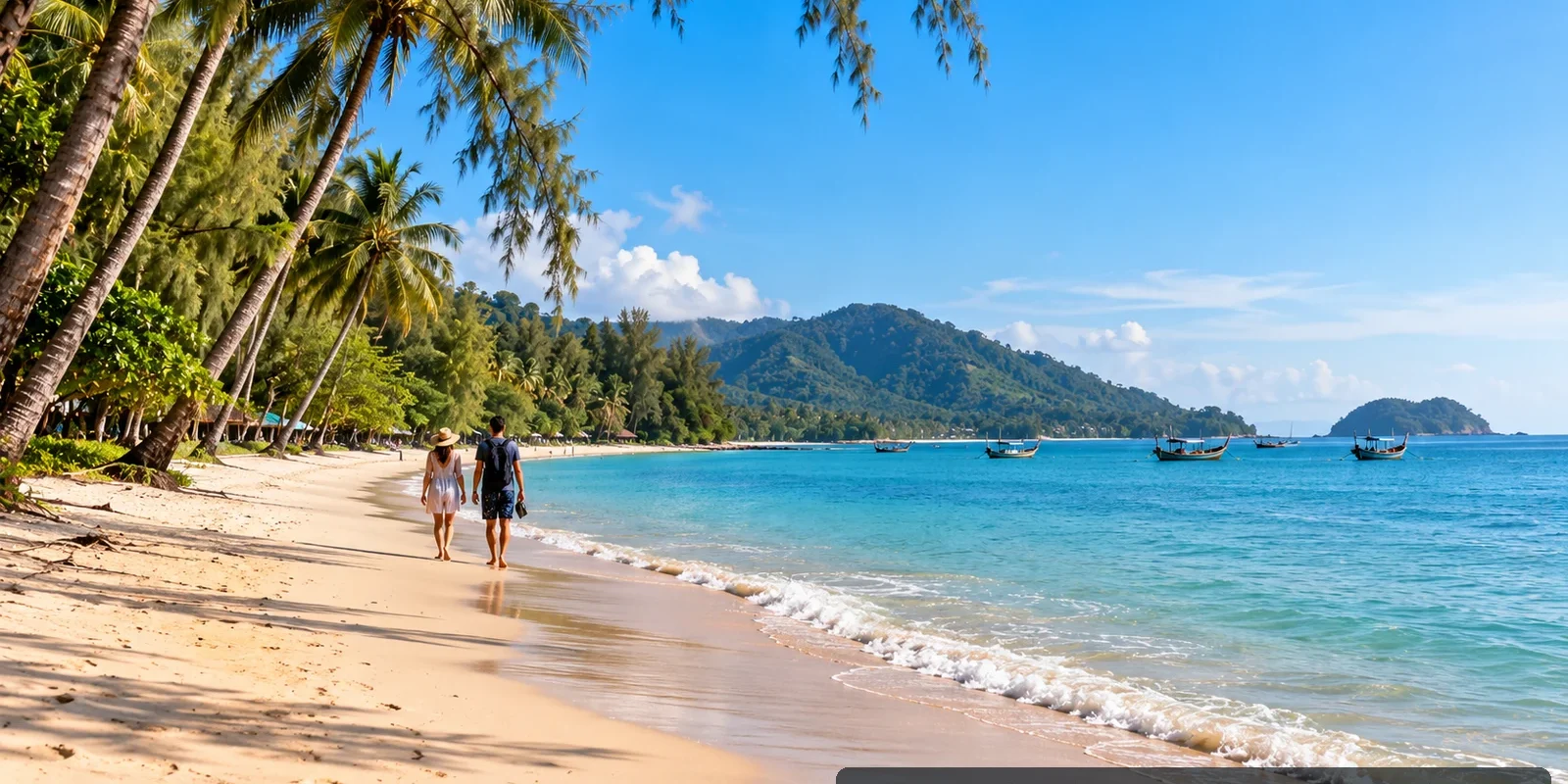
Hat Thung Wua Laen is named on the official province page as a long beach with accommodation and restaurants. It makes a sensible base for travellers who want morning walks, time by the sea and somewhere to eat without requiring a complicated day excursion.
Before booking, check the actual distance of your chosen accommodation from the sand, whether you need a vehicle after dark and whether the beach facilities you expect are operating on your dates. A beach location can be peaceful but less convenient for errands.
Hat Sai Ri and Khao Matsee
Hat Sai Ri is another coastal stop identified by Thailand’s tourist authority, together with a memorial associated with Prince of Chumphon. Khao Matsee viewpoint offers elevated coastal scenery and can be a good place to appreciate the landscape rather than spend another afternoon in the water.
The Tourism Authority’s recommended Chumphon route groups Hat Sai Ri, Mu Ko Chumphon National Park and Matsee Mountain on one day. Treat that as an itinerary idea, not proof that all places share one ticket or have unchanged opening hours.
Mu Ko Chumphon National Park
The marine-park area is a highlight for mangrove nature trails and island scenery. Conditions determine whether offshore activities are suitable; boat operators and park authorities may adjust departures or restrict access when wind and waves are poor.
Choose licensed or established operators, ask about life jackets and the actual route, and avoid assuming a calm mainland beach means calm water farther out. If a park requests that visitors remain on a designated path, respect that limit.
Going onward to Ko Tao
Chumphon is a useful mainland gateway for travellers heading to Ko Tao, but schedules, piers, transfers and weather cancellations can change. The exact pier can depend on the operator and the ticket, so check the booking confirmation rather than relying on a blog timetable from years ago.
Allow a reasonable connection buffer if combining a train, road transfer and ferry. If rough seas are forecast, plan for the possibility of a changed departure and keep essential medicines in your carry-on bag.
Try local food and communities
The province is associated with fishing and regional produce. You may find southern-style rice noodles with curry, seafood and locally grown fruit. Ask about spice level and food allergies rather than assuming that a dish with a familiar English name will be prepared the same way everywhere.
A small homestay or community-run visit can reveal more of Chumphon than a rushed beach stop. Check that any activity genuinely benefits local hosts and has arrangements appropriate for your group.
Two-day travel outline
Day one: settle near the coast, visit a beach and take in a viewpoint if the weather is clear. Day two: choose either a marine-park outing, a mangrove walk or a slower inland/community experience. Do not try to combine a full island transfer with multiple far-apart inland activities.
If you arrive late, prioritise a comfortable transfer and leave the sightseeing for daylight. The best plan is the one that does not require guessing at ferry delays.
Practical transport and accommodation
Chumphon town and the beach areas serve different needs. The town may suit onward transport and services, while a coastal property may suit rest and walking. Study the map rather than assuming every Chumphon address has a sea view.
Confirm pickup times if your bus or train arrives very early or late. If renting a motorbike, check licence and insurance suitability and do not use coastal roads as a place to learn to ride.
Sea safety and seasons
Visibility, surf and access to island areas vary. Avoid swimming in rough conditions and respect posted beach or park warnings. Weather forecasts are more useful close to the day than an old description calling one month universally safe.
Travel insurance conditions can differ for diving, snorkelling or boat excursions. Check the policy and the operator’s safety briefing before paying for an offshore day.
Frequently asked questions
Is Chumphon only a ferry stop? No; its beaches and parks can justify a short stay. Is every beach suitable for swimming? No; judge the sea on the day. Can you reach Ko Tao from Chumphon? There are services associated with this route, but confirm the current operator, departure point and weather status.
Official sources and further reading
- Tourism Authority of Thailand — Chumphon Province
- Tourism Authority of Thailand — Recommended Route in Chumphon
Editorial policy: This article is practical travel information, not a guarantee of weather, booking availability, safe swimming, opening hours or prices. Illustrations are AI-generated and not evidence of the exact appearance of individual heritage sites.
