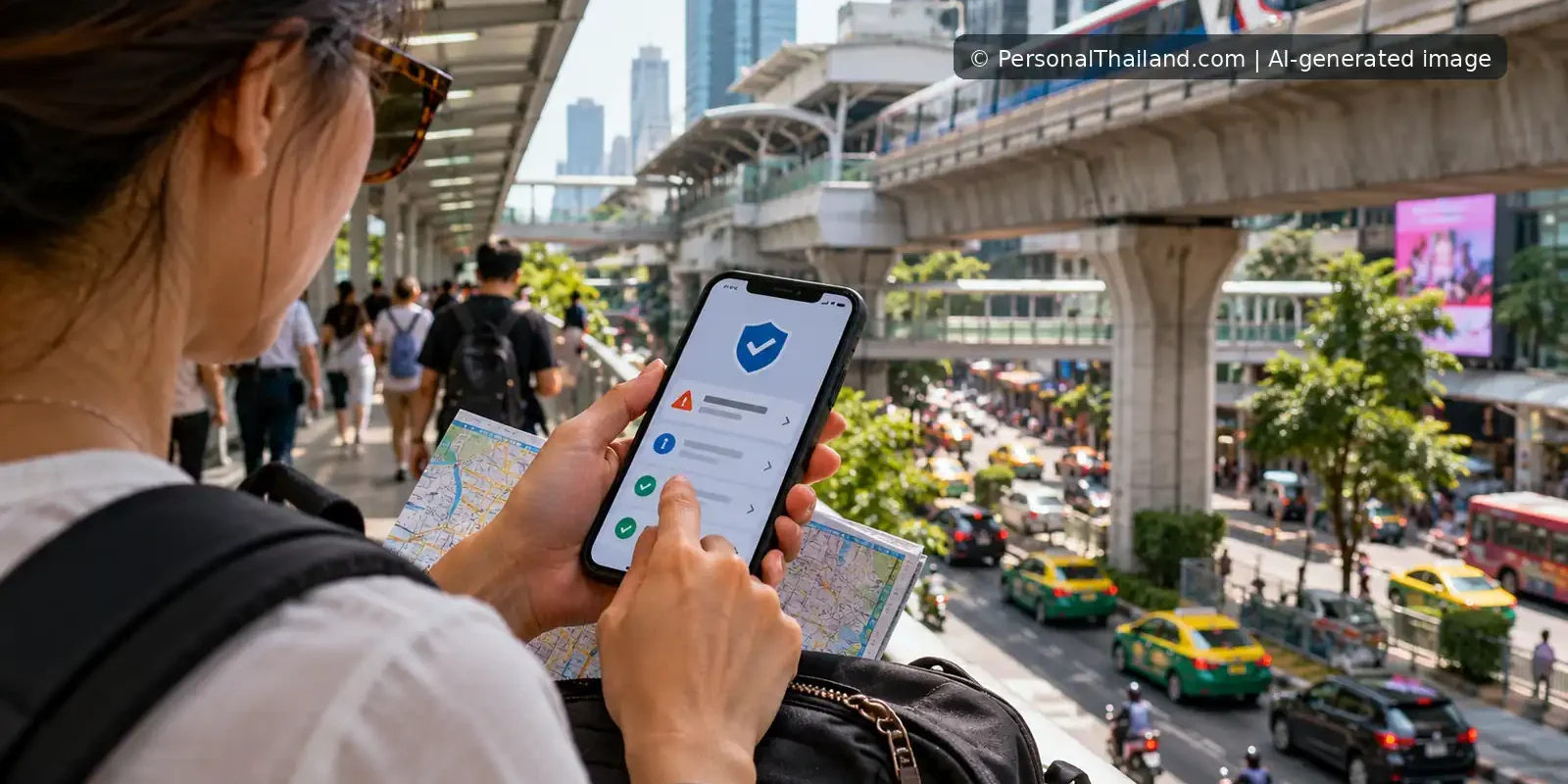
A dramatic warning about Bangkok can spread far beyond the date or neighbourhood it concerns. An old news clipping, an anonymous social-media post or a message forwarded between travellers may look urgent even when the original event took place many years ago. The first task is to establish whether the information is current, who issued it and exactly which location it covers.
In July 2007, Personal Thailand published a brief alert based on a report about stolen motorcycles and a possible security threat in Bangkok. The original post did not supply documentation sufficient to confirm the allegations, and it must not be circulated as an active warning today. A better use of the page is to explain how visitors can check official advice and respond calmly to a genuine security concern.
Start with the date and the issuing authority
Before sharing a security alert, check when the original notice appeared. A screenshot may hide a publication date, while a headline may refer to an investigation or a precaution rather than a confirmed event. Look for a statement from the relevant police, transport authority, embassy or established news outlet, and read the entire notice rather than only the headline.
Ask whether the alert identifies a precise place, a time period or any instruction for the public. A warning concerning an individual station, protest route or southern border province should not be expanded into a claim that every part of Bangkok is affected. If the message mentions an evacuation or road closure, seek confirmation from an authority responsible for that location.
What official travel advice actually says
The UK Foreign, Commonwealth & Development Office maintains a Thailand safety and security page covering matters such as terrorism, demonstrations, crime and practical personal precautions. It advises travellers to stay aware of their surroundings and follow local authorities, while noting that security situations can change.
Its regional-risk guidance separately identifies particular areas near the Thailand–Malaysia border. Those geographically specific warnings should not be casually described as a Bangkok-wide emergency. Travellers from countries other than the UK should also consult their own government’s current travel advice, as recommendations and insurance consequences can differ.
How to evaluate a claim online
- Find the first publication. Search for the headline or an unusual sentence and check the oldest credible version.
- Look for a dated official statement. Identify the issuing agency and whether the notice is still in force.
- Check the geography. Bangkok, Pattaya, Phuket and Thailand’s southern border provinces are not interchangeable.
- Separate facts from speculation. A police investigation, suspicious object or precautionary closure is not proof of an attack.
- Do not pass along accusations. Avoid identifying suspects or blaming a religious, ethnic or national community without established verified facts.
If you encounter a suspicious situation
Move away from an immediate hazard instead of approaching it for photographs. Follow instructions from identifiable on-site authorities and keep access routes clear. A crowded street or unfamiliar security procedure is not itself evidence that something dangerous has happened, so avoid creating a scene based on a rumour.
When reporting a concern, be specific: describe what you can actually see, give a location and time, and say whether somebody needs medical help. Do not speculate about the motives of a stranger. Clear observations are more useful to responders than an interpretation of a rumour.
The Thailand Tourist Police lists the tourist assistance hotline 1155. The Tourism Authority of Thailand’s emergency directory also lists 191 for police and 1669 for emergency medical assistance. These are national contact resources, not a substitute for following any specific instructions at the scene.
Everyday precautions matter too
Visitors are more likely to need ordinary travel preparation than to act on a sensational historical warning. Keep essential documents secure, know how to reach your accommodation without relying entirely on a phone battery and avoid leaving valuables unattended in transport. When using a taxi or other service, confirm where you are going before departure.
For evenings in busy entertainment districts or around public demonstrations, keep an easy route back to your hotel. If a protest or police operation is under way, choose a different route rather than entering the crowd to see what is happening. Save the address of your accommodation in Thai as well as English if possible.
How to share an alert responsibly
When an alert is genuinely relevant to friends or family, share a link to the dated official notice and explain which area and period it concerns. Include any later update that changes the situation. Avoid forwarding cropped screenshots or messages labelled “urgent” without a date. An inaccurate warning can frighten travellers and misdirect attention from real local instructions.
The 2007 motorcycle-related report is now part of this site’s history, not evidence of a current threat in Bangkok. Reliable safety information starts with a current official source, accurate geography and practical action rather than an alarming headline.